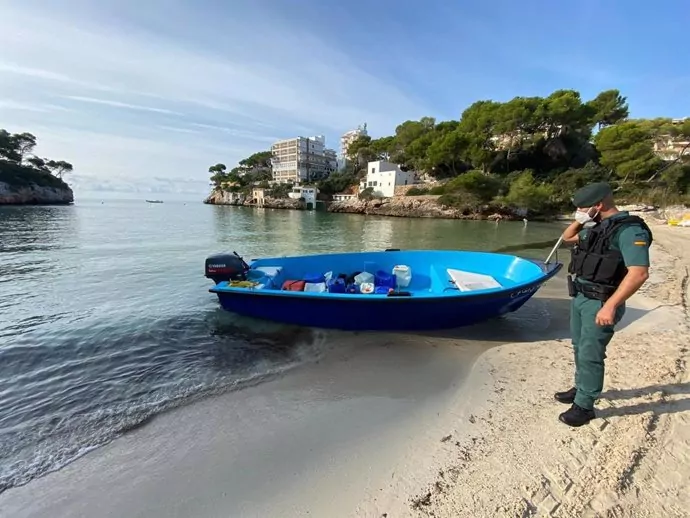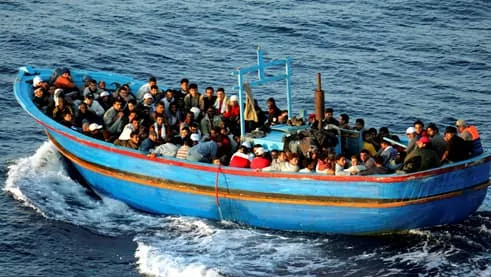
The Balearic Government has denounced the «unsustainable» migratory crisis suffered by the archipelago and has once again claimed to the Spanish Government that the Balearic Islands be excluded from the distribution of unaccompanied migrant minors from the Canary Islands, given the continued increase in irregular immigration arrivals.
This has been expressed this Monday by the general director of Immigration and Development Cooperation, Manuel Pavón, who has warned that the autonomous community «begins 2026 as it ended 2025, with a new wave of irregular immigration», after the arrival in the first five days of the year of seven boats with about 150 migrants on board. According to the data provided by the Government Delegation, the total number of arrivals amounts to 147.
Pavón pointed out that this situation confirms that the migratory crisis in the Balearic Islands «is no longer a one-off or temporary event, but a consolidated problem», which generates an increasing pressure on the resources of reception and care of the archipelago. «It is a reality that deeply worries this Government,» he stressed.
Given this scenario, the autonomic responsible has demanded the central government -and in particular to the president Pedro Sánchez, the Minister of the Interior Fernando Grande-Marlaska and the delegate of the Government in the Balearic Islands, Alfonso Rodríguez-to adopt urgent measures to curb the situation. In this regard, he recalled that the protection and control of borders are not autonomous competences, but it is «to demand that the current regulations are complied with».
«The Government has the obligation to demand that effective measures be taken to put an end to the migratory route between Algeria and the Balearic Islands,» said Pavón, insisting that this is the line of action being followed by the autonomous Executive.
The Government argues that the territorial uniqueness of the Balearic Islands and the pressure that its social and reception services are already under justify its request to be left out of the distribution of unaccompanied migrant minors, while calling for a more forceful response from the State to a crisis that it considers structural and not punctual.