The Consell Insular de Formentera has given this week a new and surprising twist in its position on the parking lots of the port of La Savina. After months of rejecting extensions, questioning the construction of underground parking and celebrating its elimination from the port project, the institution now proposes to enable 120 new surface parking spaces to respond to the saturation of the nucleus.
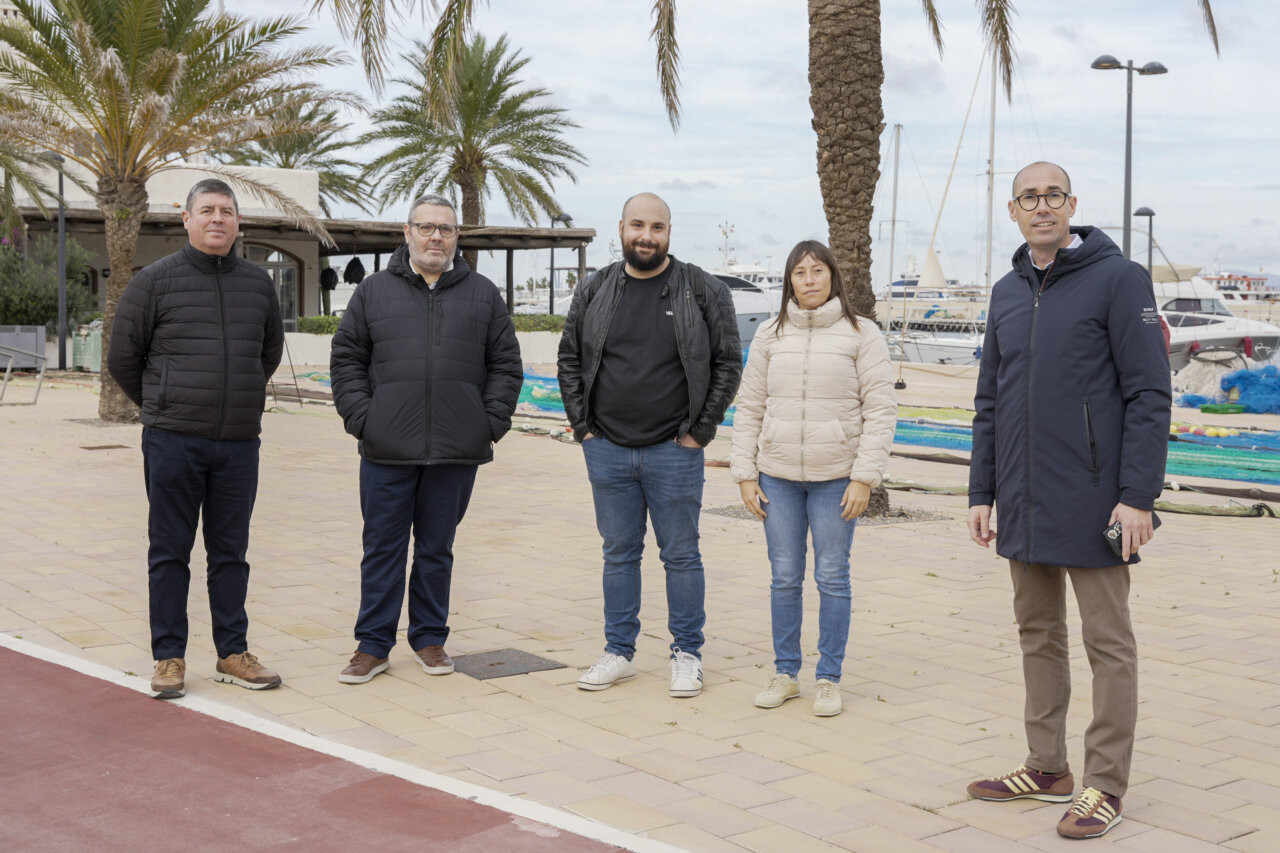
The president of the Consell, Óscar Portas, together with the first vice president and councilor of Mobility, Verónica Castellón, and the second vice president and councilor of Urbanism, Javi Serra, made a technical visit to the area accompanied by specialized staff. From this field work, the Consell presented at the Navigation Council this Thursday an initiative based on the rearrangement of existing spaces, without major works and without affecting the bike lane.
-
La Savina will receive more than 9.4 million to modernize the port: this is how it will be transformed by 2030
-
Strategic boost for La Savina: Formentera Council and APB to form a joint commission to review the port’s Special Plan
The Port Authority of the Balearic Islands (APB) valued positively the technical approach, which the Consell interprets as an endorsement to move forward quickly. Portas defended the initiative as a direct response to a demand from the residents of La Savina who “have long been demanding solutions to the saturation of parking”.
However, this new position contrasts in an evident -and for many, surrealistic-way with the discourse that the Consell itself has maintained throughout the year.
From rejecting subway parking… to demanding more parking spaces
The contrast goes back to some time ago, when the Consell d’Entitats and all the political forces of the island celebrated the elimination of two subway parking lots foreseen in the initial project of the APB.
The plan envisaged 200 private parking spaces distributed in two large underground infrastructures, of about 9,000 m² in total. Far more than what is now being demanded.
Institutional and neighborhood pressure led the APB to withdraw this approach. In exchange, only the possibility of creating a smaller parking lot -between 40 and 50 spaces- under an existing building was left.
At the time, the Consell defended this modification as a political success: the impact of the work was reduced and, in addition, the concession period was shortened from 25 to 16 years, by reducing the necessary investment.
But the positions began to change immediately after. Portas himself pointed out in April of this year that the final number of parking spaces was insufficient and that “La Savina needs parking”, opening the door to new demands that now materialize in the proposal of 120 surface parking spaces.

A contradiction at the heart of the debate
This change of criteria – from pushing for the elimination of parking to requesting more parking spaces – has generated confusion among businessmen, associations and technical sectors. For several economic actors, the evolution of the institutional position is difficult to explain without resorting to the word “contradiction”.
The twist takes on “surrealistic” overtones, as expressed by some business voices, who recall that the existence of 200 underground parking spaces was criticized, an intermediate project was rejected and now a substantial expansion of parking is being demanded, even if it is on the surface.
Sustainable mobility and citizen demands: an unstable balance
The Consell simultaneously defends the need to improve sustainable mobility. In fact, it announced the implementation of a direct public transport service between Sant Francesc and La Savina every half hour during the summer, free for residents.
Despite this, and without renouncing this line of action, the institution has now prioritized the expansion of the parking lot as a more immediate response to the difficulties of access and saturation of the port.