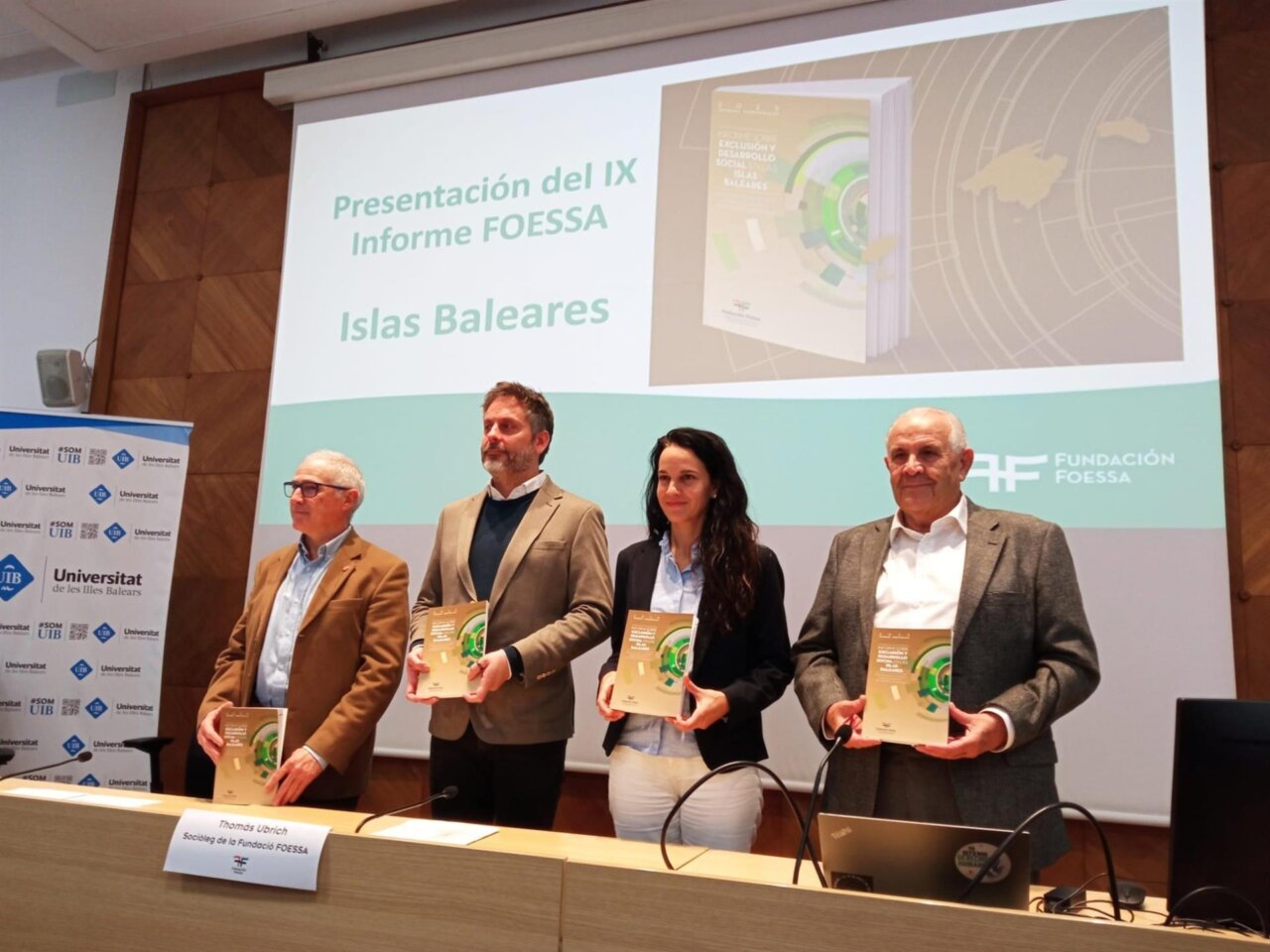
Cáritas Diocesana and the Foessa Foundation warned Wednesday in Palma that housing has become a “fake right”, after noting that almost 20% of the Balearic population – more than 233,000 people – now live in social exclusion, a figure that has barely moved since 2018. The organization’s leaders called for ambitious policies to curb abusive prices and expand the public park. In the presentation of the report, they stressed that the islands suffer one of the highest levels of residential stress in the country. Ibiza, they pointed out, is among the most affected areas.
-
Marga Prohens presents the Public Housing Shock Plan
-
“I hope you spend on medicine what you earn on rent”: the viral publication that uncovered the housing war in Ibiza
The 9th Foessa Report on Social Exclusion and Development places housing at the center of the social blockage. According to the data, 29% of the population suffers from residential exclusion, with a 41% increase in housing prices since 2018 and even greater increases in new construction. The average rent has climbed to €1,598, 31% higher than in 2019, while more than 60% of renters spend more than 30% of their income on the household, a threshold considered financial overstretch.
46,000 households fall into severe poverty after paying rent
The document states that 46,000 households end up below the severe poverty line after paying rent and utilities, which is evidence -according to the authors- that housing “does not allow a decent life” and expels thousands of residents from the territory. In addition, 110,000 people live in unsafe housing and another 100,000 in inadequate or unsanitary conditions, with Ibiza among the “most stressed” areas of the archipelago.
Foessa also notes a serious shortfall in income protection. The Minimum Vital Income (IMV) only reaches 35% of those in severe poverty, and 66% have never received information about the benefit. In parallel, the Guaranteed Social Income (Resoga) has gone from covering 1% of the population in 2018 to only 0.44% in 2024, which generates an “informative and administrative hole” that leaves thousands of households without support. Ubrich defended that IMV recipients can also access the Resoga, because “with the IMV the needs are not covered.”
Employment up, integration stagnant
Despite the increase in employment – from 560,000 to 607,000 employed people since 2018 – the Balearic Islands creates jobs without reducing exclusion, Foessa said. Wages have risen by 20% in nominal terms, but only 3.3% in real terms due to the increase in the cost of living. Exclusion among employed people has gone from one in ten to almost one in seven, which reinforces the idea that employment does not guarantee social integration.
Gaps: foreigners, young people and families with children most affected
The report notes that the foreign population suffers exclusion rates of 31%, more than double that of the Spanish population. Among minors, the impact amounts to 24%, and among those between 18 and 44 years of age, to 26%. Households with children represent two-thirds of the excluded population, while one in five households report having suffered discrimination.
Sociologist Thomás Ubrich concluded that the current model “is exhausted” because it generates “inequality, precariousness and isolation”. The foundation proposes a new social pact based on care, with priorities in housing, decent employment, social protection, integration of the migrant population and reinforcement of the community fabric. The report argues that the Balearic Islands must choose between moving towards a more fragmented society or placing the common good at the center of public action.