They often sleep rough, move from place to place and have not set foot in a public office for years. In the city of Ibiza,
The initiative promoted by the Department of Social Welfare is articulated as a resource for active detection and proactive linkage, with high intensity interventions and an approximate duration of nine months. The service targets people in severe social exclusion, such as those suffering from broken ties, mental health problems, addictions or dual pathology, which hinders any stable contact with social services.
Arrive before it’s too late
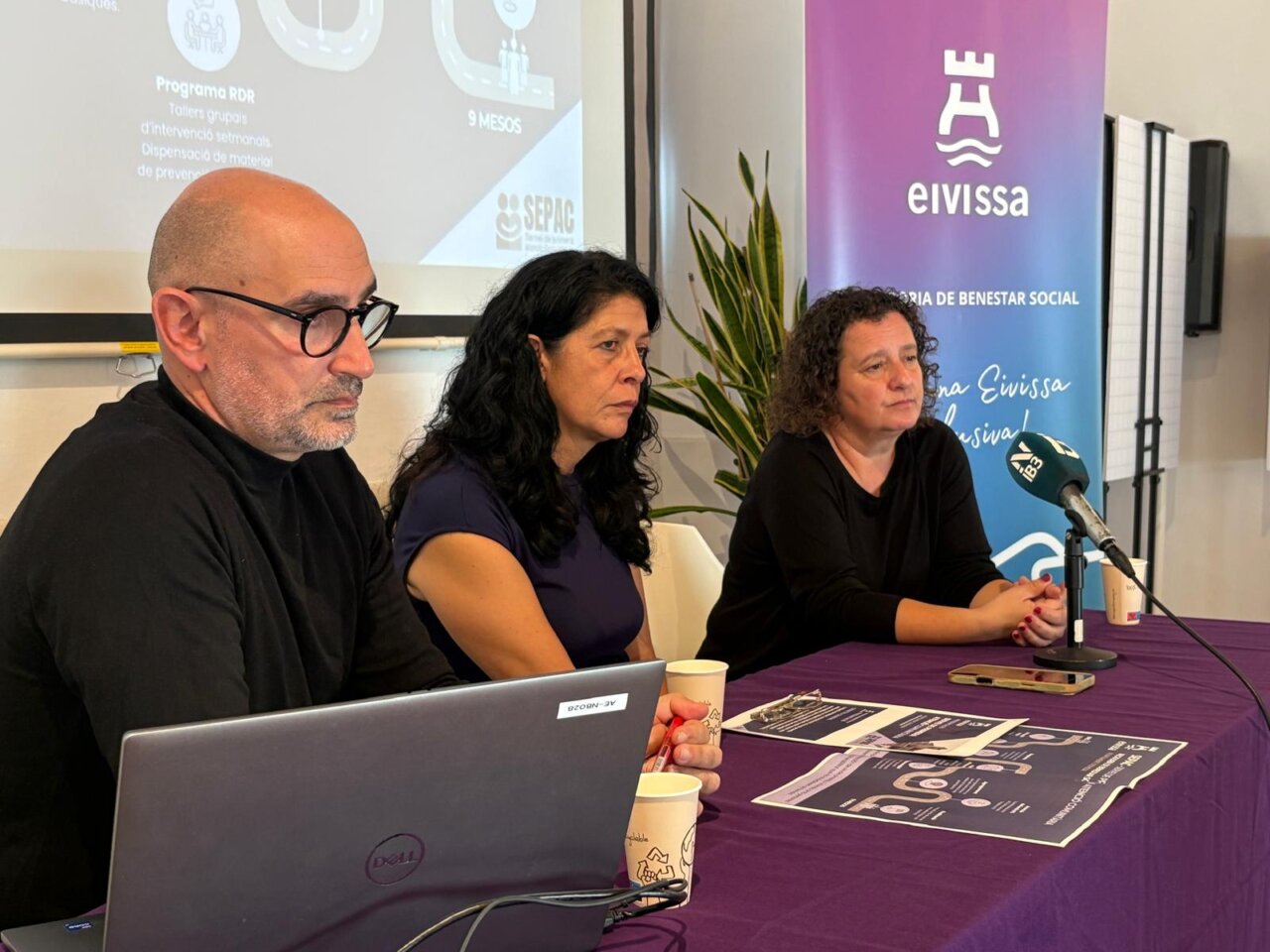
The Councilor for Social Welfare, Lola Penín, explained that SEPAC responds to the need to reach those who do not knock on the door. “
The project has been presented to representatives of Caritas, Red Cross, Deixalles, Metges del Món and other organizations that work in the field and are part of the network of attention to social exclusion, with which the City Council foresees a constant coordination to detect cases and share monitoring.
An intensive, person-to-person model
SEPAC is divided into three clearly differentiated phases. The first focuses on
The director of Social Welfare of the City Council of Ibiza, Iván Castro, stressed that these are particularly complex profiles, many of which were not being attended or lacked a clear reference in social services. “We are talking about people in street situations with extreme vulnerability, completely disconnected from the system,” he has indicated.
Headquarters at sa Miranda and nine months of accompaniment
The SEPAC team will be formed by a social worker and a social educator and will be based at the Centro Sociocomunitario de sa Miranda, in the neighborhood of sa Penya. The service is scheduled to
The head of the City Council’s Social Welfare Service, Belén López-Higuera, explained that one of the first challenges is to rebuild basic routines. “Enabling a person to return to an appointment or maintain regularity is a key step in any inclusion process,” she said.
From covering the basics to opening up new opportunities
SEPAC’s starting point is to guarantee health, hygiene and housing, considered three essential pillars for initiating any improvement process. “When a person manages to stabilize on these three levels, their ability to move forward and improve their situation increases significantly,” added López-Higuera.
The service takes as a reference previous experiences of the City Council, such as the program ‘Dones que floreixen’, focused on women in street situations. According to municipal data, nearly 90% of the participants accessed a housing solution after completing the project, a result that has served as a basis for extending this intervention model to other exclusion profiles.
A gateway to the system
From the Consistory they insist that SEPAC does not replace existing resources, but acts as a gateway and bridge to community services for people who until now were under the radar. The success of the service, they stress, will depend to a great extent on the coordination with the social entities already working in the street.
With this initiative, the Ibiza City Council reinforces its commitment to a model of community intervention, proactive and person-centered, with the aim of reducing social exclusion and facilitating real access to public services for those living in the most extreme situations.