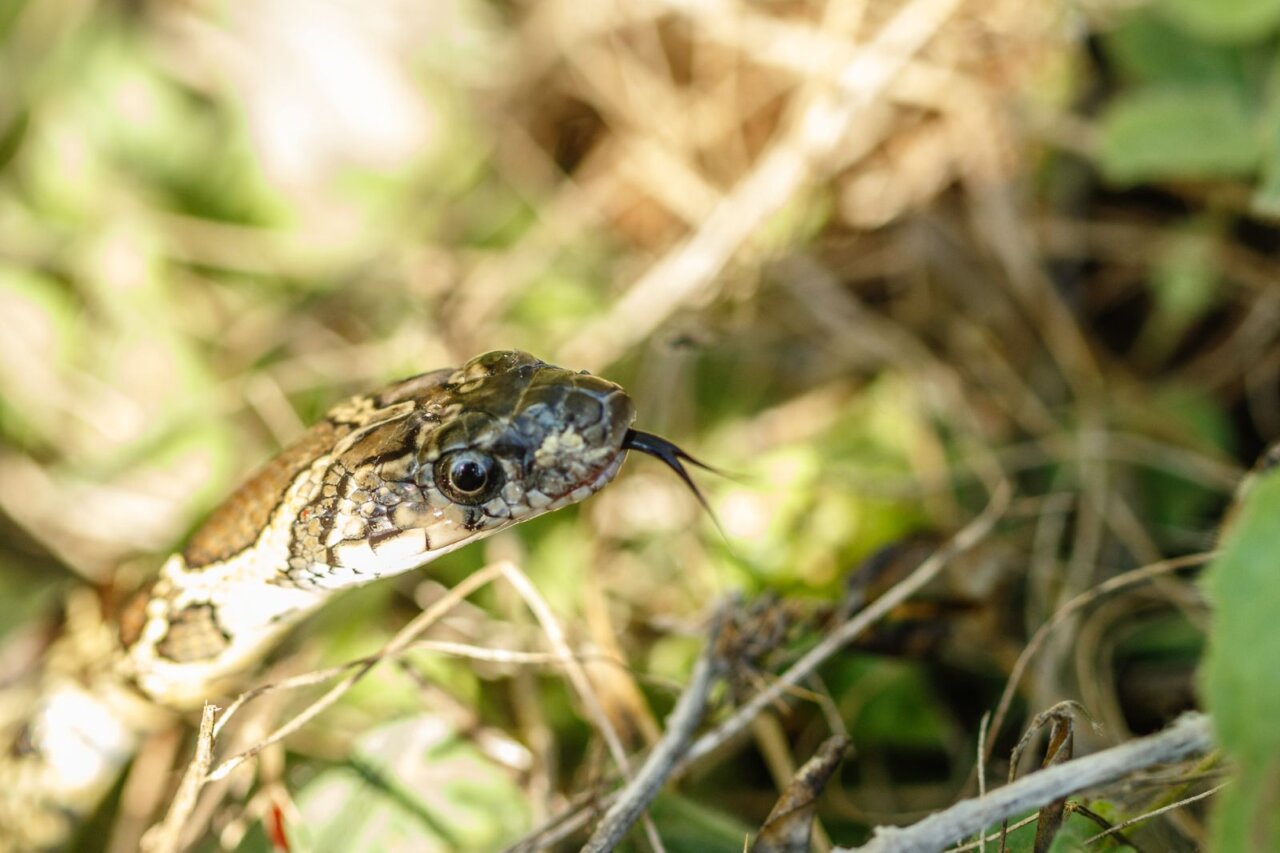
IbizaPreservation captured during 2025 a total of 584 invasive snakes in different parts of Ibiza, as part of the Protegim Ses Sargantanes project, an initiative launched in 2023 to curb the spread of alien species and protect the Pitiusa lizard, one of the most endangered endemic reptiles of the island. With this balance, the total number of specimens captured since the beginning of the program amounts to 1,172, all of them horseshoe snakes, considered a serious threat to terrestrial biodiversity.
The 2025 campaign has consolidated and expanded the scope of the project, which has acted both in protected natural areas and in rural areas, with a significant increase in the number of traps installed and the number of participating farms. In total, 350 traps were placed throughout the island, an increase of 32.5% over the previous year and almost nine times more than in the first year of action.
Fewer catches in Ses Feixes and record in Ses Salines
Two natural enclaves have again focused part of the trapping effort: Ses Feixes de Talamanca and Ses Salines Natural Park. In the former, captures dropped to 49 specimens, compared to the 98 recorded in 2024, after the October floods and damage caused by rodents forced the removal of half of the traps installed.
The foundation also points to a possible displacement of the snakes to other areas of the island. “Weather conditions and the alteration of the devices had an influence, but it is also likely that the population is being redistributed,” explained Itziar Arratibel Ostolaza, director of programs at IbizaPreservation.
The behavior has been the opposite in the Natural Park of Ses Salines, where the highest number of captures was recorded since the project began, with 68 snakes in 2025, double that of the previous year and well above the six recorded in 2023. In this area 60 traps were activated and 21 revisions were made, reaching an average density of 1.25 specimens per trap, higher than that recorded in Ses Feixes.
Concern about the decline of lizards
The increase in captures in Ses Salines has set off the alerts of environmental technicians, as it affects a lizard population that until now was considered stable. “Annual samplings indicate that this population is in decline and, if the expansion of the snakes is not curbed, it could eventually disappear,” warned Inés Roig, technical specialist of the foundation.
The pitiusa lizard fulfills key functions in the ecosystem, such as pollination or pest control, and its regression represents a far-reaching environmental imbalance. Currently, trapping is the only effective tool to contain the spread of invasive snakes.
The countryside joins in the control of invasive species
One of the pillars of the project has been the involvement of the agricultural sector, which in 2025 has strengthened its participation with 68 collaborating farms, twenty more than the previous year. In this rural area, 250 traps were installed, including those of 12 farms of the Associació de Vesins de Corona, which joined for the first time, and the 21 farms of the Es Fornàs neighborhood association, which already participated in a coordinated way.
The result was the capture of 467 snakes, 105 more than in 2024. “This success reflects the commitment of the citizens of Ibiza with the control of invasive species and the defense of its natural heritage,” stressed Arratibel.
They demand a conservation plan and more institutional support.
IbizaPreservation warns of the lack of an approved conservation plan for the Pitiusa lizard, which makes it difficult to coordinate resources and long-term strategies. Looking ahead to 2026, the foundation considers it essential to intensify trapping in the south of the island, where some populations of the reptile still survive.
“The situation is critical and the administration must assume a decisive role that cannot be postponed,” insisted Roig, who also stressed the importance of protecting the territory of Formentera to prevent the threat from spreading to that island. Meanwhile, the organization is already working on the planning of the next campaign, with the aim of continuing to expand the collaboration network and stop the loss of biodiversity in Ibiza.