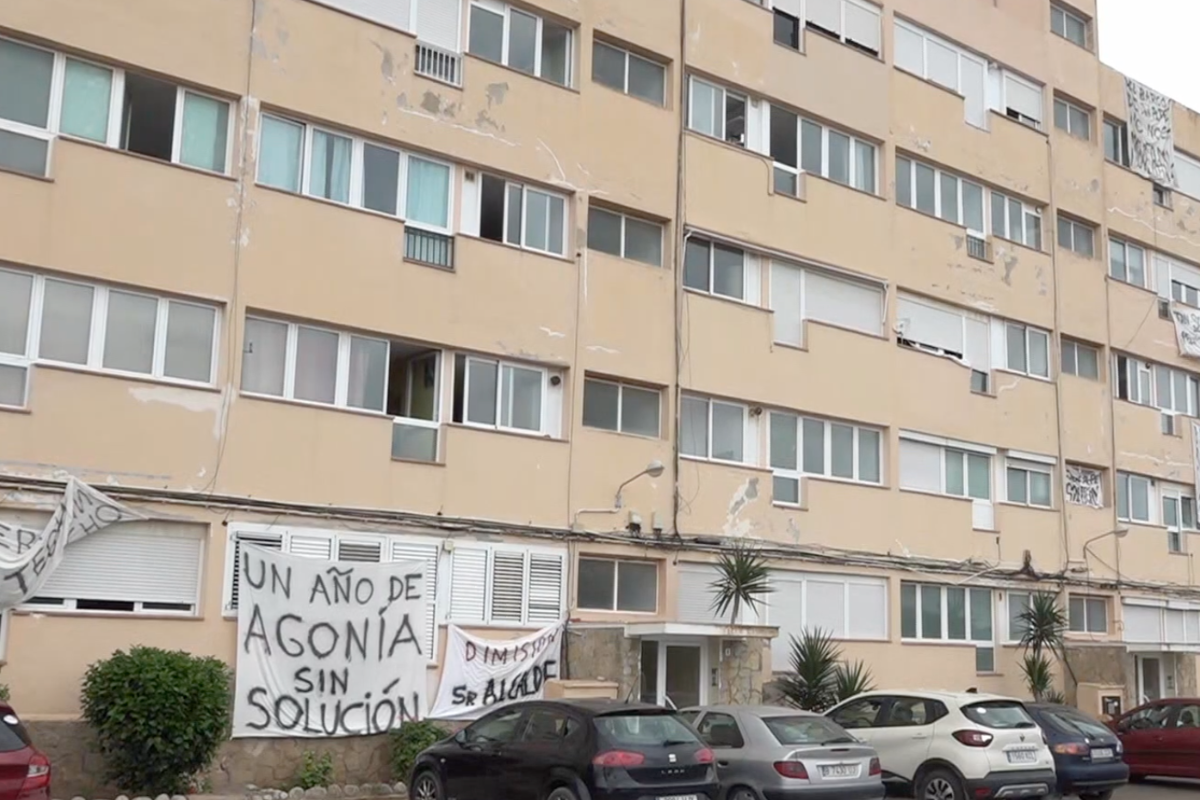
The legal report on the Don Pepe case has a central thesis: the presumption of legality of block A despite the fact that the license document does not appear today. However, to defend this idea, it does not limit itself to reconstructing the 1964 file, but resorts to a principle with broad jurisprudential support: an Administration (in this case the City Council of Sant Josep) cannot use its own silence, inactivity or loss of documents to harm the citizen. The opinion expressly cites rulings of the Supreme Court and references of the Constitutional Court that reinforce this approach and support the legal twist reported by La Voz de Ibiza.
The legal key: silence does not work against the administered party
One of the central passages of the report reproduces the doctrine of the Supreme Court, according to which administrative silence is conceived for the benefit of the administered party, and not as an instrument for the Administration. In the words of the opinion, “it is not licit for the Administration to benefit from the non-fulfillment of its duty to expressly resolve”.
This principle is decisive in Don Pepe, where the core of the conflict is documentary: until now, the City Council has focused on the fact that “the license does not appear” for block A. Faced with this absence, the report shifts the focus to another question: if there was processing and it was the Administration that failed, it cannot, decades later, turn this failure into a total condemnation.
What is the legal background of the report?
Supreme Court (July 16, 1997)
The report is based on the doctrine of the Supreme Court, which recalls that administrative silence is conceived for the benefit of the citizen and that the Administration cannot use its own inactivity or lack of response to harm him, not even when the interested party opted to wait for an express resolution for reasons of legal certainty.
Supreme Court 874/2021: the right to be informed is not an obligation
The report links to another Supreme Court ruling, dated June 17, 2021, to respond to a recurring objection in this type of conflict: the alleged passivity of the citizen. The reproduced passage rejects converting the right of citizens to be informed of the procedure into an active obligation, and criticizes the fact that administrative silence is interpreted to the detriment of the administered party.
Applied to the Don Pepe case, the opinion points out that, even if the developer cooperative did not formally push for a declaration of positive silence, the prolonged municipal inactivity and the execution of the works without opposition can be interpreted as a presumptive favorable act, taking into account the historical context of the case.
STC 14/2006
The report also cites Constitutional Court Ruling 14/2006 to reinforce the material justice component of the legal reasoning. According to this ruling, it is “absolutely unacceptable” for an Administration to neglect its obligations to the citizen and, some time later, show extreme zeal in demanding compliance with its own obligations.
This argument does not introduce a normative novelty, but reinforces the idea of legitimate trust that runs through the entire opinion.
Supreme 4120/2020
Another reference incorporated is the Supreme Court ruling of December 14, 2020, which the report uses as a general framework. The ruling emphasizes legal certainty and the protection of consolidated situations against administrative inactivity, especially in the urban planning field.
The opinion does not automatically equate the Don Pepe case to this case, but invokes it as doctrinal support for the principle that the Administration’s failure to act cannot be turned against bona fide third parties.
With all this basis, the report justifies a central idea: it is not possible to grant a license today 60 years later, but the lack of administrative diligence should not harm third parties in good faith, especially when the file itself has gaps attributable to the City Council.