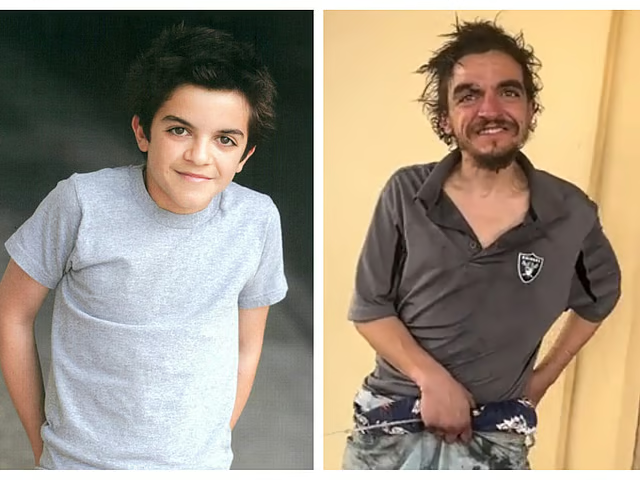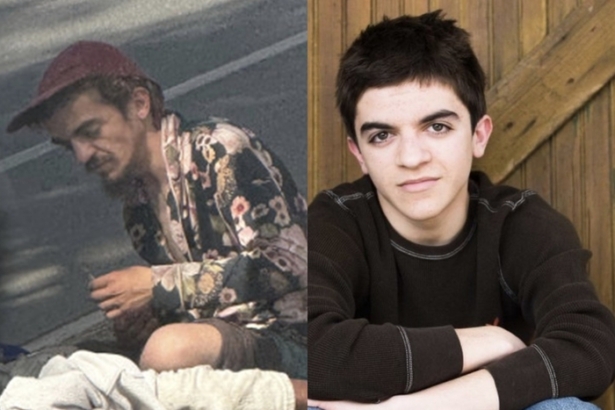
The entertainment industry is once again facing one of its most uncomfortable realities. The name of Tyler Chase, a former child actor linked to a popular Nickelodeon series, has become a trend after a video was released showing him living on the street in California. The images, which quickly went viral, have generated a wave of reactions and have rekindled a recurring conversation: what happens to many performers when fame comes too soon and fades without leaving a solid structure behind.
Tyler Chase’s case is not the first, nor, foreseeably, will it be the last. However, its impact has been particularly strong because of the contrast between the television memory associated with his childhood and the harshness of his current situation. The video, shared on social networks, has served as a trigger to reflect on the precariousness that affects many former child stars once the spotlight is turned off.
The video that uncovered Tyler Chase’s situation
The scene that has gone around the world is seemingly simple, but profoundly revealing. In the viral clip, Tyler Chase appears in conversation with a woman who, upon recognizing him, hugs him visibly excited. She asks him if he participated in the Nickelodeon series Ned’s Declassified School Survival Guide, and he confirms that he was indeed part of the cast as one of the children’s characters that marked an entire generation of viewers.
The naturalness of the exchange contrasts with the harshness of the context. Chase is calm, without dramatizing his situation, but the image of a former television face living on the street has been enough to provoke a massive reaction on social networks. Thousands of users have expressed surprise, disbelief and concern about what happened.
The reaction in networks and the debate on ephemeral fame
One of the most shared messages about the video was from user Mario Naufel, who shared the images on the social network X. In his publication, he stated that Tyler Chase’s case “is a reminder that fame can fade quickly”. As he pointed out, when “the cameras stop rolling,” many child actors “are left on their own to face challenges that persist,” especially financially.
🇺🇸 FROM CHILD STAR TO HOMELESS IN CALIFORNIA – THE TYLER CHASE STORY
Tyler Chase, who played Martin on Nickelodeon’s Ned’s Declassified School Survival Guide, was recently spotted homeless in California.
In a viral street clip, he calmly explains he was on Nickelodeon and even… pic.twitter.com/ArPzugXqA0
– Mario Nawfal (@MarioNawfal) December 21, 2025
In the same context, Naufel underscored an idea that has resonated strongly with users: “Child actors get tremendous recognition in their early years, but the truth is that later on the reality can be very harsh.” In direct reference to Chase, he added that his story “is a wake-up call” about how not everyone gets a strong support system when success comes too early.
These reflections have prompted a wider debate on the responsibility of the entertainment industry and on the structures that should be in place to accompany minors working in front of the cameras.
Structural problems of child actors
Tyler Chase’s case highlights a familiar problem within the audiovisual industry. While there are performers who make a successful transition from child acting to adulthood, many others face a very different picture. The lack of stable job opportunities, coupled with early entry into a highly competitive world, can lead to economic and social marginalization.
Over the years, it has been observed that early fame is not always accompanied by long-term planning. In many cases, the income generated during childhood is not properly managed or there are no mechanisms in place to ensure future stability. When roles disappear and public interest wanes, some former child actors are exposed to a reality for which they were not prepared.
Mental health and lack of support networks
Beyond the economic aspect, Tyler Chase’s story puts the focus back on the mental health of those who grow up under public scrutiny. Media pressure, the loss of identity when leaving behind a well-known character and the difficulty of integrating into an adult life away from the spotlight are factors that can have profound consequences.
In this sense, the debate generated after the broadcasting of the video has once again raised the need for the industry to assume greater responsibility. Among the most repeated demands is the creation of psychological support programs and long-term financial plans to help child actors face the end of their successful stage.
A movement of support in social networks
After learning of Tyler Chase’s situation, numerous users have begun to mobilize on social networks to show their support. This digital movement is not limited only to his figure, but seeks to make visible a broader problem. The idea of offering assistance to former child stars going through similar circumstances has gained momentum, fueling a collective debate on how to prevent cases like this in the future.
Although no details have been released about specific aid, the symbolic support has been remarkable. Tyler Chase’s name has become a recurring example when talking about the transience of fame and the fragility that can hide behind a childhood marked by television success.