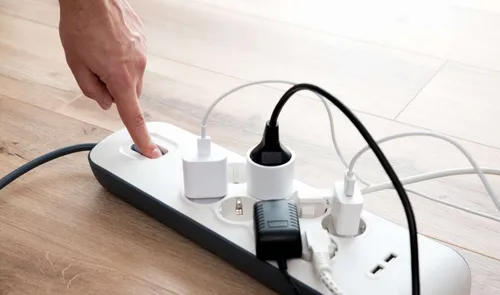
For years, the socket has been an immovable element in homes; its location was decided during the construction work and hardly changed over time. However, in Spain, a new type of socket is beginning to emerge that breaks with the traditional model and proposes a more flexible, cleaner alternative adapted to modern life.
This system dispenses with fixed recessed sockets and opts for a modular structure that allows electricity to be brought exactly where it is needed, without resorting to power strips or complex installations. The result is a more functional house, with no visible cables and no construction work.
A new way of distributing electricity at home
Unlike the classic socket, which requires furniture to be arranged according to its location, this new model allows just the opposite: adapting the power points to the actual layout of the home. The modules can be placed on walls, ceilings or structural elements, creating discreet electrical lines that fit in with everyday use.
This solution is especially useful in homes where renovations are not desired, such as older apartments, rental housing or second homes. It also responds to an increasingly common demand: reducing dependence on extension cords and eliminating cables that run along the floor or accumulate under desks.
Features of the new plug
One of the reasons for the popularity of these sockets is their simple installation: there is no need to cut holes or modify the original installation. The modules are attached by means of strong adhesive systems or small screws, and the wiring is concealed in conduits that go virtually unnoticed.
At the same time, the system is designed to evolve with the home; if the layout of a room is changed or new devices are added, it is enough to move or incorporate additional modules. The whole process is fast, reversible and does not require advanced technical knowledge.
What changes does the latter mechanism impose
These new sockets also incorporate overload protection mechanisms, integrated switches and child locking systems, reducing the usual risks associated with power strips or improvised connections and ensuring greater safety.
In addition, there is a high degree of customization. There are modules with USB ports, light regulators or wireless control, as well as different finishes and colors that allow them to be integrated into any interior style, from the most minimalist to the most classic.
Although the traditional plug is still in the majority, this modular solution is beginning to gain presence in private homes and professional spaces. Offices, creative studios and coworking areas use it for its ability to adapt to changing environments.