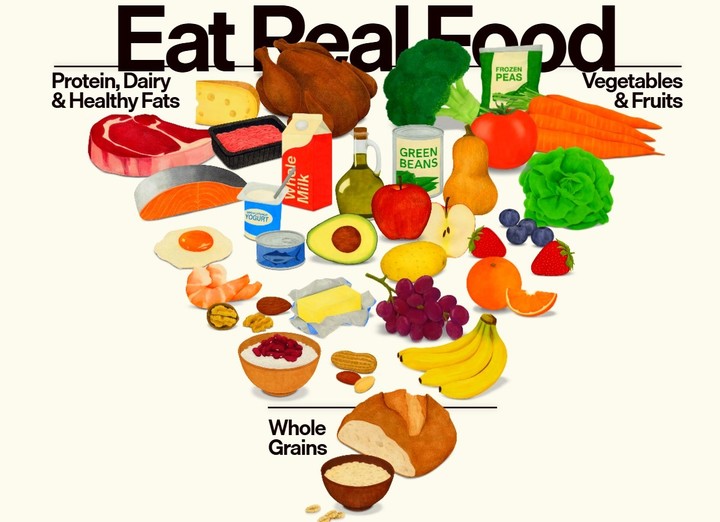
The U.S. Department of Health and Human Services has officially unveiled the “Dietary Guidelines for Americans 2025-2030,” an update that represents a profound shift in the country’s nutrition policy.
Under the direction of Secretary Robert F. Kennedy Jr. this new program seeks to simplify consumption recommendations, placing the focus on natural products and displacing foods with complex industrial processes that have predominated in recent decades.
A return to whole and natural foods
The cornerstone of this reform is the prioritization of what the Department of Health calls “real foods”. The intent of the new guidelines is to get families back to basics, focusing their diets on nutrient-rich products such as protein, vegetables, fruits and naturally occurring fats.
Introducing: The New Pyramid pic.twitter.com/NR03y6bqos
– HHS (@HHSGov) January 7, 2026
According to Secretary Kennedy, the objective is to drastically reduce the consumption of highly processed products to improve the overall health indicators of the population.
The new order of nutritional priorities
Unlike previous models, the current U.S. pyramid gives a central place to proteins, including both animal sources (such as eggs, red meat, poultry and seafood) and plant-based options, among which legumes and nuts stand out.
This approach is accompanied by a change in the approach to fats; the new guidelines propose integrating healthy fats from whole foods such as avocados, olives and full-fat dairy products, recommending olive oil as the preferred choice for cooking.
Severe restrictions on processed foods and sugars
One of the strictest points of the new regulations is the recommendation to completely avoid added sugars and artificial sweeteners, which are no longer considered part of a nutritious diet. In this regard, the population is urged to avoid sugary drinks, soft drinks and packaged or ready-to-drink products that often contain high levels of sodium.
The guide also makes a clear distinction between carbohydrates, encouraging the use of whole grains rich in fiber and suggesting the reduction of refined flours present in white bread and industrial pastries.
Impact on the production system and international differences
The implementation of these guidelines also has an economic and agricultural aspect: Brooke Rollins, Secretary of the Department of Agriculture, pointed out that this readjustment seeks to directly support local farmers and ranchers who produce fresh food. By encouraging the consumption of meat, dairy products and vegetables, the aim is to strengthen the domestic primary production industry.
This model represents a notable contrast with the nutritional structures still maintained in other countries, such as Spain, where official recommendations tend to place cereals and carbohydrates at the base of the diet, above proteins.
With this move, the United States initiates a public health experiment that prioritizes nutritional density over traditional calorie counting or carbohydrate dominance.