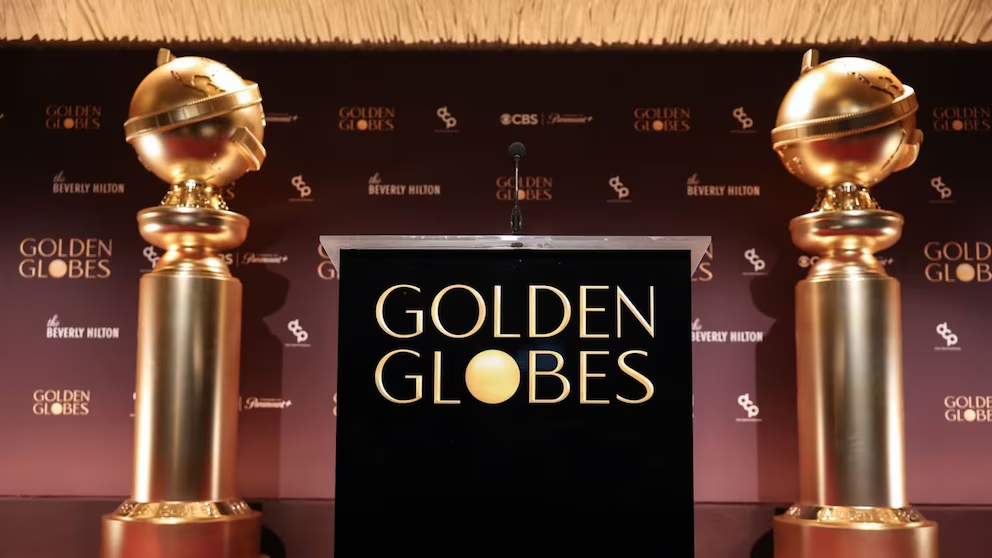
The 83rd edition of the 2026 Golden Globes brought together an outstanding variety of film and television productions that won recognition at a ceremony marked by the dominance of certain names in both film and television. The films Hamnet and One Battle After Another stood out in the film category, while series such as Adolescence and The Pitt were the most awarded in television. Below is a detailed list of the categories with the winners of this edition.
Cinema: recognition of the year’s major productions
In the Best Dramatic Film category, the award went to Hamnet, the adaptation of Chloé Zhao’s novel that tells the story of Agnes, William Shakespeare’s wife, after the loss of her son. This production managed to stand out against other titles such as Guillermo del Toro’s Frankenstein or Kleber Mendonça Filho’s The Secret Agent.
The Best Comedy or Musical Film was Paul Thomas Anderson’s One Battle After Another, which also obtained relevance in several categories within the same ceremony. This title beat competitors such as Blue Moon or Marty Supreme, consolidating itself as one of the big surprises of the night.
The Best Cinematic Box Office Achievement category was topped by The Sinners, beating major commercial productions such as Avatar: Fire and Ash or F1: The Movie, reflecting the ability of certain films to combine quality and box office performance.
In the Best Foreign Language Film category, the award went to The Secret Agent, by director Kleber Mendonça Filho, ahead of Oliver Laxe’s Sirât and Kaouther Ben Hania’s The Voice of Hind.
The award for Best Screenplay went to Paul Thomas Anderson for One Battle After Another, highlighting the creative work of this filmmaker against other nominees such as Jafar Panahi for A Simple Accident or Chloé Zhao and Maggie O’Farrel for Hamnet.
In the category of Best Animated Film, The K-pop Warriors took the award, beating productions such as Elio or Guardians of the Night: Kimetsu no Yaiba – Infinite Fortress, which reflects the breadth of proposals in animation this year.
Direction and outstanding performances
In the Best Director category, Paul Thomas Anderson was the winner for One Battle After Another, beating out the likes of Guillermo del Toro for Frankenstein and Chloé Zhao for Hamnet.
In terms of performances, Best Dramatic Actress went to Jessie Buckley, for her role in Hamnet, ahead of Jennifer Lawrence and Julia Roberts. Best Dramatic Actor went to Wagner Moura, for his role in The Secret Agent, ahead of actors such as Joel Edgerton and Michael B. Jordan.
The Best Actress in a Comedy or Musical category went to Rose Byrne, for If I Could, I’d Kick You, in a close competition with actresses such as Cynthia Erivo and Emma Stone. Best Actor in a Comedy or Musical went to Timothée Chalamet, for Marty Supreme, standing out from the likes of George Clooney and Leonardo DiCaprio.
Among the supporting awards, Best Supporting Actress went to Teyana Taylor for One Battle After Another, beating rivals such as Emily Blunt or Ariana Grande. Best Supporting Actor went to Stellan Skarsgård for Sentimental Courage, beating rivals such as Benicio del Toro and Paul Mescal.
Best Soundtrack was awarded to Ludwig Göransson, for The Sinners, against other compositions such as those of Alexandre Desplat for Frankenstein or Max Richter for Hamnet. In the Best Song category, the award went to Golden, for The K-pop Warriors, beating candidates such as Dream As One for Avatar: Fire and Ashes.
Television: dominance of series and performances
In the television field, the Best Drama Series was The Pitt, which won over competitors such as The Diplomat and Slow Horses. This series also saw the work of its protagonist recognized, as Best Actor in a Drama Series went to Noah Wyle, standing out in a cast that also included Sterling K. Brown and Diego Luna.
The award for Best Comedy or Musical Series went to The Studio, which beat out productions such as The Bear and Murder Only in the Building. In the same line, Best Actor in a Musical or Comedy Series went to Seth Rogen, for his role in The Studio.
The Best Actress in a Musical or Comedy Series was Jean Smart, for Hacks, which was her third win in this category for her interpretation of Deborah Vance. This series managed to establish itself as one of the season’s benchmarks of the genre.
In the category of Best Limited Series, the award went to Adolescence, a production that strongly addressed issues related to violence in adolescence, beating proposals such as Black Mirror or The Beast in Me. Its cast was also recognized, as Best Actress in a Miniseries, Anthology or TV Movie went to Michelle Williams, for Dying for Sex, although Adolescence dominated the group categories.
Among the TV Supporting Actress awards, Best Supporting Actress went to Adolescence’s Erin Doherty, while Best Supporting Actor went to Owen Cooper, also for the same series, consolidating his position within the TV season.
Other categories
In addition to film and television, the 2026 Golden Globes recognized work in areas such as best podcast and best comedy monologue. In the podcast category, the award went to Spotify’s Good Hang With Amy Poehler, beating out other popular shows such as Armchair Expert With Dax Shepard or Call Her Daddy. In humor monologue, the award went to Ricky Gervais for Ricky Gervais: Mortality, against comedians such as Bill Maher or Kevin Hart.
The 83rd edition of the 2026 Golden Globes thus left an awards season loaded with a diversity of genres, international productions and outstanding performances in both film and television, confirming the dominance of certain titles that also point to the next awards of the season.