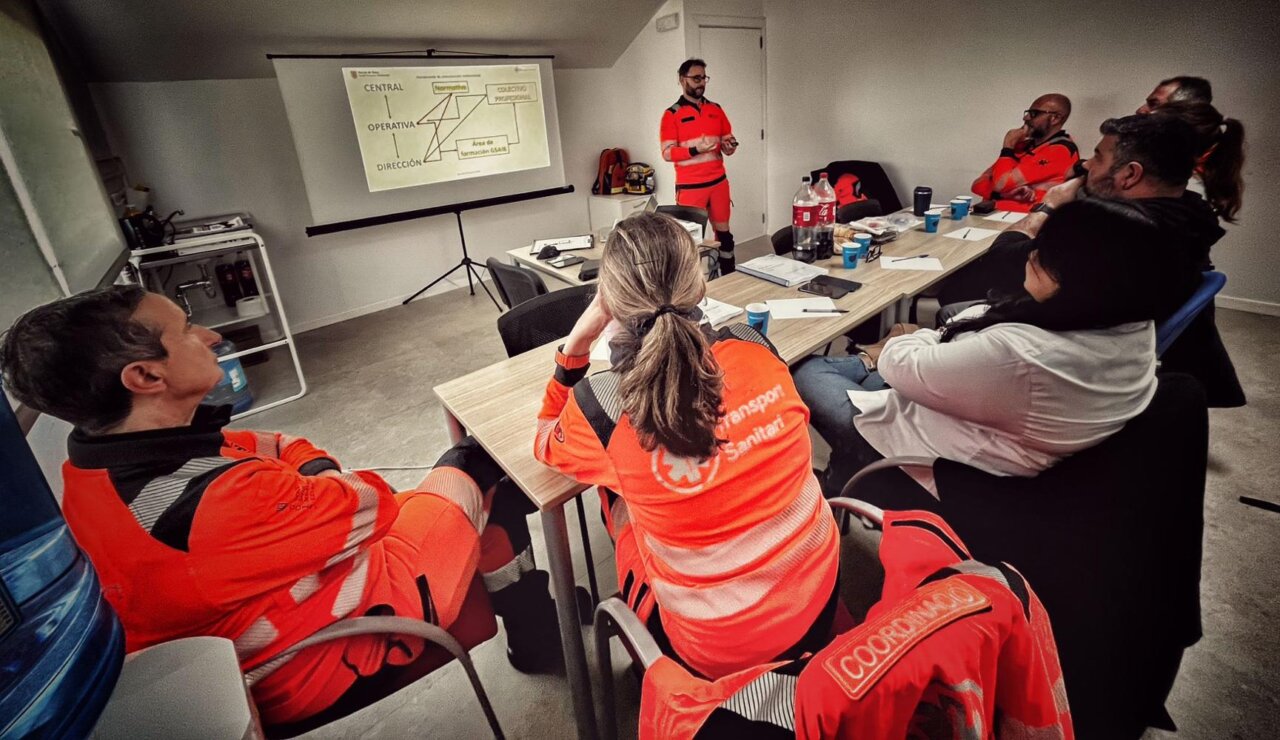
The Works Committee of the public company GSAIB, composed of unions FS-TES, USAE, CCOO and UGT, again raise their voices against what it considers a new sign of lack of planning, rigor and commitment by management. A known problems arising from the incorporation of new ambulances Programmed Health Transport, now adds, according to denounce an even more serious fact: the violation of a labor agreement signed under the protection of the Statute of Workers.
A process regulated by Article 41 that ends up as a dead letter
Last November 10, GSAIB officially informed the Works Council of the opening of the consultation period provided for in Article 41 of the Workers’ Statute, with the aim of modifying the working conditions of the Programmed Health Transport staff. The management justified the need to implement 12-hour shifts, in rotating day and night shifts, alleging organizational and technical reasons.
During the negotiation period, which lasted until November 27, both parties stated that they had acted “in good faith” and with a willingness to reach an agreement. In the end, a pact was signed that expressly included:
-
Change from a 7.5-hour workday to 12-hour shifts on a rotating day and night basis.
-
Effective as of January 1, 2026.
Five days later, everything changes
However, according to the committee, the surprise came just five days after the signing. At the meeting to plan the 2026 shifts, the management presented schedules that did not respect what had been agreed, eliminating the agreed rotational nature and proposing fixed shifts.
Javier Marín, head of Health Transport of UGT Illes Balears, says that GSAIB justified the change claiming “a problem in the transcription of the agreement”. For the unions, such an explanation is “a joke”, even more so in the case of a procedure as serious as a substantial modification of working conditions covered by a legal article.
Three meetings, the same scenario and a unilateral decision
On December 1, 5 and 10, during successive planning meetings, the committee again demanded strict compliance with what had been signed. As they explain, the company’s response was identical in all of them, even going so far as to communicate that the schedules would be sent to the personnel “with or without agreement”.
For Marín, this position is reminiscent of “stages of unilateral company decisions with tints closer to pre-Constitution times”, despite the fact that half a century has passed since then.
They value strike, but distrust management
The social side claims to have considered calling a strike, although it finally ruled out that it would be useful in this context. “It would only serve to sign an agreement to call off the strike that would probably be breached again,” they lament, recalling the events of the last few weeks.
Unions will take the case to court
In view of what they consider a flagrant violation of labor rights and bad faith on the part of management, FS-TES, USAE, CCOO and UGT have decided to take the case to court. They also point out the subsidiary responsibility of IbSalut, as a member of the board of directors of GSAIB and guarantor of its decisions.
An “unusual and serious” situation
The committee describes the scenario as “unusual and serious”, warning that it will adopt all the measures within its reach to protect the fundamental rights of the workers of the Programmed Health Transport. They also denounce the situation of defenselessness to which they are subjected due to what they consider to be a manifest bad faith negotiation on the part of the public company.