
The arrest of Nicolás Maduro early Saturday morning in a secret U.S. operation and his subsequent transfer to the United States along with his wife, Cilia Flores, where both will be tried for drug trafficking, corruption and arms possession, has been possible thanks to the military and intelligence power of the United States.
As the hours go by, new details are emerging of an operation that Washington presents as millimetric and long-planned. According to The New York Times, Maduro’s location was made possible thanks to a CIA mole infiltrated in the Venezuelan power environment, whose collaboration would have been rewarded with up to 50 million dollars.
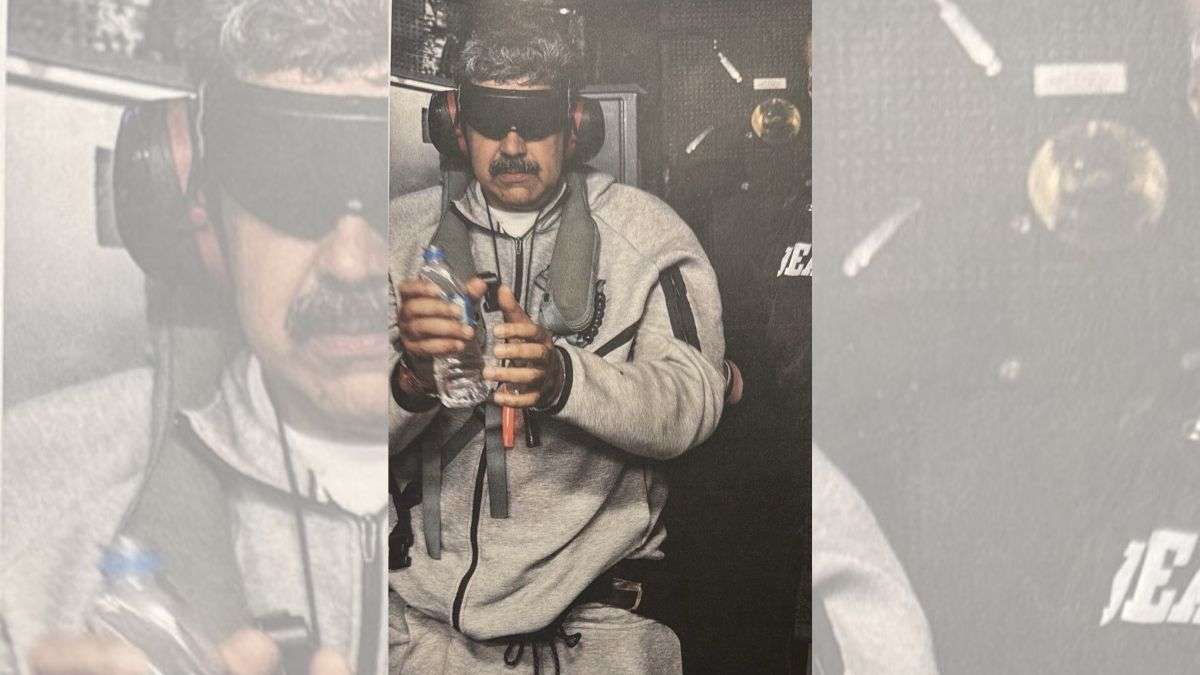
Cilia showed up.
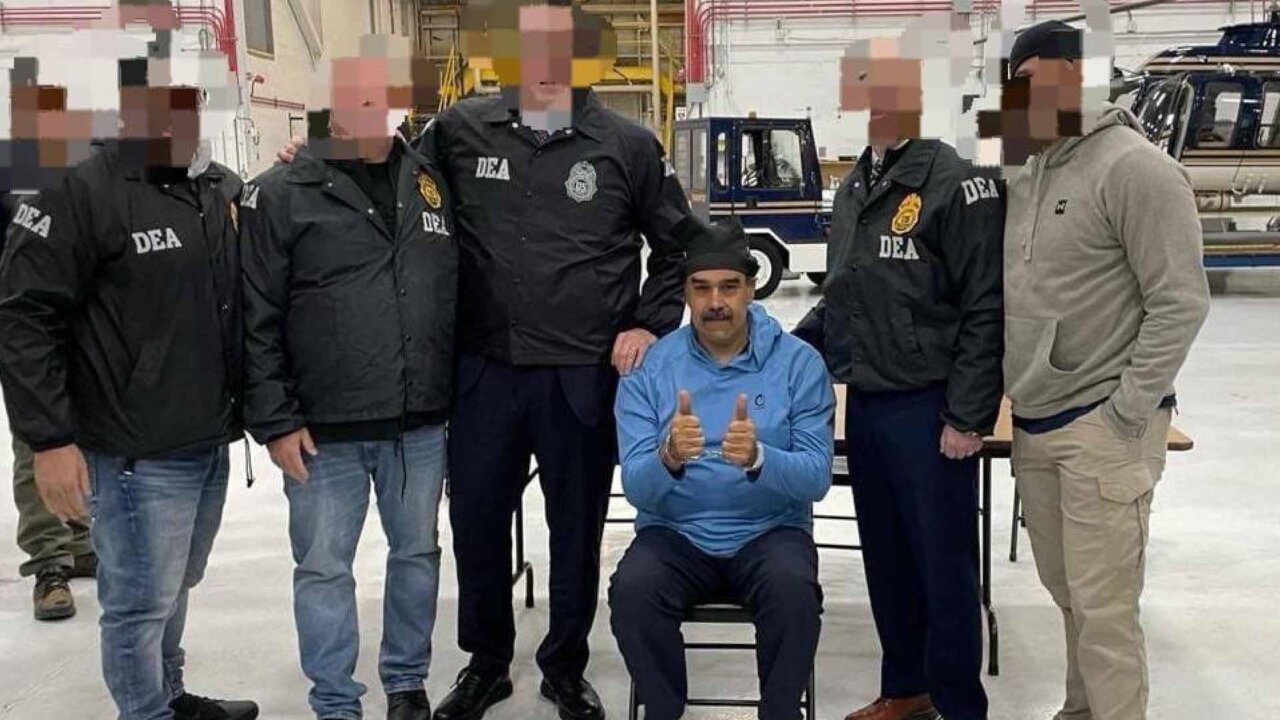
I was informed that Maduro hurt his leg when he tried to flee.
Here he seems to be complaining about that injury.Video Courtesy pic.twitter.com/335WR4mFzo
– Carla Angola TV (@carlaangola) January 4, 2026
Months of spying and an exact replica in the U.S.
US intelligence agents infiltrated Venezuela as early as last summer with the aim of reconstructing in detail the president’s routine: his movements, schedules, security measures and even personal habits. That information allowed the US to erect in Kentucky a life-size replica of the complex where Maduro took refuge in Caracas.
Some media have reported that Maduro had become obsessed with his security, had reinforced his staff of Cuban bodyguards, changed his phone number very frequently and spent the night in different places. None of that was of any use because the mole and spy drones had the president perfectly monitored at all times.
As with the Navy Seals and Osama Bin Laden’s residence in Islamabad, Pakistan, elite Delta Force units rehearsed the operation there over and over again for months, practicing forced entry and blasting steel doors to minimize intervention time.
Three minutes to the bedroom
In the early hours of Saturday morning, once the actual operation had begun, it took the US commandos just three minutes to reach the room where Maduro and his wife were sleeping. According to Donald Trump’s own account, the Venezuelan president tried to take refuge behind a security door, but did not make it in time.
Trump had authorized the operation on December 25, although its execution was delayed several days due to weather conditions. Finally, it was launched taking advantage of a favorable weather window.
The number of dead is still unknown. The figure on the table is 40 people, including civilians and military personnel. None of them American.
From Caracas to New York
Following their capture, the couple was evacuated by helicopter and flown out of Venezuela. By early Saturday evening, they had landed at Stewart Military Airport in New York State before being taken to the Metropolitan Detention Center in Brooklyn. The trial will be held in the Southern District of New York.
Threats, oil and power vacuum
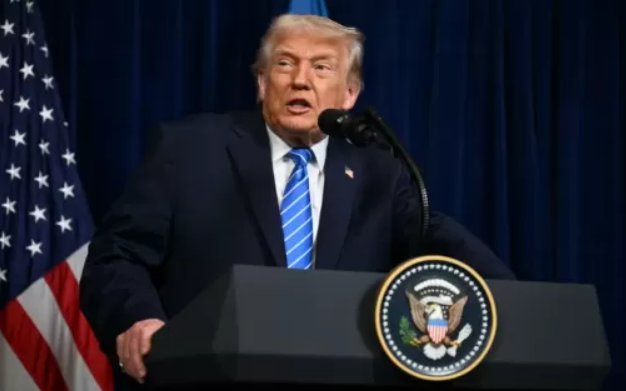
In his first appearance after the operation, Trump threatened a second wave of attacks if Chavismo offers resistance and assured that the United States «will govern Venezuela until there is a safe transition». He also affirmed that, after the air attack involving more than 150 aircraft, US energy companies will take over the management of the Venezuelan oil industry.
Meanwhile, the Venezuelan Supreme Court of Justice has ordered Vice President Delcy Rodríguez to assume the presidency in view of Maduro’s «forced absence». Rodríguez has demanded her release and has denounced foreign intervention, although Trump maintains that the Chavista leader has contacted Washington to collaborate. Brazil, for its part, has recognized her as interim president.
Maduro’s capture not only closes an unprecedented intelligence operation: it opens a completely new scenario for Venezuela, whose political and economic outcome remains, for now, up in the air.