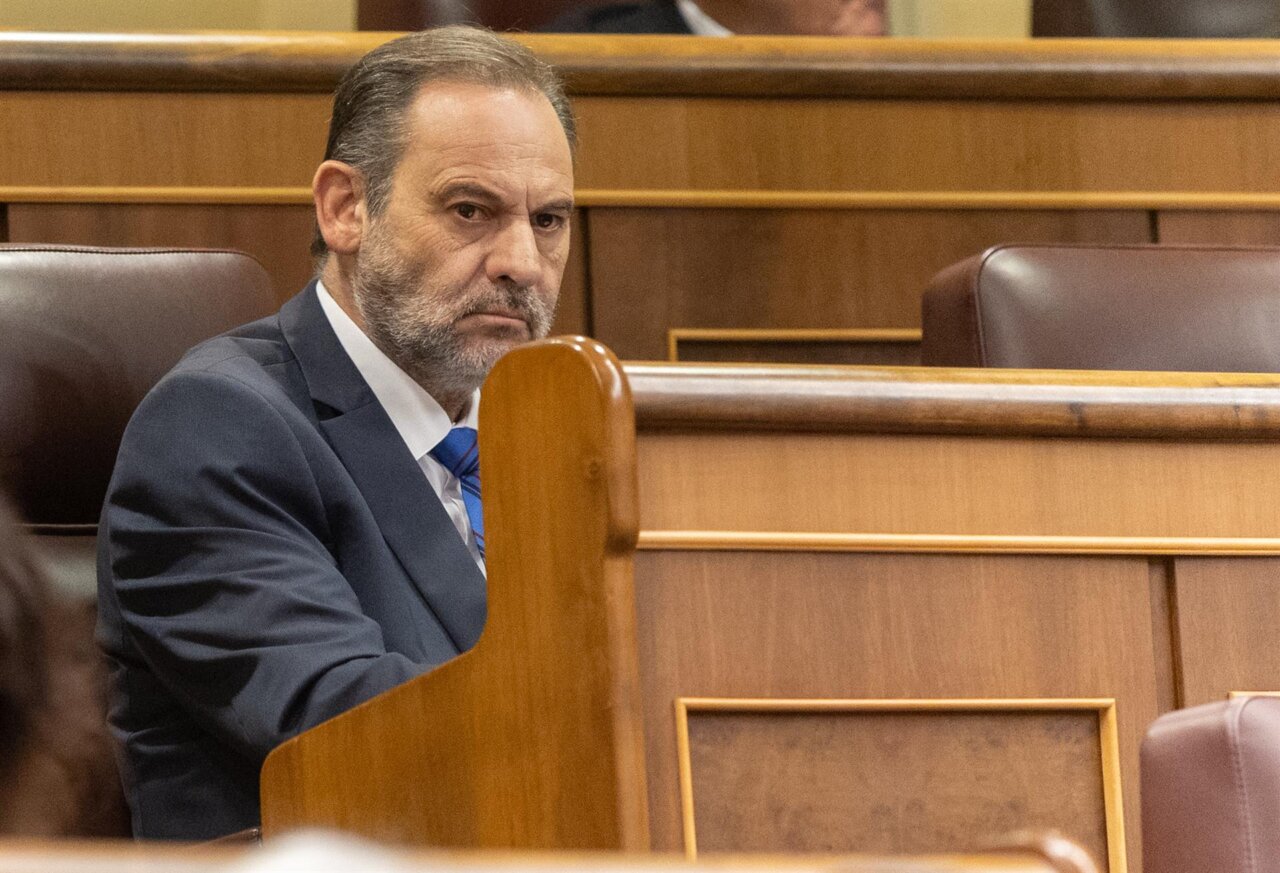
The former Minister of Transport José Luis Ábalos, in provisional prison in the framework of the so-called ‘Koldo case’, has requested this Tuesday to the Supreme Court that his case be tried by a popular jury and not by a court of magistrates, as is currently planned. The request is part of the investigation into alleged irregularities in the purchase of masks during the pandemic of covid-19.
In a document to which Europa Press has had access, the defense of the deputy requests the revocation of the indictment and argues that several of the crimes he is charged with fit within the competences of the popular jury, as stated in the Organic Law of the Jury Court. Specifically, he refers to the crimes of bribery, influence peddling and embezzlement, which he considers to be typical of this type of prosecution.
According to the brief, only two of the crimes included in the indictment –criminalorganizationand insider trading –would not fall within the scope of the jury. However, the defense argues that the main weight of the charges falls on the crimes that do fall under the jurisdiction of the popular jury, so these should “drag” the rest and not the other way around.
Ábalos also recalls his status as aforado before the Supreme Court, but defends that this does not prevent the trial from being held with a popular jury. In this sense, he points out that the High Court would maintain the competence, although with a special composition of the Chamber, formed by a magistrate-president and nine sworn citizens.
As a precedent, the defense cites the case of the former president of the Generalitat Valenciana, Francisco Camps, whose case for the alleged acceptance of gifts was heard before a popular jury in the Superior Court of Justice of the Valencian Community and ended with an acquittal.
José Luis Ábalos became the first sitting national deputy to go to prison and faces requests for up to 30 years in jail for his alleged involvement in the irregularities detected in the contracts for the supply of masks during the health emergency.