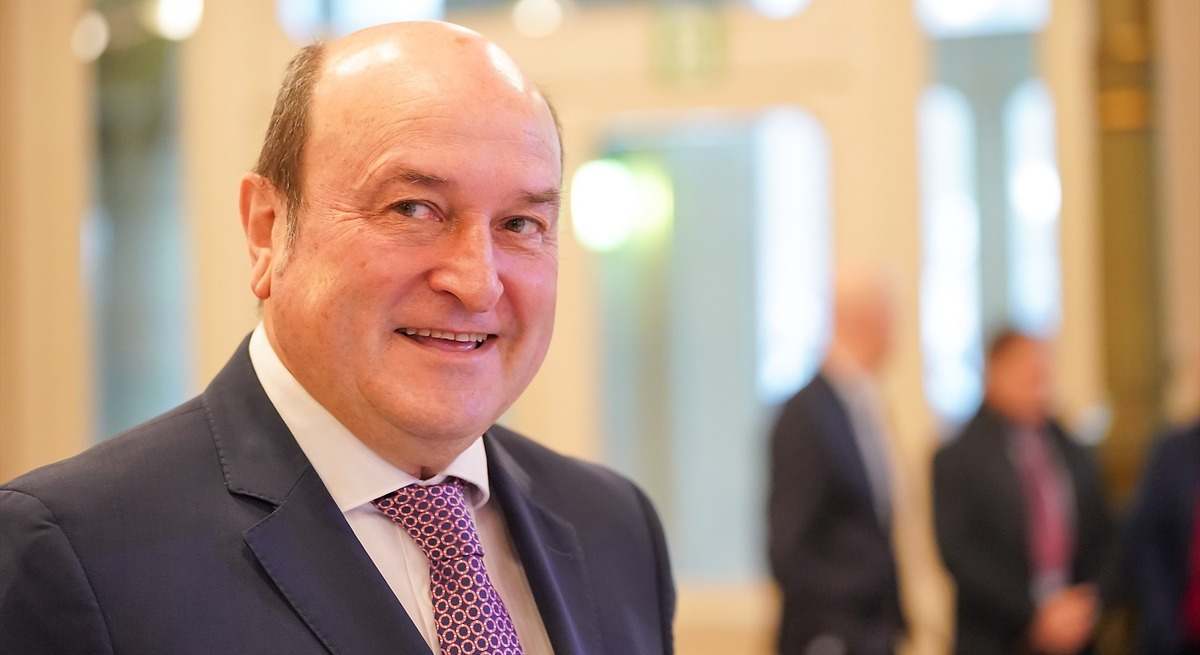
Telefónica has taken a strategic step in the midst of negotiating its redundancy plan by incorporating Andoni Ortuzar to the board of directors of Movistar Plus. The former president of the PNV for more than a decade joins the board of the audiovisual subsidiary, where Marcos Contreras, a director of CriteriaCaixa, has also been appointed.
Why Andoni Ortuzar was signed up
The change is due to the fact that the company seeks to strengthen its capacity for public dialogue and its reading of the regulatory context in which the audiovisual sector operates, according to company sources.
Ortuzar’s career is particularly valuable in this field: before his long period at the head of the PNV, the leader worked as a journalist and held the general management of EITB, a position that gave him extensive experience in communication, media and institutional management.
The board update comes at a sensitive time for the company, 10% owned by the State, which is still in the process of negotiating a redundancy plan that will affect approximately 5,000 employees. At the same time, the group continues to reorganize its structure and review its strategies in an increasingly competitive audiovisual market.
PNV backs the arrival of its former president
From the jeltzale formation, the appointment is interpreted as a natural step for Ortuzar after leaving the political front line. The secretary of the EBB, Maitane Ipiñazar, publicly defended that its former leader is “fully qualified” to assume responsibilities in the private sector and reminded that any politician has the right to resume his professional career outside the institutional sphere.
Ipiñazar highlighted that Telefónica has taken into account his experience in the field of communication and public media management, and stressed that the party welcomes the signing “with absolute normality”.
EH Bildu denounces a new case of revolving doors
EH Bildu’s reaction was at the opposite extreme: the Basque nationalist coalition regretted what it considers a repeated practice in Spanish politics: the transition of public positions to companies with a strong institutional presence.
According to party sources, this type of movements “feed discredit” and generate “social fatigue”, as they are perceived as benefits derived from partisan proximity.
EH Bildu warned that such transfers erode confidence in public management and called for a firm commitment to eradicate “cronyism” and reinforce political ethics.