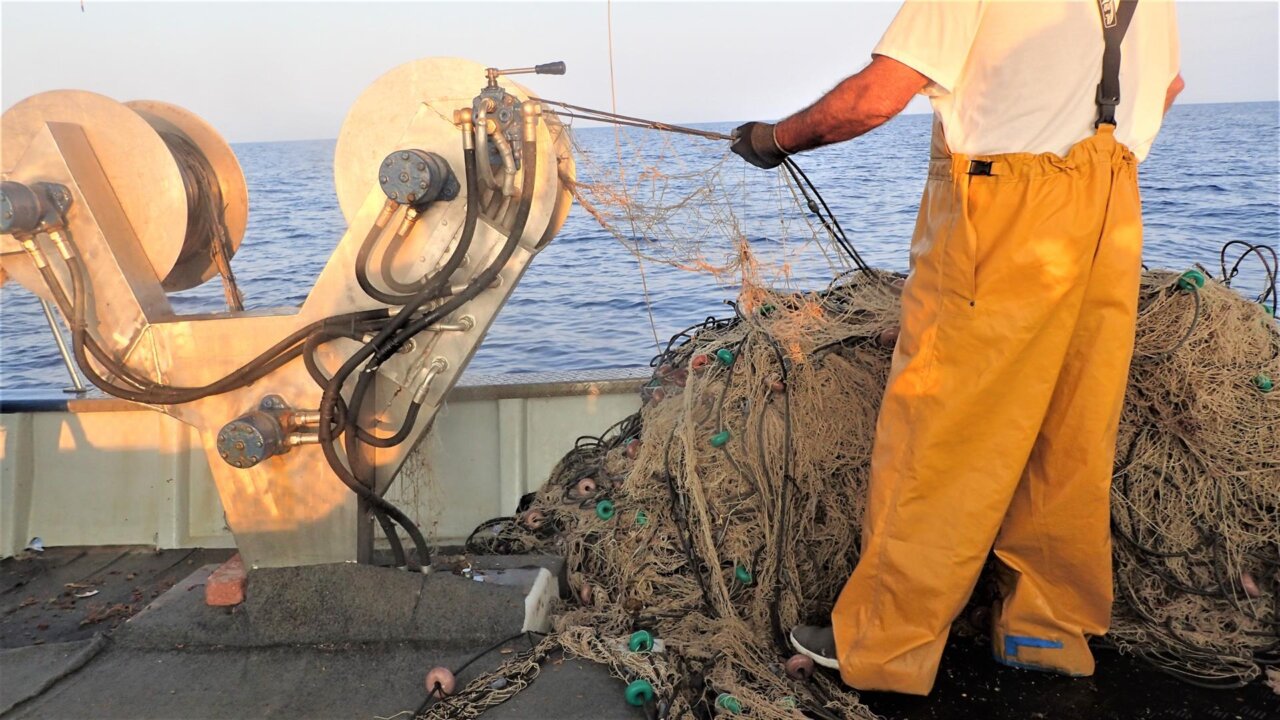
The Ministry of Agriculture, Fisheries and Natural Environment, in collaboration with the Mediterranean Institute of Advanced Studies (Imedea), has launched ‘Remar2’, the second phase of the fisheries monitoring program aimed at strengthening the sustainability of professional and recreational fishing in the Balearic Islands through the use of artificial intelligence (AI) tools.
As reported by the Conselleria in a statement, this new stage, funded through the Sustainable Tourism Tax (ITS), gives continuity to the work started two years ago and reinforces the commitment of the Govern with a modern, rigorous and based on scientific evidence fisheries management. The main objective of the project is to develop monitoring systems that allow more accurate implementation of fisheries co-management plans.
The general director of Fisheries, Antoni M. Grau, has pointed out that, although the Balearic fleet is relatively small and considered globally sustainable, “European regulations and market demands require increasingly detailed and verifiable information on fishing activity and its ecological impact”. Therefore, the program is committed to a comprehensive monitoring system that analyzes the fishing effort, composition and size of catches.
In the field of professional fishing, the project also takes into account the economic returns, in order to obtain an accurate picture of the state of marine resources and trends that may affect their viability in the medium and long term. In this sense, the Conselleria emphasizes that ‘Remar2’ will improve decision-making based on objective data.
Artificial intelligence applied to catches
One of the main innovations of ‘Remar2’ is the incorporation of artificial intelligence technologies capable of identifying, measuring and counting fish and crustaceans from images. In professional fishing, the specimens are photographed at the fish market, where the AI system automatically determines the species and size, providing an “unprecedented” level of detail on landed catches.
In the case of recreational fishing, the program works so that the photographs taken by fishermen to record their catches in marine reserves can be verified and measured automatically, improving the reliability and consistency of the data collected.
Scientific monitoring and ecosystem protection
The project also plans to strengthen the scientific system for monitoring marine resources by expanding the acoustic telemetry network of the Balearic Islands, with the intention of extending it to the four islands. This network makes it possible to study the movements and migrations of coastal fish, rays and sharks through electronic tagging, as well as to identify ecologically relevant areas, such as breeding aggregation zones.
The integration of these data with mathematical models and spatial information from vessels will generate a continuous flow of information that will facilitate the assessment of the state of ecosystems and the early detection of changes in marine populations.
The program is completed by the field work of a scientific team that regularly embarks with professional fishermen to collect data that cannot be obtained remotely, such as catches discarded or released by size, the state of the seabed and environmental conditions. All data collected by Imedea are treated in an aggregated and anonymous way, without identifying individual behaviors.
Currently, ‘Remar2’ operates in Mallorca, Ibiza and Formentera, with plans to expand to Menorca. Although the ecological differences between islands make it necessary to adapt some aspects of monitoring, the ultimate goal is to harmonize methodologies and establish a common monitoring framework for the entire archipelago, promoting closer collaboration between science, administration and the fishing sector.
Continue reading:
-
“It’s too exaggerated”: fishermen from Ibiza and Formentera charge against the new mandatory app for declaring catches
-
From Ibiza to Galicia: fishermen’s associations unite against mandatory app to declare catches
-
Will there be fish for Christmas? Government adds 13 fishing days to guarantee supply
-
Europe demands control of recreational fishing and the Balearic Islands becomes a key laboratory