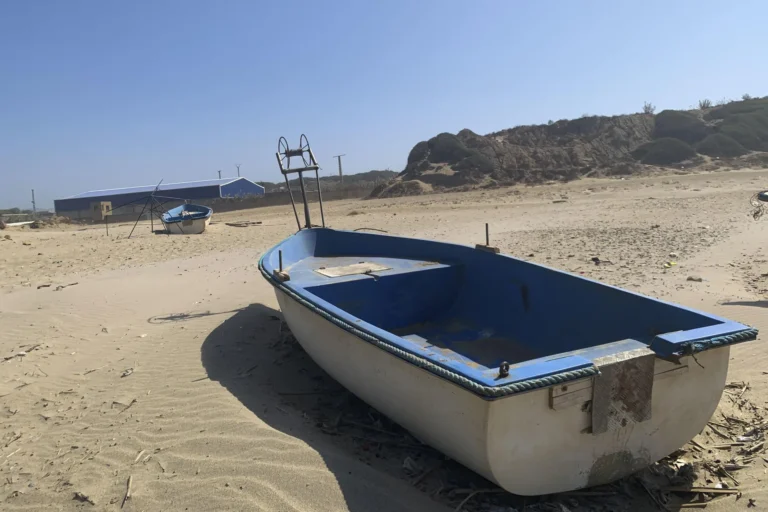

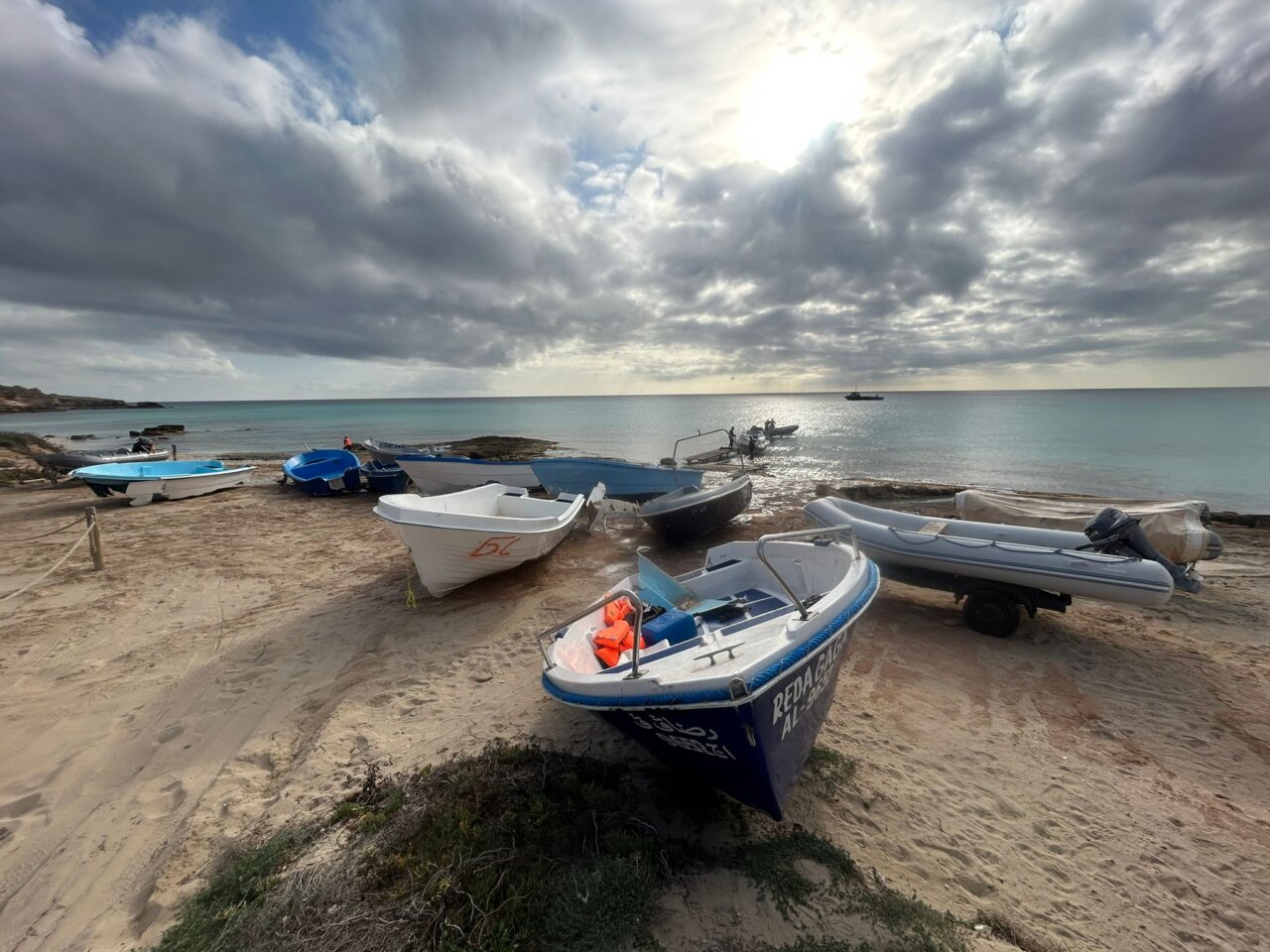
The migratory route to the Balearic Islands has established itself in 2025 as one of the deadliest and most opaque corridors in the Western Mediterranean. According to the Right to Life Monitoring 2025 report by Caminando Fronteras, more than 1,000 people have disappeared this year alone on the Algerian route, a route that connects directly with the coasts of the archipelago and that for years was denied by the institutions as a migratory route. Ibiza and Formentera have established themselves as central destinations on this route, especially the smaller of the pitiusas.
In this context, Helena Maleno, researcher and founder of Caminando Fronteras, provides a deeper reading: the Balearic route is not only dangerous, it is a space where policies that prioritize migratory control over the protection of life are being tested. For Maleno, what is happening in the sea around the Balearic Islands reveals how Europe today is understanding the right to life at its borders. In this interview, the human rights defender details the failures in the rescues, the discriminatory bias of the protocols and the direct impact these decisions have on the families searching for their missing persons.
-
Migrants who die in transit: working with families to recognize them and the importance of repatriation
-
Autopsy photos and promises of payment: how network operates to extort money from relatives of missing immigrants
An invisible route where not all lives count equally
-You speak of the Balearic route as one of the most opaque and invisible by the institutions. On a day-to-day basis, what is failing the most: early detection, rescue activation or coordination between authorities?
-Indeed, it is one of the most invisible routes. We have been seeing it for years and in 2025 we are seeing terrible things, human rights violations, both in the reception processes and due to the lack of a real analysis of the challenges presented by this migratory route. We have been denouncing for some time that it is one of the routes where there is the greatest arbitrariness when it comes to activating protocols for the protection of life at sea. Since the emergency was declared in September, there have been adjustments in the reception processes to try to guarantee fundamental rights, although they are still insufficient. But that has not happened, nor is it still happening, when we talk about the protection of the right to life at sea. Activation is failing: the transmission of alerts is failing, the analysis of these alerts by the rescue services is failing, the activation of means and also the coordination with third countries responsible for these rescues is failing.
What does the Balearic route (as it is operating today) tell us about how the right to life is being understood at European borders?
-For us, the Balearic route is a true laboratory of necrofrontier, of death policies. We say this because there are several circumstances: first, the invisibilization of the route for years, and second, a non-veiled criminalization of families and social organizations such as ours by public administrations. We do not see this in other places with the same intensity. The Balearic Islands has become a border where hatred and racism have such a high political profit that it is allowed to be a necro-border. In addition, the confrontation between governments that should collaborate, especially visible in issues such as childhood, gives us clear clues of how these policies of death work today. The Balearic Islands is right now, unfortunately, a European example of bad practices.
When you denounce delays in the activation of search and rescue systems and the use of passive searches, what are we talking about in practice?
-What we are explaining is that the rescue services mostly use passive search protocols when it comes to migrants. This is not the case, for example, if a yacht goes missing. In that case, a search area is mapped out, calculations are made and air assets are launched immediately. With migrant boats, on the other hand, information is sent to other boats in the area «in case they see something», a method with much less impact. We know that right now there is a Frontex plane, but Frontex does not aim to protect lives, but to control migration, so that people do not leave or do not arrive. The problem is that when a person has already left and is at risk, the protocols continue to have a racist bias. The same decisions are not made as if the vessel were a yacht.
What are the key moments and where is time lost when a vessel is lost?
– It is true that sometimes alerts from families arrive late and that takes away crucial time. But as soon as an alert is received, protocols should be activated that would apply to any other type of vessel, and that does not happen. Even in cases of positioned vessels, the delay in activation generates risky situations, something that has even been denounced by the Unified Union of the Civil Guard in several communiqués this year.
What should be improved in the cooperation between countries involved in this route to avoid disappearances?
-Cooperation between countries is based on the externalization of borders: that they do not leave or that they do not arrive, no matter at what cost. The democratic protection of the right to life at sea, as stated by the United Nations, is put on the back burner. Countries do not coordinate to save lives, they coordinate from a logic of control without respect for human rights, and that is where the right to life is falling down.
What concrete changes would prevent deaths in the Balearic route in the short term?
-Real coordination between countries, guaranteeing protocols with active searches, position analysis and use of aerial means. Let’s remember that Maritime Rescue is one of the best in the world, and its function should be to protect life without wondering who is at sea or why. These protocols exist, but in the Balearic route they are not being applied with the same guarantees as in other contexts or with other people.
The Algeria route, not only for Algerians
One of the issues that the latest annual report of Caminando Fronteras warns about is that the boats leaving Algeria for the Balearic Islands (many of them to Ibiza and, especially, to Formentera) no longer carry only Algerian citizens, but also those who arrive in that country escaping from Somalia and different parts of the Horn of Africa.
Why are people from the Horn of Africa now choosing this route to the Balearic Islands?
-Migratory routes are changing very fast because we are living in a time of extreme global instability. Somalia is going through a very serious situation and recent events are going to destabilize the region even more. Many people used to flee to Libya or Tunisia. Today, the situation of black migrants in Tunisia is even worse than in Libya, with a real hunt for migrants. Europe, especially Italy, is paying for this persecution. In this context, Algeria appears to be a somewhat more protective place, even if it also applies deportations and forced displacements. When these people take to the sea, they already do so in a situation of extreme vulnerability.
Are you receiving inquiries from families looking for missing persons on the way to the Balearic Islands?
-Yes, we receive many inquiries from families from Somalia, Sudan, Mali or Burkina Faso. There are whole boats missing and other cases of people rescued by Algeria after being adrift.
How is the accompaniment of these families?
-There are many deficiencies in the recognition of their rights. Deceased persons have the right to be identified and the families need death certificates, for legal reasons and also to be able to close the mourning. We accompany families who travel to the Balearic Islands to denounce disappearances and many times this right is not guaranteed, despite the enormous effort they make.
When a family loses track of someone who was on their way to the Balearic Islands, what protocol is activated today?
-We activate our own protocol for information search, psychosocial accompaniment and information on rights. The main obstacle is the impossibility for many families to travel to Spain, and also the lack of collaboration for DNA tests from consulates or embassies, something that the Ministry of Foreign Affairs does not facilitate.