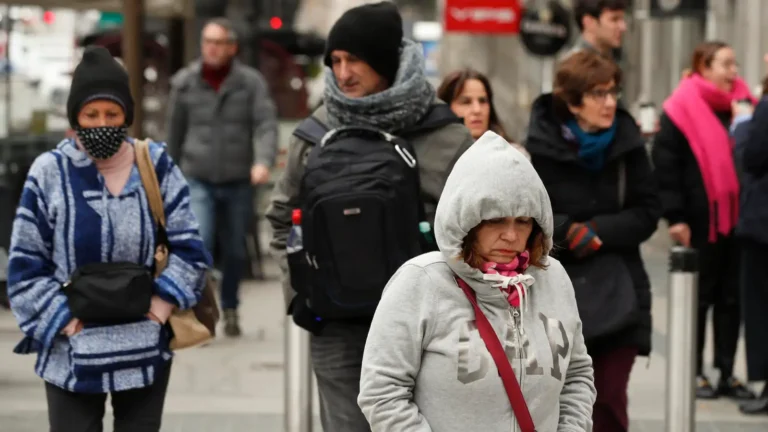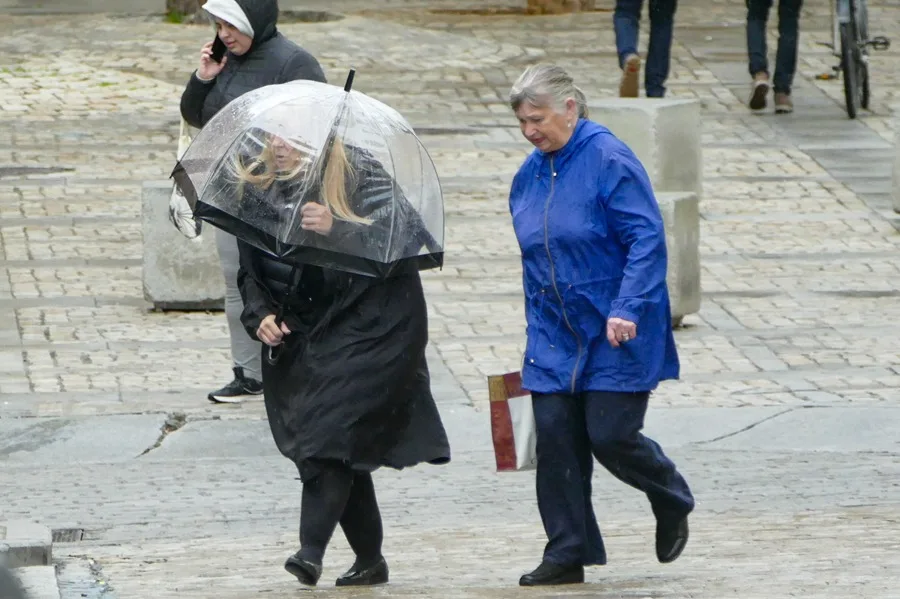
In the coming hours, the weather in Spain could take a sharp turn and put back on the table the specter of a “new Filomena”. The arrival of an Atlantic squall and the possible entry of very cold air open the door to a winter episode with rain, lower temperatures and the option of snowfall in different areas of the country over the next few days.
In the North Atlantic and Europe, an unusual combination of factors is emerging: on the one hand, the Francis squall will advance towards the area around the Peninsula; on the other hand, an omega blockade will favor Spain to be under the influence of the descending branch of the polar jet. This pattern could facilitate the arrival of very cold air masses, of polar or even arctic origin, towards more southern latitudes than usual.
The possible collision of air masses
According to current scenarios, from Saturday onwards Francis would push warmer and more humid air from the south, while cold air could descend from the north. Between Sunday and Tuesday, both masses could meet over the Peninsula, giving rise to a very delicate meteorological situation that is difficult to forecast accurately.
The key will be the extent to which the cold air manages to move southward. This will determine both the drop in temperatures and the possibility of more or less extensive snowfall.
Is it really possible to speak of another Filomena?
Although some models have shown striking scenarios, meteorologists insist that comparing this episode with Filomena is not correct. Beyond the fact that the name of the squall begins with the same letter and that they are winter dates, the starting conditions are different.
Before Filomena, Spain had been under intense and persistent cold for days: in this case, the first impact would be of milder air from the south, before an eventual thermal decrease. For this reason, some experts point out that the situation is more reminiscent of episodes such as Reyes in 2018, when there were snowfalls at low altitudes in large inland areas, but without a generalized collapse.
Will there be snowfall at lower elevations?
For now, the most likely scenario is an increase in instability over the weekend, with precipitation over much of the country. The possibility of snow will depend on the exact location of the contact strip between the warm and cold air: if this clash occurs further north, snowfall will be restricted to the usual mountain areas.
If it descends towards the center or the peninsular interior, there could be more prominent snow episodes. However, experts stress that these transition zones are usually very narrow and that the maps may change significantly in the next updates.
Prudence and continuous monitoring
Specialists warn that it does not make sense to anticipate major storms based on a single model output, especially several days ahead and in such a complex context. Much remains to be defined and it will be necessary to closely follow the evolution of the Francis squall and the associated cold air.
For now, the recommendation is to get information from official sources and wait for the forecasts to become firmer before drawing conclusions about the real extent of the episode.