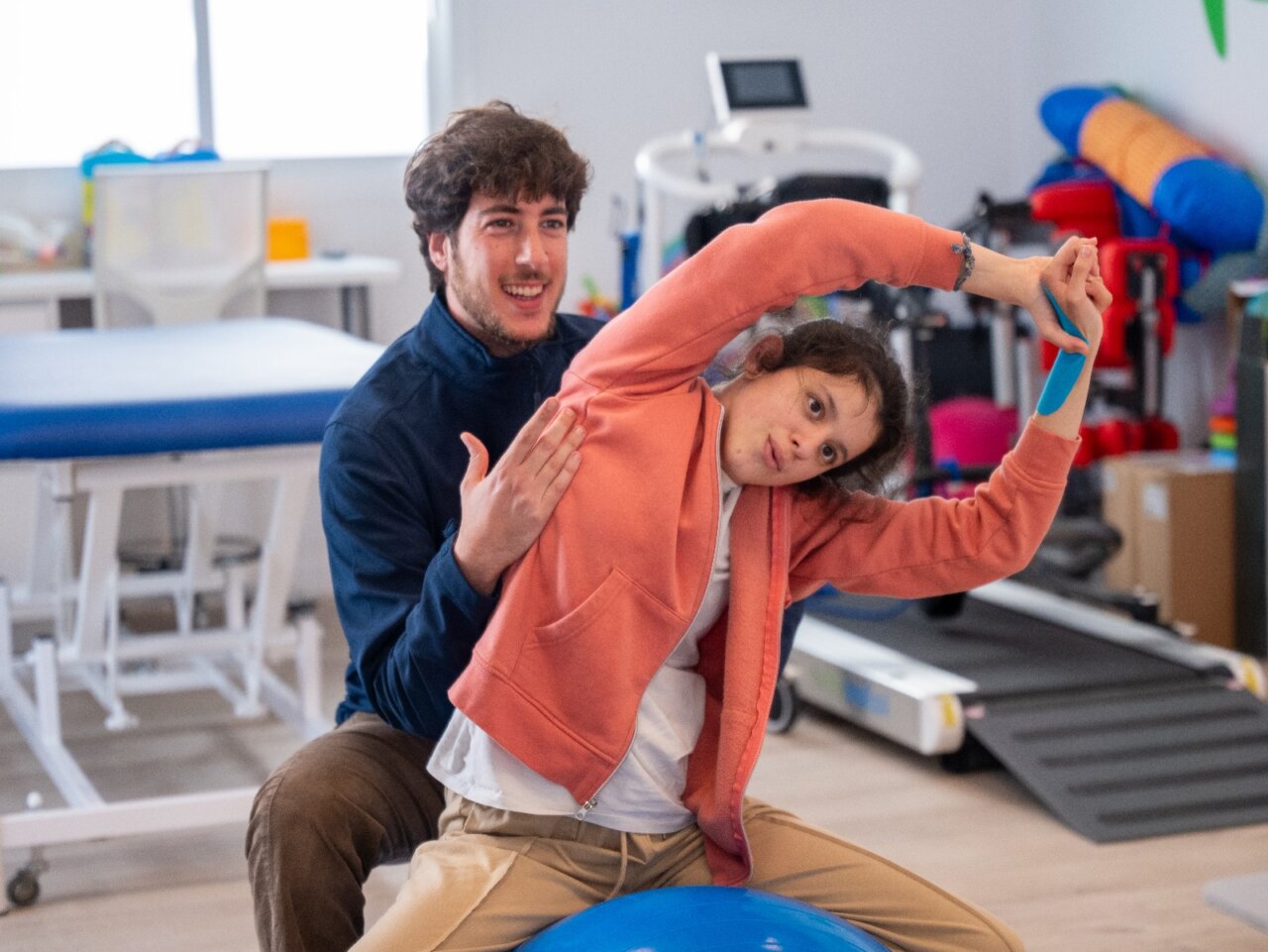
On the Day of People with Disabilities, Carmen Boned, manager of Com Tu! (the former APNEEF) The organization defends that inclusion also begins with the words we use. The historical Pitiusa entity has left behind some acronyms that many did not remember to bet on a name that their own children can pronounce. One that, according to Boned, “says what we want to show with the name, right? That we are like you, that there is a real inclusion even in the name, that the name inspires something, not just an acronym.
The change from APNEEF to Com Tu! comes after almost three decades of work with children and adolescents with support needs in Ibiza and Formentera. The trigger was a grant for digitization that the entity took the opportunity to also review how it presented itself to society.
“When they gave us that grant, with that grant we hired…,” recalls Boned, who explains that the external diagnosis pointed to a very clear weak point: the name. APNEEF was a long, difficult acronym that did not help to explain what the organization does. “A neighbor of Santa Eulària told me: “yes, the place that has those letters that I never remember,” he says.
“We wanted the name to be consistent with the way we have been working,” he sums up. That’s why he insisted that the new name should convey from the beginning the idea of closeness and shared dignity: “That there should be a real inclusion even in the name, that the name should inspire something in you.
The entire organization was involved in this process, including the speech therapists, who gave their opinion on options that were easier for the children to pronounce. The result was Com Tu!, a brand that, in addition to being shorter, encapsulates a direct message: the person with a disability is not “apart”, he or she is with you, is “like you”.
A logo that explains inclusion
The reflection on language was also transferred to the design. The new logo mixes upper and lower case letters, incorporates letters that are “missing a little piece” and plays with the whole.
For Boned, there is a deliberate message there: “Despite our differences, together, it has meaning, right? And we form something important. It is not a matter of hiding the different, but of placing it in a whole in which what prevails is the whole: when you look from afar, what you see is a legible word, not the small “defects” of each letter.
Behind that logo, he insists, is “that of inclusion, that our differences are not so important. When you see it all together, you don’t realize it. A statement of intent on a day that invites us to think about the place of people with disabilities in society.

Families on the edge: housing, breakups and loneliness
From her experience at Com Tu!, Boned describes a landscape in which disability is no longer the only factor that places a family in a situation of vulnerability. In the families that the organization accompanies, there are often several layers of fragility.
“In the end we are talking about people who in some cases have more difficulties, for example, for the issue of housing,” he explains. Ibiza is a particularly hostile territory for those who have fewer resources and for young people: “Society itself is complicated, especially for young people, for people with fewer resources”.
Added to this is a silent social change: there are more and more families without a close network. ” There are families with less family support, who are perhaps foreigners, who have no family that can help them, and that is what worries us most,” she admits. The equation becomes more complicated when there are jobs with long hours, therapeutic services, care and rents that eat up a good part of the income.
In this context, the work of the organization – its therapies, guidance, coordination with schools and administrations – is just one piece of a much larger puzzle. The manager knows that families often arrive “on the edge” and that the diagnosis of disability is only part of the story.

“If you get five in, you can’t spend seven”: the limit for entities
In September, La Voz de Ibiza told the situation of the then APNEEF: difficulties to maintain all the therapies, flight of professionals for housing, 40 users on the waiting list and families anguished at the possibility of being left without care. The expression that remained floating was the one that Boned herself dropped then: “It is sad to leave them with nothing”.
As a result of that piece, she now explains, some interpreted that the entity was on the verge of closure. She clarifies:

More inclusion… and a lot of noise
Asked how she sees inclusion today, Boned is reluctant to be defeatist. She assures that she would like to think that there is
At this point he also introduces a grateful look towards the institutions. He emphasizes that there are more programs, resources and public support than a few years ago, and he values the efforts of the administrations -including the Balearic Government- to promote initiatives for job placement and specific services for people with disabilities. He does not present it as a perfect scenario, but as an advance compared to previous stages in which there were hardly any tools.
However, he also knows that cases that do not add up “make a lot of noise”. Occasional episodes of mockery or violation, or news about services that have not been adapted, can give the impression that everything is going backwards. That is why she insists on the importance of public policies and clear protocols to prevent the rights of people with disabilities from depending only on individual goodwill.
In this tension between progress and shortcomings, the change of name of the organization is almost an anecdote… and at the same time, a sign. It is the commitment of a collective that has been working for years in the field to align the way it presents itself with the way it wants the people it accompanies to be seen.
This,” he says about Com Tu!, “reflects the way we have been working,” not a change of direction. The exercise has been rather to review what they do and “express it outwardly in an easier way that explains a little more what we do”.
On aDay of Persons with Disabilities marked by speeches and declarations, their reminder is simple: inclusion is not only played out in laws or ramps, but also in how we name, in what stories we tell and how we support those who care. And in remembering, like its logo, that although not all letters are the same, “our differences are not so important” when everyone is guaranteed to be part of the whole.