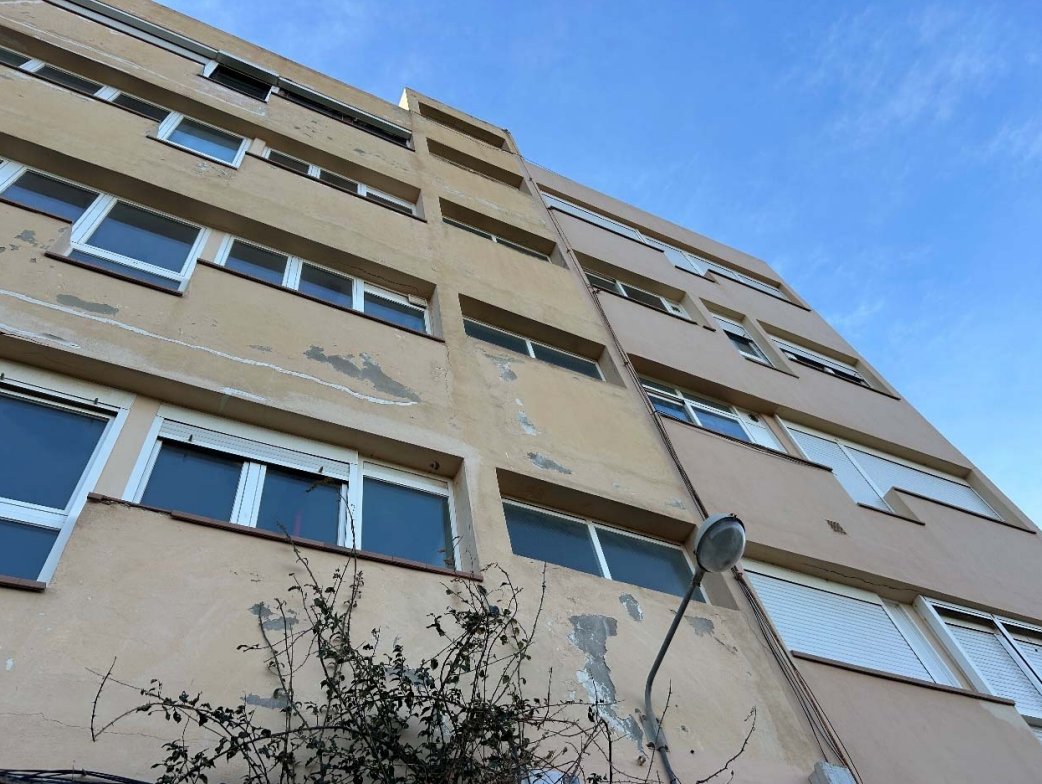
In addition to the technical report which establishes that Block A of the Don Pepe building is “rehabitable” and opens the way to the process of reviewing the declaration of ruin, the legal report commissioned raises a fundamental twist: the fact that the license document for Block A does not appear today does not necessarily mean that the building was built “without a license”.
The report is based on the principle of presumption of legality recognized in the Spanish legal system and developed by case law for cases of administrative error or inactivity.
This thesis is based on the historical processing of file 38/1964, on the existence of two identical applications and two identical projects and on a chain of subsequent actions which, according to the report, can only be explained if the developer and the administration acted with the conviction that both blocks were protected.
The document reconstructs the birth of the complex from the administrative milestones of 1964. On January 29 of that year, both license applications are submitted for block A (“building of 36 apartments and annexes”) in Es Codolar; and for block B for an identical building.
However, there is only record that on March 28 the municipal corporation grants building permit no. 38/1964 for a 36-apartment building in block B.
The report also transcribes part of the application for block A (where the developer expressly requests “the appropriate building permit”) and provides details of location that were in the file, such as distances to the sea and the stream.
Two “clone” projects and a key clue
One of the pillars of the opinion is that these were not two improvised buildings, but two technically twin projects within the same administrative package.
In this sense, the report describes that both projects were essentially identical: same description, surfaces and measurements; same registry 31344; although only the visa number changes.
And he adds a juicy detail: in the scarce documentation of the file, the statistical file of free housing of block A appears, while that of block B does not appear, despite the fact that the file itself cited that file as a condition.
This “mismatch” fuels the hypothesis of administrative confusion due to the similarity of the two projects.
Only one license granted
The report recognizes the essentials: Today, only the license document for Block B is “physically on file”.
But he immediately introduces the fact that changes the story: the 1960-1967 License Record Book is missing, so it cannot be verified whether Block A had a license that was later lost.
In the conclusions, the report clearly states: the license for block A has not been located, and the book where it would have been verified has been lost.
Three hypotheses to explain the “phantom license” of block A
The report puts forward three logical explanations for the absence of the document, without asserting that one is the only possible one.
First, a confusion due to the identity of the projects, where the administration would have treated it as a single project and therefore only formalized block B.
The second is that it was a drafting error on the part of the public employee when drawing up the leave document: it mentions block B and omits block A, without denying it.
-
Countdown for the Don Pepe: neighbors’ assembly convened and expectations are high
-
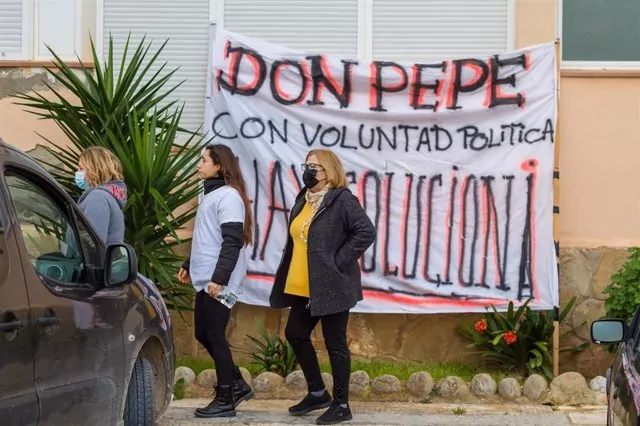
Neighbors barricaded in Don Pepe: “Let everyone see how the houses are after so many years”.
And finally, the possibility that the license was granted for block A but the document was lost. This cannot be verified because of the loss of the license book.
The chain of “subsequent acts” that reinforces the presumption
The report considers that the developer’s subsequent conduct and the paper trail fit poorly with the idea of a clandestine construction site.
First, because on April 13, 1964, the General Captaincy authorized the construction of two identical four-story buildings for apartments, at the request of the Cooperative.
In addition, the cooperative addresses the City Council speaking of “debts of the building permits” in the plural, which the report interprets as a sign that they believed they had (or were processing) two permits.
In addition, the Partial Plan of Es Codolar, initially approved by the City Council, includes block A both in plans and in memory, giving it “a glimpse of legality”.
Meanwhile, in 1965, a deed of new construction “under construction” was granted for both buildings and it is expressly stated that “the corresponding administrative authorizations were obtained “.
Five years later, the horizontal division of the two blocks was formalized.
The legal idea: presumption of legality, silence and legitimate expectations
The report argues that, although administratively a license cannot be granted today “60 years later”, the lack of diligence should not prejudice bona fide third parties (the current owners) and lists arguments for a presumption of legality of Block A.
Among them: extensive or implicit interpretation of the license of block B if it responded to a broader project, and the idea that the administration cannot harm the interested party by its own error; in addition to appealing to legitimate trust.
Continue reading:
-
Don Pepe neighbors’ hope: one more step to reverse the declaration of ruin of block A
-
Don Pepe: “If everything goes well, it will allow us to get out of this nightmare”.
-
Don Pepe: a technician will assess the possibility of lifting the declaration of ruin
-
Govern, Consell and Sant Josep seek legal ways for the return of families to Don Pepe
-
PSOE accuses the Government of “deceiving” the families of the Don Pepe with unfulfilled promises