
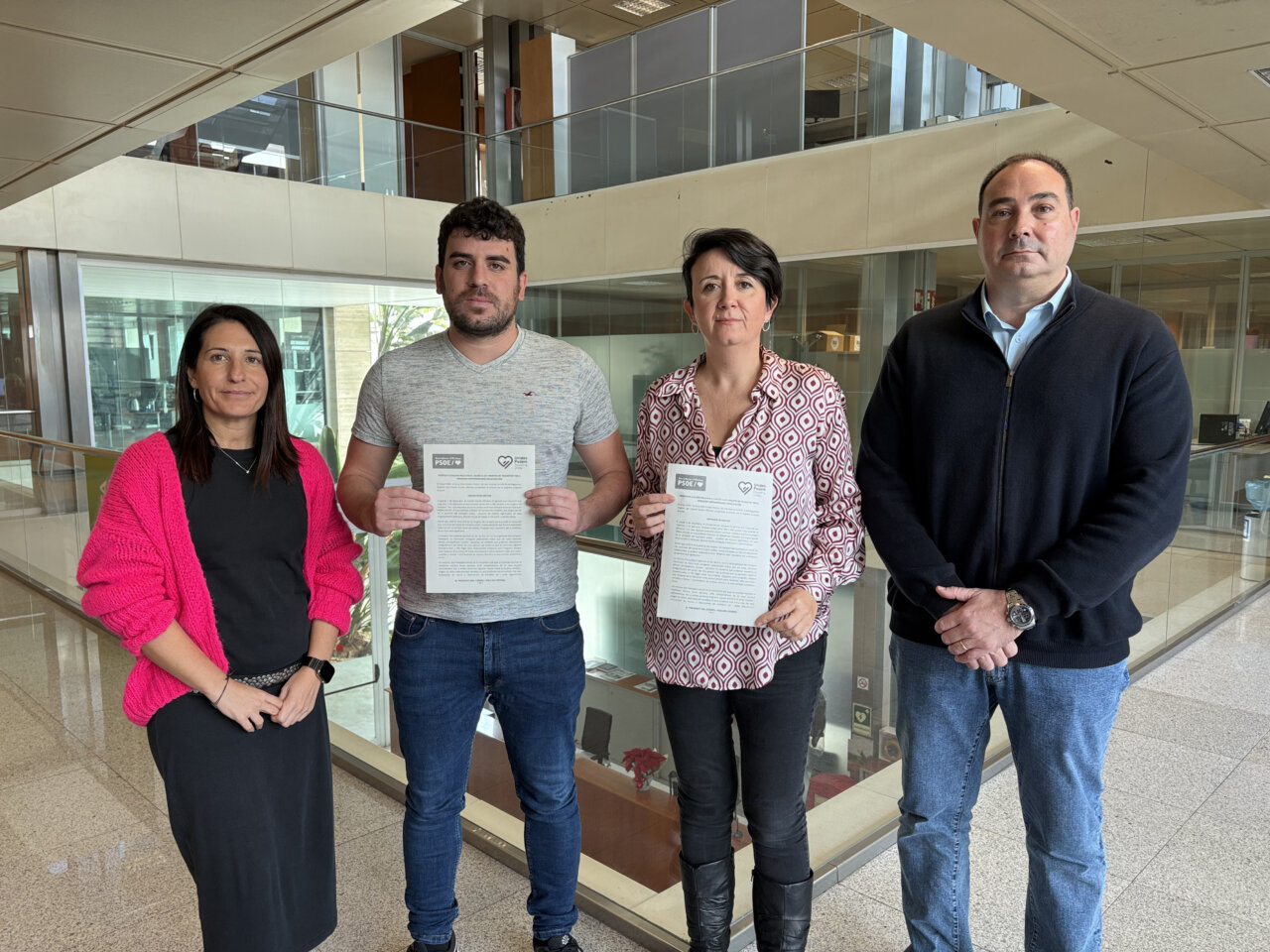
Izquierda Unida (IU) wants to take the first steps to expand its current coalition with Podemos in Ibiza and add Ara Eivissa to a common political space with a view to the 2027 electoral cycle. This has been confirmed to La Voz de Ibiza by the coordinator of IU in the Pitiusas and councilor of the Consell Insular, Óscar Rodríguez Aller, who points out that, although a formal meeting has not yet been held, his formation has already requested a meeting with Ara Eivissa, whose representation in Ibiza is limited to Josep Prats in Sant Josep and the aliquot part of the representation of senator Juanjo Ferrer, and hopes that it will take place during the month of January.
«At the moment there has been no meeting yet, but we from Esquerra Unida wanted to talk to Ara Eivissa to try to expand this coalition to the left of the PSOE,» explains Rodriguez Aller, who stresses that the idea of IU is to move forward «without haste, but without pause«.
Rodríguez Aller clarifies that the approach is not reduced to a short-term electoral negotiation: the initial objective is to open contacts to work already during the legislature on specific issues and explore, from there, if there is a basis for a broader candidacy for 2027. «We have proposed the first contacts also to talk about current affairs and try to work together during this legislature,» he says.
The IU leader describes the state of these talks as «very embryonic«, although he points out that there are signs of mutual interest in the previous informal contacts: «There has been some talk in informal conversations and it seems that there is interest, that is why we are holding the meeting».

The PSOE, in a «second phase»: «We do not rule out anything».
Asked about the possibility that an agreement could eventually be extended to the PSOE, Rodríguez Aller describes a two-step scenario: first, to build a stable IU-Podemos-Ara Eivissa bloc and, later, to evaluate whether this space can open a dialogue with the Socialists.
«At the moment… our approach is first to form a coalition… Podemos, Esquerra Unida and Ara, and then from that perspective see if we can talk to the PSOE, but it would be a second phase later,» he says. And he adds: «We do not rule out anything«.
No one is unaware of the weakness of the PSOE at the moment, haunted by the corruption scandals surrounding the President of the Government, Pedro Sánchez, and the party. Nor are the winds in the PSIB’s favor, with Francina Armengol scorched by irregular contracts during the pandemic and by her role as president of the Congress of Deputies. In Ibiza, the situation is different, although there are no candidates with a clear electoral pull.
No red lines
Unlike other negotiations where the discussion usually run aground in preconditions, IU ensures that the meeting with Ara Eivissa is not raised with «non-negotiable» demands. «We are not going with any red line,» says Rodriguez Aller, who argues that the left-wing space in Ibiza already shares a common programmatic basis and that the differences are limited.

As an example of this closeness, he mentions the institutional reality: «You can see the institutions, as in the City Council of Sant Josep, where Ara Eivissa and Unidas Podemos also share more or less the same principles and the differences are few».
«Let policies be negotiated, not acronym soup or positions.»
Rodríguez Aller insists that one of the main lessons learned from recent electoral processes is not to leave agreements to the last minute. «Above all, to do it with time. Other times, as in 2023, alliances were proposed at the last minute,» he recalls.
For IU, the priority is that the debate focuses on the agenda and not on the brand. «That policies are negotiated, not about acronyms or list positions,» he remarked.
In that line, he defends that closing before the internal phase allows to do the «real work»: to present proposals, to announce candidates and, above all, to connect with the citizenship. «We need to meet with neighborhood associations and make our project known. Not to be talking among ourselves, of what the candidacy is called,» he concludes.