The minimum interprofessional wage (SMI) will start 2026 unchanged with respect to the end of 2025, at 1,184 euros per month in 14 payments, pending agreement by the Ministry of Labor with unions and employers on a new increase after Christmas. The increase, when approved, will have retroactive effect from January 1, 2026.
The SMI 2026 will be set taking as a reference the report of the committee of experts, which has proposed two scenarios depending on whether the minimum wage is taxed or not in the IRPF. Specifically, it recommends a rise of 3.1% if the SMI remains tax exempt, or 4.7% if it is taxed.
These proposals would raise the minimum wage to 1,221 euros per month (37 euros more) if the tax exemption is maintained, or to 1,240 euros per month (56 euros more) if taxation under personal income tax (IRPF) is chosen.
The role of the committee of experts in the increase of the SMI
The SMI expert committee, created in January 2021 and made up of representatives of the government, trade unions and academia, is tasked with ensuring that the minimum wage reaches 60% of the average wage, as set out in the European Social Charter.
For the 2026 update, Labor requested two different proposals, with and without taxation, in view of the possibility that the Treasury will revise the current personal income tax deduction to adapt it to the increase in the minimum wage. Given that the Ministry of Labor defends that the minimum wage should not be taxed, everything suggests that 3.1% will be the starting point of the negotiation.
Clash between unions and employers
This position does not coincide with that of the unions, which are in favor of the minimum wage starting to be taxed. CCOO and UGT have proposed an initial increase of 7.5%, to 1,273 euros gross per month, which would translate into a real increase of 2.7% in net terms, to 1,216 euros per month after taxes. Even so, both organizations have shown themselves open to revising their proposal after learning of the experts’ report.
Employers are on the opposite side. CEOE and Cepyme propose a maximum increase of 1.5%, up to 1,202 euros gross, subject to respect for the rules of absorption and compensation set forth in the Workers’ Statute.
Takeover reform, the main stumbling block
Beyond the amount of the SMI in 2026, the main conflict centers on the reform of the absorption and compensation rules, promoted by Labor and the unions and rejected by the employers.
The president of the CEOE, Antonio Garamendi, has warned that they will go to court if the government limits that salary bonuses -such as seniority or night work- absorb the increase in the minimum wage. In his opinion, this measure could lead to wage increases of up to 20% or 25% in some cases and break collective bargaining agreements.
Increase of the SMI without tripartite agreement
The scenario of disagreement is not new. In recent years, the Ministry of Labor has agreed minimum wage increases only with the unions, without the backing of the employers.
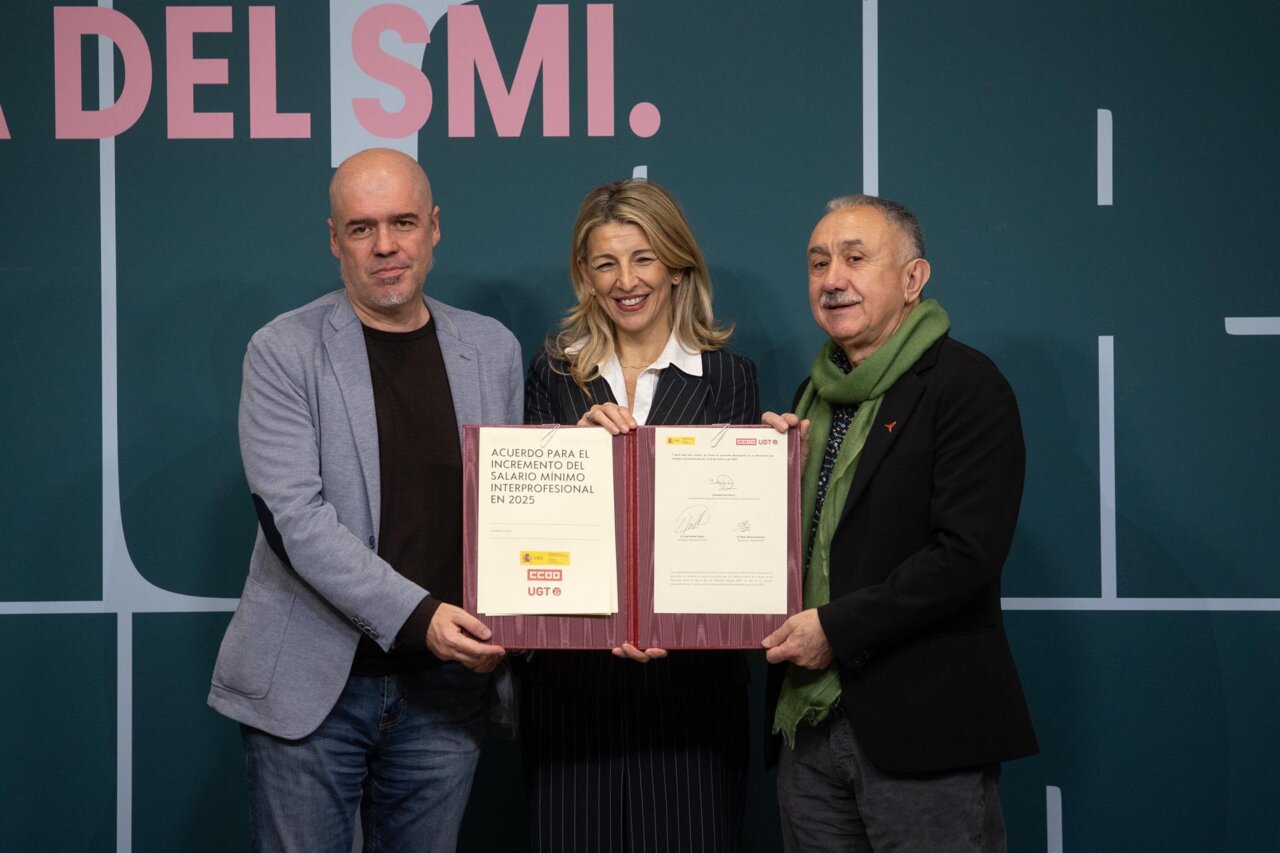
The last increase, approved in February 2025, raised the SMI by 4.4%, to 1,184 euros per month, with retroactive effect from January 1, 2025. It was the fifth consecutive year in which the CEOE was left out of the agreement.
Although the Government is not legally obliged to negotiate the SMI, it must consult the social agents. The final proposal for 2026 will be presented after Christmas, with the aim of closing the agreement before mid-January.