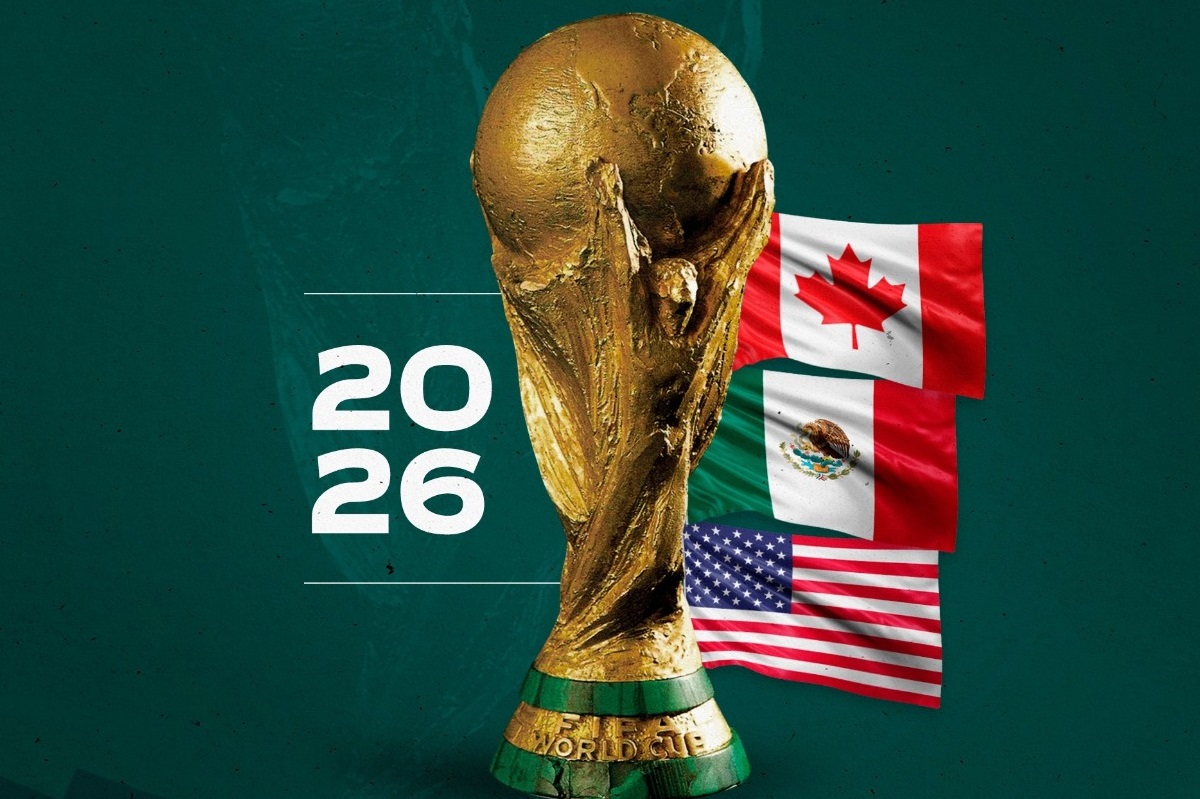
The draw held this Friday in Washington D.C. set the complete map of the 2026 World Cup, the first in history with 48 teams and 12 groups. The ceremony determined the location of each qualified team and also of the six teams that still have to play the intercontinental playoffs, scheduled for March next year.
The detailed schedule (with dates, times and venues of the 104 matches) will be published this Saturday in a FIFA global broadcast.
A World Cup of three countries and emblematic stadiums
The 2026 World Cup will be held between June 11 and July 19 in the United States, Mexico and Canada, an unprecedented format in the history of the tournament. The opening match will be played at the legendary Azteca Stadium in Mexico City, where the home team will open the tournament against an opponent to be confirmed when the schedule is made official.
Mexico will host the World Cup for the third time (after 1970 and 1986) and, in addition to the Azteca, will host matches in Guadalajara and Monterrey. The United States, host for the second time after the 1994 World Cup, will have the largest number of venues: Atlanta, Boston, Dallas, Houston, Kansas City, Los Angeles, Miami, New York-New Jersey, Philadelphia, Seattle and San Francisco. Canada, a first-time organizer of the event, will contribute two venues: Toronto and Vancouver.
The final will be played at MetLife Stadium, located in East Rutherford, New Jersey, one of the most modern venues in North America.
Spain, leader of Group H
The Spanish national team, currently number one in the FIFA ranking, was seeded in Group H, where it will face Uruguay, Saudi Arabia and Cape Verde, a group that combines tradition, physicality and very different styles.
Luis de la Fuente’s team is the favorite to finish first, a key position in the new format: those who top their zone will have a more favorable path to the knockout rounds and will avoid early crossings with other powers.
Uruguay presents the most complex challenge of the group, due to its history, competitive nature and the generational renewal it is going through. Saudi Arabia arrives with the momentum of their recent performances in the World Cup, while Cape Verde (one of the most interesting emerging teams in Africa) may become the surprise of the zone.
For Spain, the combination of opponents means a varied test, with different tactical demands and a schedule that could mark their preparation for the finals.
The 12 groups of the 2026 World Cup

Group A Mexico – South Africa – South Korea – UEFA D
Group B Canada – UEFA A – Qatar – Switzerland
Group C Brazil – Morocco – Haiti – Scotland
Group D United States – Paraguay – Australia – UEFA C
Group E Germany – Curaçao – Ivory Coast – Ecuador
Group F Netherlands – Japan – UEFA B – Tunisia
Group G Belgium – Egypt – Iran – New Zealand
Group H Spain – Cape Verde – Saudi Arabia – Uruguay
Group I France – Senegal – FIFA 2 – Norway
Group J Algeria – Austria – Jordan – Argentina
Group K Portugal – FIFA 1 – Uzbekistan – Colombia
Group L England – Croatia – Ghana – Panama
What’s next: playoffs, fixture and planning
The remaining six berths will be defined in the intercontinental playoffs. Once they are concluded, FIFA will publish the final schedule, which will allow the federations to organize their travel, logistics and preparation.
With 48 countries, 104 matches and a month of competition in three nations, the 2026 World Cup promises to be the biggest soccer event in history. Spain, as top seed and candidate, is already beginning to calibrate its roadmap to the decisive crossings.