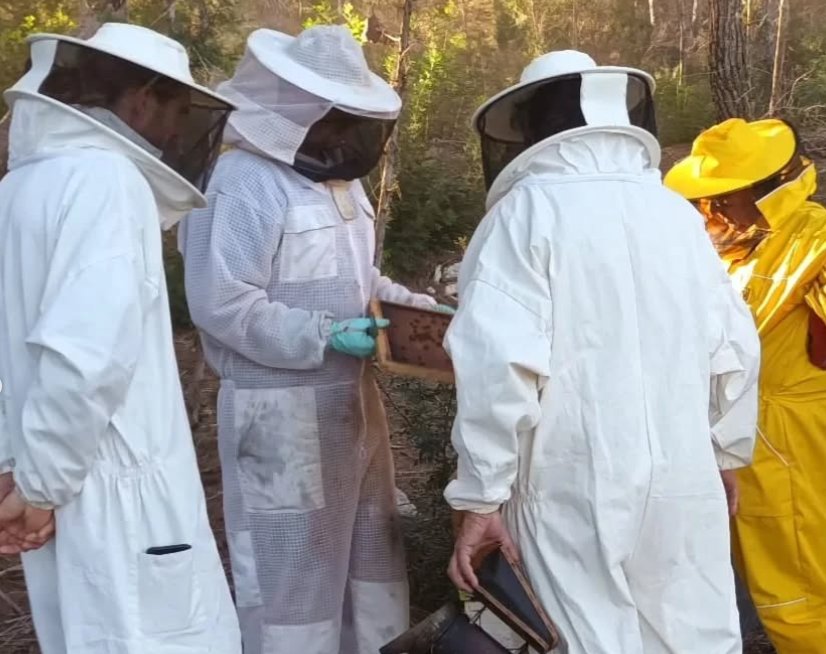
The year 2025 is leaving an unusual picture for the beekeepers of Ibiza: one of the best honey harvests of the last decade coexists with a climate of growing concern about the possible arrival of the Asian wasp and the lack of generational replacement that compromises the future of the sector.
The abundant rainfall in the first months of the year favored an exceptional flowering, unprecedented on the island for ten years. This natural scenario resulted in a first honey harvest five times higher than the previous year, according to IB3.
Producers that in usual seasons barely reached 50 or 60 kilos have reached 250 or even more than 300 kilos this spring. But the initial enthusiasm was soon hit by the extreme summer: high temperatures claimed the lives of 35% of the bee colonies, a loss that has forced the sector to redouble its efforts to save the season closure.
Even so, the autumn once again offered some respite. The rains of the last few weeks have made it possible to recover some of the lost ground, and beekeepers are confident of doubling production in this second harvest compared to the figures obtained in 2024 and 2023. Harvesting begins this week and is being followed with expectation.
Two threats that threaten the sector
Although 2025 could mark a historic production balance, beekeepers warn that the immediate future is far from rosy. The sector is facing a combination of threats that, they warn, could jeopardize its continuity.
The first of these is the imminent arrival of the Asian wasp (Vespa velutina), a bee predator whose expansion throughout the peninsula and other parts of the country is keeping Ibizan producers on tenterhooks. Their presence on the island would be devastating for the colonies and for local honey production.
In addition, the cumulative impact of climate change, the use of pesticides and the progressive reduction of natural flowering areas are making it increasingly difficult for bees to survive.
A generational change that is not coming
But the most silent and profound threat is demographic. Ibizan beekeeping is aging rapidly: the
Currently, 172 people keep beehives in Ibiza, although only 17 of them sell honey. A figure that reveals the almost testimonial character of local production and that, without new beekeepers, could be further reduced in the coming years.