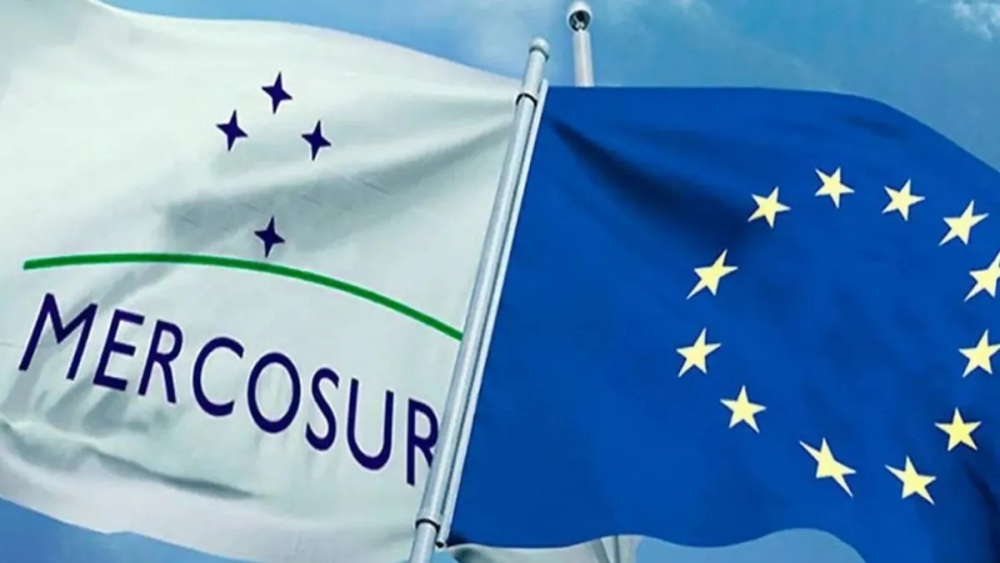
After years of intense negotiations and discussions, the European Union has given the green light to the trade agreement with Mercosur. This decision, taken by qualified majority despite the reluctance of some European partners, represents a historic turning point in EU trade policy.
For Spain, the news has a special weight: on the one hand, it opens doors to a market of 260 million people; on the other hand, the primary sector fears that foreign competition could jeopardize its viability.
A market of opportunities for the agri-food industry
Spain maintains an intense trade relationship with Brazil, Argentina, Uruguay and Paraguay, although the balance is currently in deficit. We export products worth 463 million euros, but import more than 4.1 billion: the agreement seeks to balance this balance by eliminating the tariffs that currently burden our sales, which range from 10% to 35%.
The main beneficiaries on Spanish soil will be producers of olive oil, wine, spirits and dairy products. Confectionery and processed foods will also gain competitiveness in a South American bloc with rising purchasing power.
However, companies will have to be patient: the disappearance of these fees will be gradual and, in some cases, the process of full opening will take up to a decade to complete.
The primary sector: the focus of concern
Spanish farmers and stockbreeders have received the news with great concern, and the main fear is the massive entry of beef, poultry, rice and ethanol from countries such as Argentina or Brazil, whose production costs are lower and whose sanitary and environmental requirements differ from those of Europe.
Although the agreement establishes limited quotas and a gradual opening, the livestock sector believes that even a moderate volume of imports could depress domestic prices. On the contrary, the Spanish government maintains a more optimistic view, arguing that the agreement will facilitate access to essential raw materials, such as soybeans, vital for the manufacture of animal feed, which paradoxically could help to lower costs in industrial livestock farming.
Safeguards and the citrus case
To calm tempers and unblock approval, Brussels has included a system of “agricultural safeguards”. This mechanism allows the European Commission to intervene and reimpose tariffs if serious damage is detected on the internal market.
A clear example is that of citrus fruits: if imports rise by 5% and prices fall by the same amount for three years in a row, Europe will be able to stop the entry of produce. However, from the Spanish countryside this shield is viewed with distrust, recalling that in previous agreements these tools have not always worked with the speed or efficiency that the farmer needs.
The two sides of the decision
Beyond the numbers, this agreement is an important piece for geopolitical relations: for Spain, strengthening ties with Latin America allows it to diversify suppliers and reduce dependence on other global markets at a time of great international instability.
The impact of the Mercosur agreement on Spain is not linear: while the processing industry with strong brands sees an opportunity for expansion, the primary sector feels under pressure. The success of this agreement will depend, to a large extent, on the adaptability of Spanish companies and on whether the EU’s protection mechanisms work when the countryside needs them.