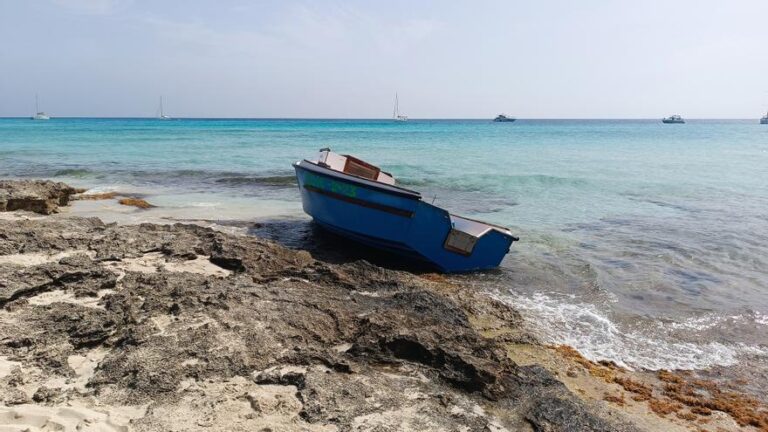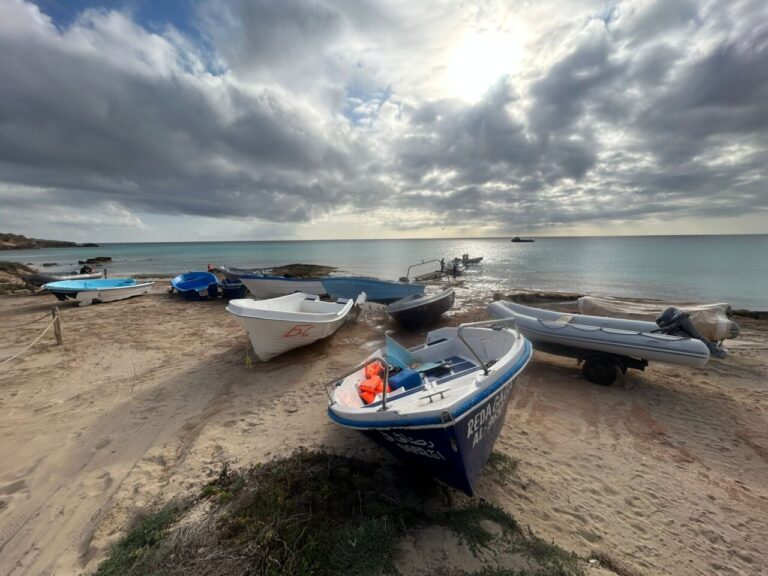


The Provincial Court of Palma will judge next Friday two men accused of skippering a patera that arrived in Formentera in June last year, a cause for which each faces a sentence of seven years in prison, according to the prosecution’s indictment. The procedure is framed in a crime against the rights of foreign citizens, according to the Prosecutor’s Office.
-
Seven skippers arrested after dangerous crossing with illegal immigrants in a fishing boat and pateras bound for Ibiza
-
The case of the fishing boat detained in Ibiza confirms the theory of the use of mother ships for illegal immigration
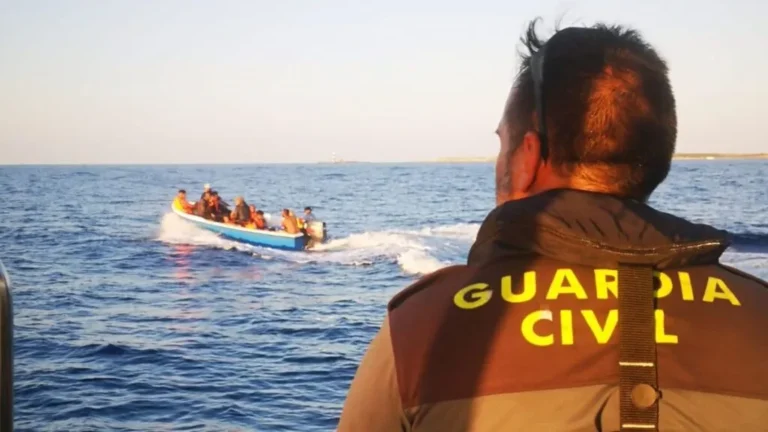
According to the prosecutor’s account, the boat left the Algerian coast of Tipassa in the early hours of June 19 and reached Formentera around 4 p.m. the following day, after a crossing of more than 24 hours. The arrival took place off the coast of the island, one of the usual points of entry into the Balearic Islands.
On board the skiff were 16 migrants, including two minors, who had paid between 6,000 and 8,000 euros per person to make the journey from Algeria to Formentera. The Prosecutor’s Office underlines the lucrative nature of the operation, an extreme that aggravates the criminal responsibility of the accused, according to the indictment.
The Public Prosecutor’s Office argues that during the crossing the lives of the occupants were seriously endangered, since the skiff did not meet the minimum maritime safety conditions and lacked life-saving elements, a circumstance that increased the risk at sea. This type of precarious trips has been repeatedly warned by the authorities in the Balearic archipelago.
Roles in the boat
As for the distribution of functions, one of the accused was in charge of steering the engine, aided by a GPS device, while the other was in charge of refueling, using part of the fifteen or so 30-liter gas bottles that the boat was carrying. The Prosecutor’s Office considers the active participation of both in the crossing to be accredited.
The indictment adds that none of the defendants had the necessary knowledge or training to steer a boat, a factor that, in the prosecutor’s opinion, increased the risk for the migrants during the navigation to Formentera.