

The president of the Consell de Ibiza, Vicent Marí (PP), has decided to get directly involved in one of the most complex and sensitive debates for the present and future of the island as is the housing crisis with a speech focused on two axes: limitation to free housing and all efforts aimed at housing for local people.
He has done so from the institution with the least competences in the matter and taking an obvious political risk, a few months before the May 2027 elections, by putting on the table measures that break with the classical liberal ideology of his party and that involve intervening in the real estate market.
It has much to lose and little to gain in a move that breaks with the short-termism that characterizes the political class of recent times. In a way, he is repeating the move to limit the entry of vehicles and setting the pace of the discourse of the Balearic PP.
The move was not improvised. Marí intentionally took advantage of the traditional end-of-year interviews granted to Diario de Ibiza and Periódico de Ibiza y Formentera to launch messages of high political voltage -urban moratorium, although he was careful not to use a term that raises blisters among his ranks, limits to growth, residents first, Limited Price Housing- with a clear objective: to take the bull by the horns .

In his institutional speech recorded in Sa Coma he already slipped some ideas, but without as much depth as the limitation to the construction of free housing.
No closed plan, but with a calculated maneuver
Sources close to the president insist that there is no plan designed nor a closed package of measures behind these statements. There is no timetable or definitive roadmap. What does exist is a conscious political maneuver that forces all the agents involved to take a position: city councils, professional sectors, political parties and higher administrations.
The reaction has been immediate. The PSOE of Ibiza has accused Marí of inoperativeness and of launching «empty words», being dismayed by a speech that was not expected from the PP.
United Podemos and Vox, on the other hand, have not made any statement so far.
In parallel, some city councils have shown their willingness to explore a possible urban moratorium, while architects and builders have expressed their outright rejection of any suspension of free housing, as reported by Periódico de Ibiza.
After Reyes, contacts with social agents and opinion leaders will be intensified. There will also be collective meetings through the social dialogue mechanisms.
Housing for local people
The need that Vicent Marí has referred to is to provide housing for residents. He has not been the only one. Coincidence or not, in her New Year’s institutional speech, the president of the Balearic Government, Marga Prohens, placed as a priority the need to guarantee housing for local people.
And the housing problem no longer affects only vulnerable groups, but increasingly residents, middle class families, skilled workers and young people born or rooted on the island who can not live where they work. Ibizans who can not return or Ibizans who leave.
A market misaligned with the island’s reality
The diagnosis handled by the president of the Consell is shared by many of the actors involved: housing can jeopardize the successful model of Ibiza.
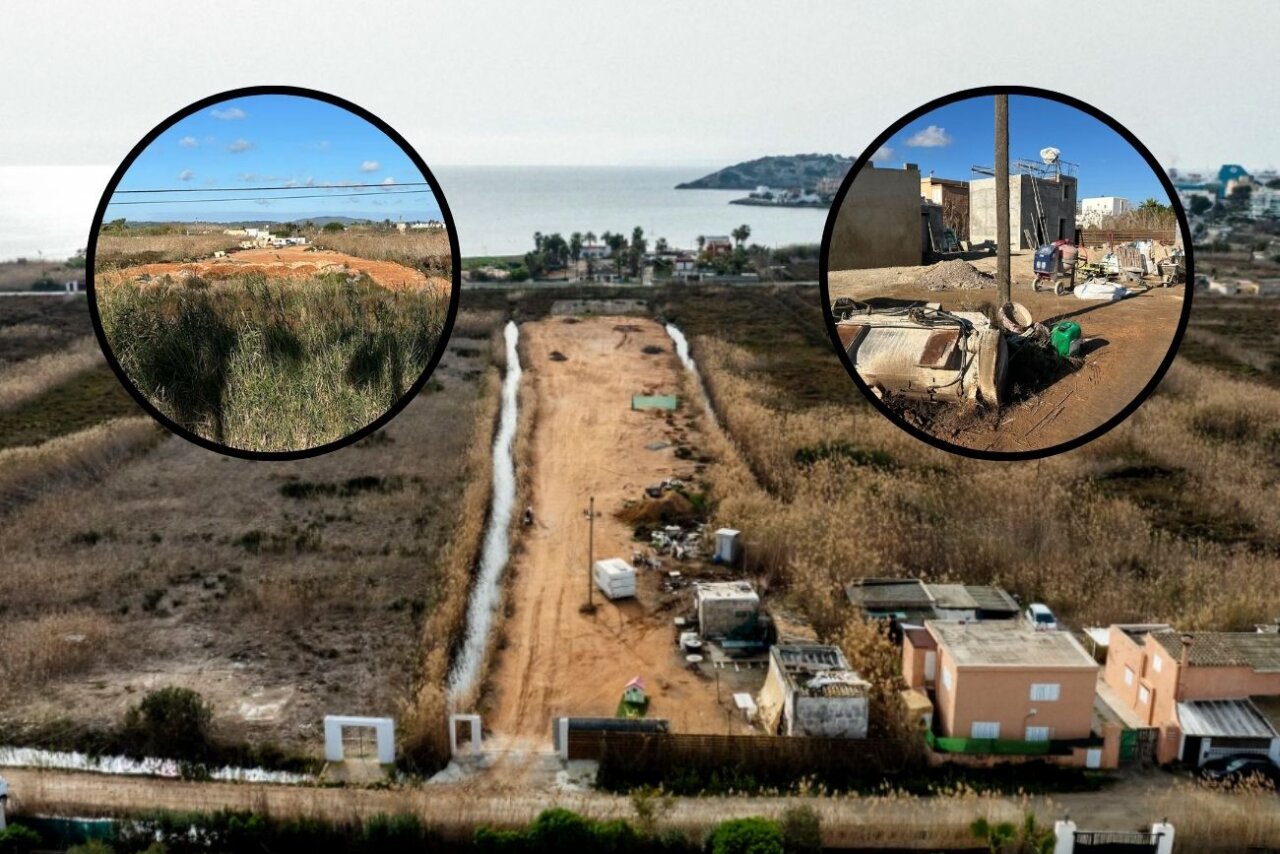
Free housing is nowadays accessible almost exclusively to the upper classes from countries with a higher per capita income, and in many cases it becomes a second residence.
The prohibitive cost of land, the high construction costs and the legitimate expectations of the promoters make the prices of apartments go through the roof. Both for buying and renting.
The luxury housing that is being built does not solve the housing problem and, far from relieving the pressure, consumes resources and public services – water, health, security – for which the island has neither sufficient capacity nor a stable labor force.
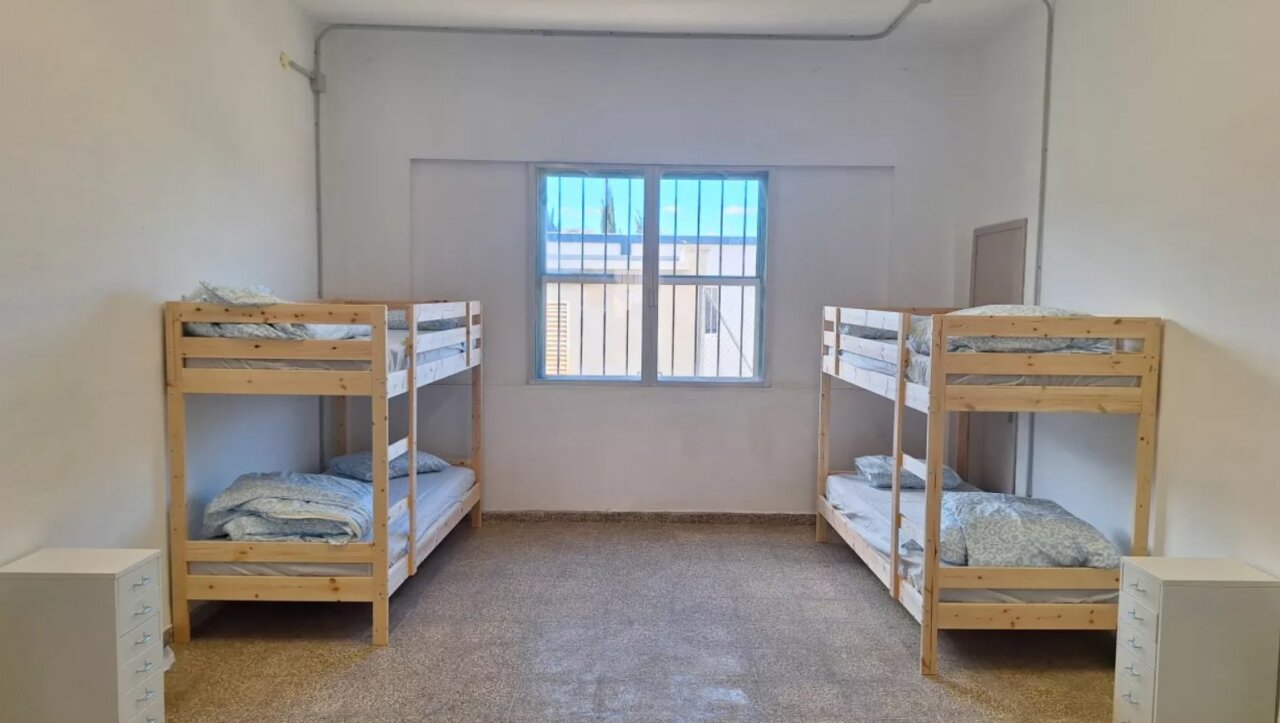
The debate, sources familiar with the Consell’s approach underline, is not about nationalities, but about real use and roots: in a limited territory, every house that is not destined to habitual residence is one less house for those who live and work in Ibiza. And there are problems to find labor, both qualified and unqualified. And unworthy shantytowns, also in winter.
All sectors are suffering from a lack of labor due to the increased needs that have resulted from the transformation of the island towards a model of visitor with greater purchasing power. The increase in the category of hotels, restaurants and nightclubs has meant a greater demand for labor. And for more months.
This reality also affects teachers, health care providers and security forces.
For this reason, the president’s slap on the wrist has affected businessmen and public administrations.
A physical limit and a clear warning
There is a generalized idea that the market is not capable of solving the problem on its own and that unlimited growth is not possible because this only makes the problem worse, since the housing that is built does not meet the needs.
For this reason, the president spoke of limiting the construction of free housing and prioritizing Affordable Housing.
Beyond the price or urban planning, there is a factor that conditions any scenario and that cannot be ignored: Ibiza does not have water to continue growing. The proof is the imposition of Water Resources to the growth contemplated in the General Urban Development Plan (PGOU) of the city of Ibiza.
The solution, via a fourth desalination plant, will take a long time. A decade is the estimated time for it to come into service.
Illegal tourist rentals
Measures such as the fight against illegal tourist rentals, although necessary, have not had a significant effect on the residential market on their own. In a way, it has been a disappointment, since there were high hopes that these homes would be destined for the residential market, something that, at least for the time being, has not been the case.
It cannot be overlooked that the difficulty in attracting workers ends up causing an inflationary spiral that reduces the competitiveness of the destination, since labor costs increase through salaries or through housing paid by the employer. And it feeds tourism-phobia, another risk to be taken into account.
Not to mention the barrier to importing talent that has the ability to decide where to work.
The competence labyrinth
The debate is also taking place in a complex legal and jurisdictional framework. The European Union does not allow prohibiting the purchase of homes by EU citizens or applying discriminatory tax measures.
Municipalities are responsible for urban planning through general plans and subsidiary regulations, which take years to change. They can also increase heights and facilitate the conversion of premises into dwellings.
The Consell can act on the PTI, but it is the tool with the least real impact on this problem.
The Balearic Parliament has the margin to modify the Housing Law and the Government to approve decrees, while the central Government, with a great capacity for intervention, remains practically absent from the debate, weighed down by its parliamentary weakness and by an ideological approach centered on the tenant versus the landlord and which avoids reinforcing legal security in the face of non-payment and squatting so that vacant housing can be put on the residential rental market.
The housing problem is not exclusive to Ibiza, although in peninsular territories the perfect storm does not occur, since it is always possible to build a few kilometers further away from the city center for popular classes as it has been done all my life. This is one more issue on Pedro Sánchez’s table.
Here the role of the Consell de Ibiza is more political than effective. It is the government of the island but without regulatory capacity or competences.
What is and what is not on the table
According to La Voz de Ibiza, the presidentdoes not plan to intervene in the single-family or multi-family housing market in certain high purchasing power areas.
The focus is on the residential market where it is still possible to act and, especially, on the need to build housing for the middle class, both for rental and purchase.
The administration, Marí assumes, cannot solve the problem alone. That the IBAVI builds rental housing for the most disadvantaged groups is necessary, essential in fact, but absolutely insufficient. The vacuum is in the middle class, expelled from the free market completely and to which the administration is not giving answers.
In fact, it is incapable of responding alone. It needs the involvement of developers and builders, sectors that have to make money by building blocks of subsidized housing.
An uncomfortable but unavoidable debate
Although he has not said so publicly and the president is reluctant to do so, all roads lead to a moratorium on free housing so that the resources of the construction sector can be focused on the construction of Limited Price Housing in plots qualified as such or requalified and in transition zones, as provided for in the regional regulations approved by the Government of Marga Prohens.