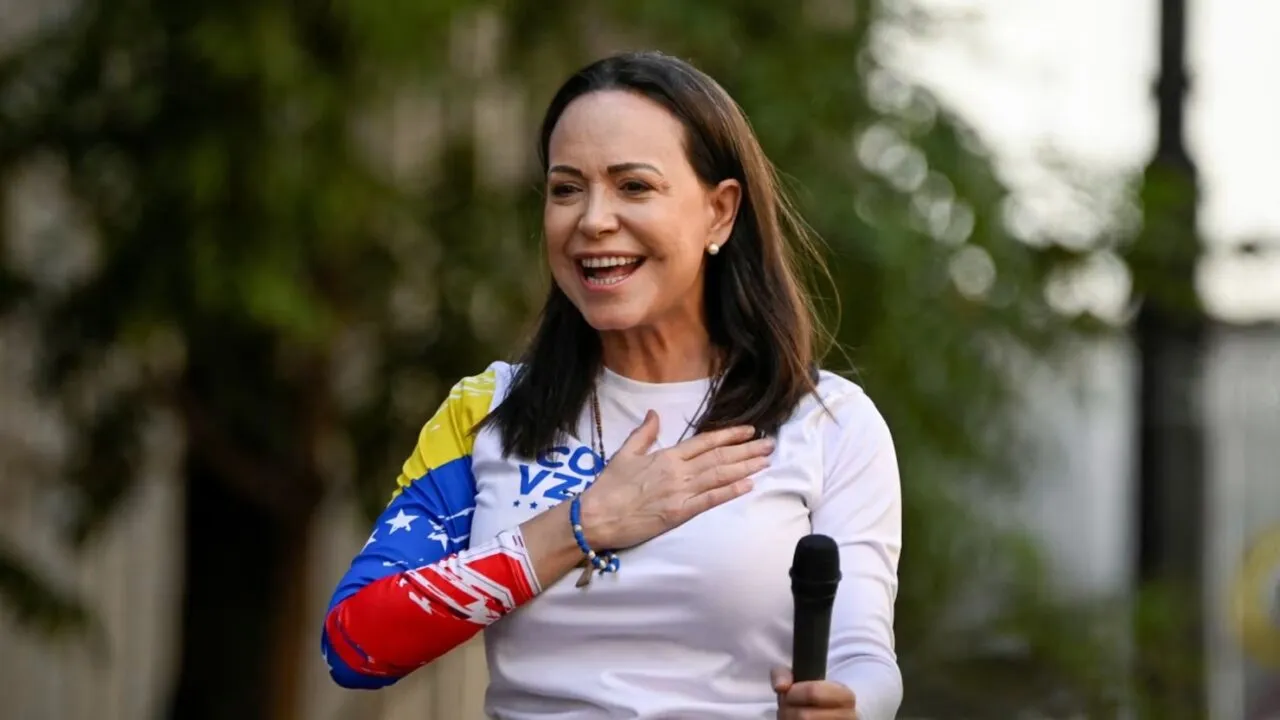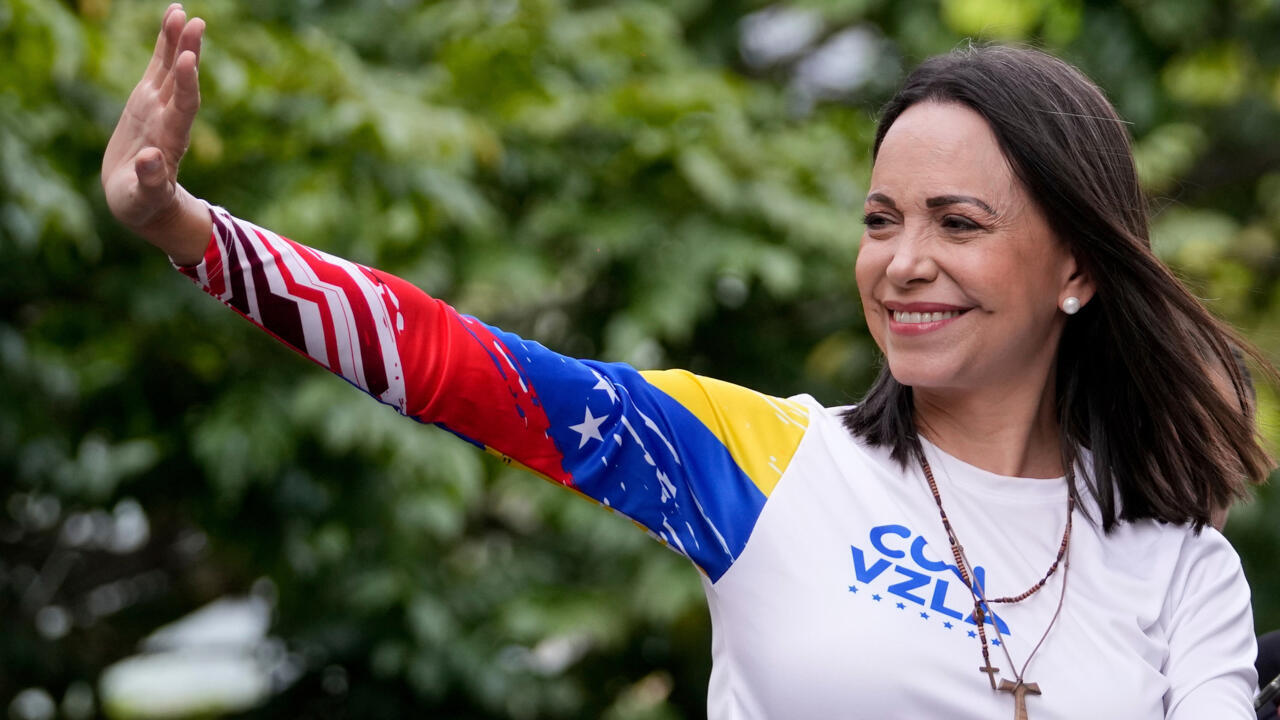
The expectation in Norway grew to the maximum this Tuesday after the Nobel Institute cancelled, without further explanation, María Corina Machado’s press conference.
The Venezuelan opposition leader, winner of the Nobel Peace Prize 2025 and in hiding for more than a year, was expected in Oslo for her first public appearance since January. However, her whereabouts remain an enigma.
An uncertain presence in the Norwegian capital
The conference was scheduled for 1 p.m. local time, but was first postponed and then suspended, fueling uncertainty as to whether Machado managed to leave Venezuela. The Nobel Institute’s spokesman, Erik Aasheim, maintained the suspense by stating that “it was very difficult for her to come to Norway”, although he reiterated that they expect her presence at the official award ceremony this Wednesday.
Last Saturday’s announcement, in which the Nobel Institute anticipated the leader’s participation, had triggered speculation that she might come out of hiding to receive the award in person.
However, Machado’s family, now settled in Oslo, claims not to know where he really is.
Tension and excitement in Oslo: supporters await historic moment
In the Norwegian capital, the Venezuelan community is living hours of anxiety. Dozens of sympathizers, exiles and Machado’s relatives are waiting for signs of the leader, whom they consider a symbol of democratic resistance.
Her mother, Corina Parisca, expressed her wish for her daughter to appear at the ceremony: “I pray every day for her to be with us tomorrow”, she said upon her arrival in Oslo. Emotion is mixed with fear: many wonder if the leader will be able to return to Venezuela without facing arrest.
Magalli Meda, Machado’s former campaign manager, assured that the opposition candidate “does not contemplate exile” and that any departure from the country would be temporary. Meanwhile, opposition candidate Edmundo González Urrutia also traveled to Oslo from Madrid to join the team.
The ceremony will be attended by Latin American heads of state invited by Machado herself, among them Javier Milei (Argentina), José Raúl Mulino (Panama), Daniel Noboa (Ecuador) and Santiago Peña (Paraguay).
A Nobel Prize winner reignites Venezuelan political conflict

The award, granted to Machado for her defense of democracy and her struggle for a peaceful transition, generated an immediate reaction from Chavismo. The ruling party called for a big march for this Wednesday in Caracas, while its leaders hardened their discourse against the Nobel Peace Prize winner.
The Minister of the Interior and number two of Chavismo, Diosdado Cabello, described the award as an “auction” and assured that he knows where the opposition leader is. He also reiterated that, if she leaves Venezuela, she will be considered a “fugitive”, as Attorney General Tarek William Saab had already warned.
Cabello also took the opportunity to criticize the leaders invited to Oslo, especially Panamanian President Mulino, whom he accused of responding to US interests. At the same time, he hardened his position against international organizations such as the International Criminal Court, whose technical office in Venezuela will be closed due to lack of cooperation from the government.
A convulsed regional scenario
The awarding of the Nobel Prize coincides with a moment of geopolitical tension in the Caribbean, where the United States carries out military operations that Chavism uses as an argument to denounce external interference.
Analysts such as Michael Shifter warn that, although the Nobel Prize has reactivated international attention on the Venezuelan democratic cause, sustaining the momentum will be difficult without concrete progress in the political transition. The population, mired in a chronic economic and humanitarian crisis, is showing signs of fatigue.
Will Machado appear at the ceremony?
The biggest question remains unanswered: is María Corina Machado in Oslo? With only hours before the award ceremony, the Nobel Institute avoids confirming it and her entourage maintains absolute secrecy.
The arrival of international leaders, the emotional atmosphere among the exiles and the silence surrounding the leader turned the Nobel Prize ceremony into a scenario charged with political symbolism.
If Machado appears publicly, it will be a historic turning point. If he does not, his absence will mark another chapter in a struggle that continues to be waged in hiding, in exile and under international pressure.