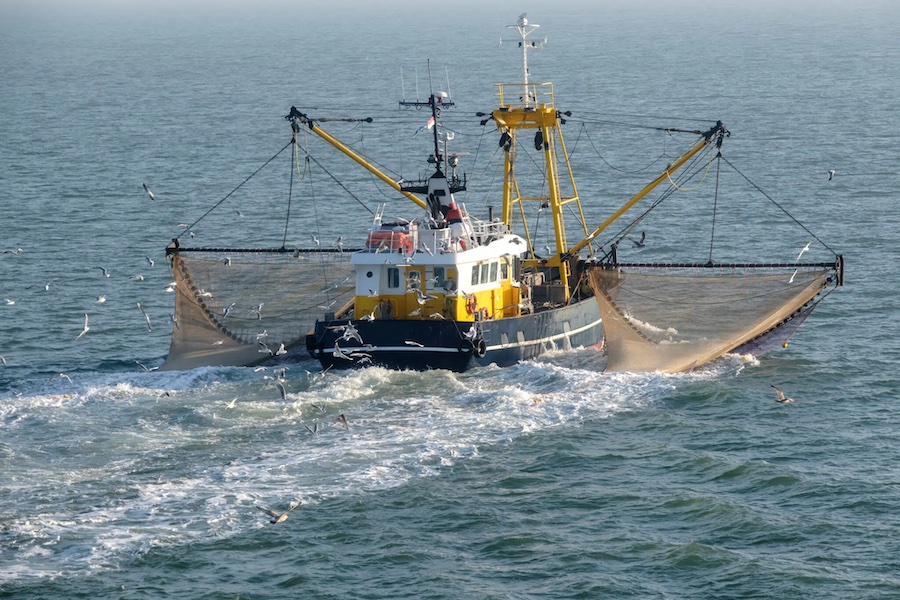
The Balearic Federation of Fishermen’s Confraternities (FBCP) described Tuesday as “insulting, immoral and indecent” the proposal that the European Commission has put forward to reduce the fishing days of the trawling fleet in 2025, a cut that would place the average activity in only 9.5 days per boat, compared to the 27 authorized this year. The sector argues that a cut of such magnitude would break the balance between conservation, economy and food sovereignty.
An approach that comes after years of adjustments
The FBCP regretted that the proposal is being made public after DG MARE director general Charlina Vitcheva acknowledged the effort made by the sector in the last six years, especially in reducing its fishing effort and in the positive results observed in the resources. “It looks like one more stab at a sector that makes trade-offs to survive,” the federation pointed out.
It is worth remembering that exactly one year ago, the European Commission proposed a 79% reduction in trawling days in the Mediterranean, leaving the fleet with 27 days for the whole of 2025. That approach generated criticism in Spain, Italy and France and opened an intense debate on the economic and social impact of trawling. The current proposal – communicated this week to the fishermen’s associations – goes even further along those lines, reducing the planned activity to less than ten days per year.
Trawling sustains 70 % of catches in the Balearic Islands
The barques de bou provide about 70% of the catches in the archipelago, so the cut would have direct consequences on the availability of fresh fish and the operation of the fish markets. From the federation warned that without this modality neither the marketing chain nor the fishermen’s associations, which depend on a minimum volume of activity to function, are maintained.
The president of the FBCP, Domingo Bonnin, said that the sector is facing a proposal that “would almost make the viability of fishing activity impossible”, given the magnitude of the proposed reduction. The cut, according to the federation, would affect transversely to sailors, shipowners, marketers and auxiliary services, leaving many of them without sufficient workload to sustain their structures.
The sector claims that it has met the requirements since 2019.
The federation recalled that, since the implementation of the multiannual plan for the western Mediterranean, the fleet has reduced by 50% the days of work and has accepted closures of fishing areas, a process they describe as “continuous and costly adaptation”. “All this seems insufficient to the Commission,” they lamented, arguing that analyses in recent years indicate that fish and crustacean stocks are being exploited at sustainable rates.
The sector requests the recovery of an activity scenario of around 180 days a year, a figure they consider compatible with conservation. They also demand the withdrawal of the catch limitation for red shrimp, understanding that it adds an additional burden to an already very restricted fleet.