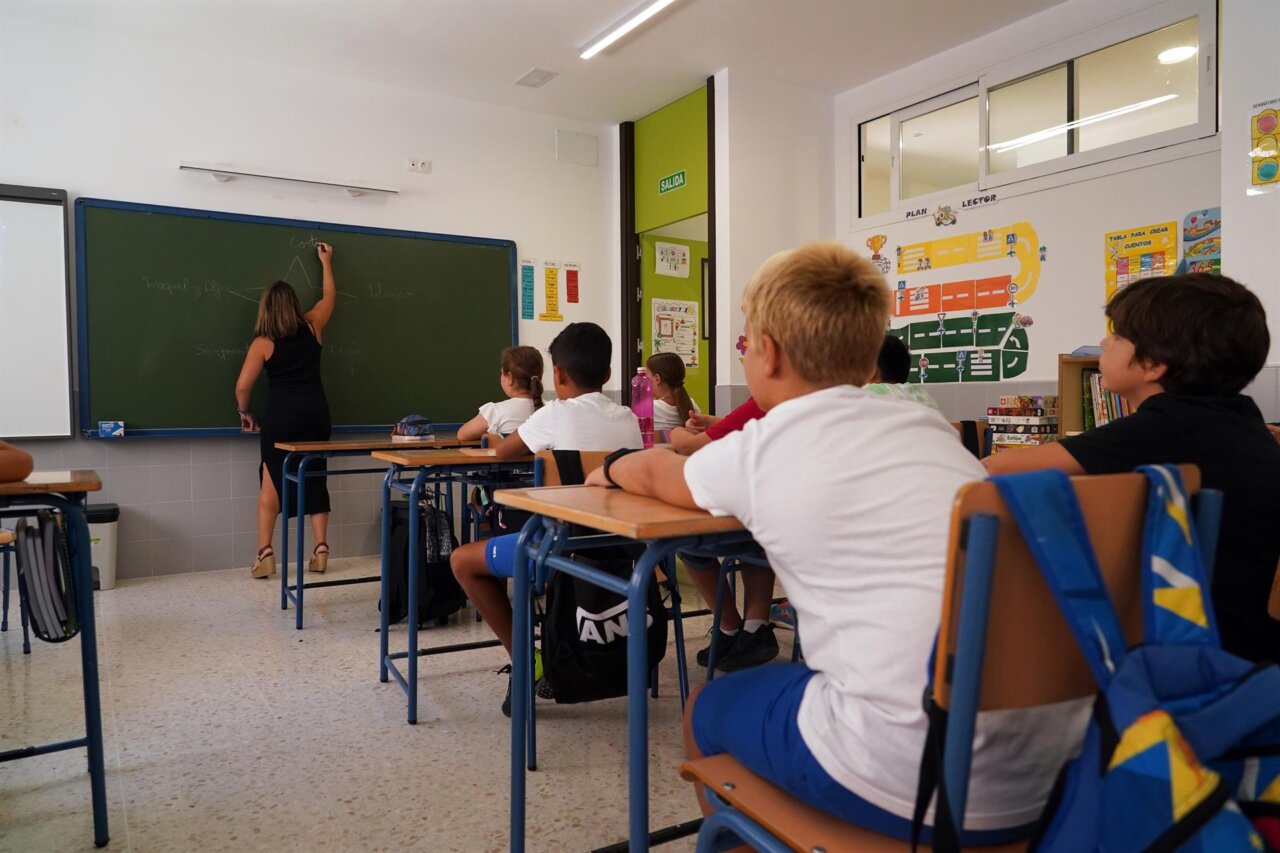
Confinement” has once again been the order of the day in UK schools, but this time not because of COVID-19, but because of an aggressive mutation of seasonal influenza, the H3N2 subvariant subclade K, which has resulted in record numbers of hospital admissions and has forced several schools to close temporarily. The most striking case has occurred at St Martin’s, Caerphilly (Wales), where more than 250 pupils and staff members have fallen ill simultaneously.
What might have seemed a routine health response has quickly become a matter of the utmost political sensitivity. Nothing related to education is discussed in the UK anymore without the weight of what the COVID pandemic has left as a legacy: social fracture, emotional burnout and institutional trauma that Downing Street is trying hard to avoid.
The government’s position and political pressure
The government has indicated that schools should not close except in “extreme circumstances”. That message was aimed at both educational communities and a public uneasy about a situation that is “dangerously” reminiscent of the early months of 2020, when schools closed completely in the midst of the COVID pandemic.
A spokesman for the Executive insisted on the importance of keeping classrooms open: “Class attendance is critical for children’s life chances”. At the same time, he warned that “closures should be the last option”, mixing health data with veiled warnings and evident political anxiety at the possibility of repeating drastic measures.
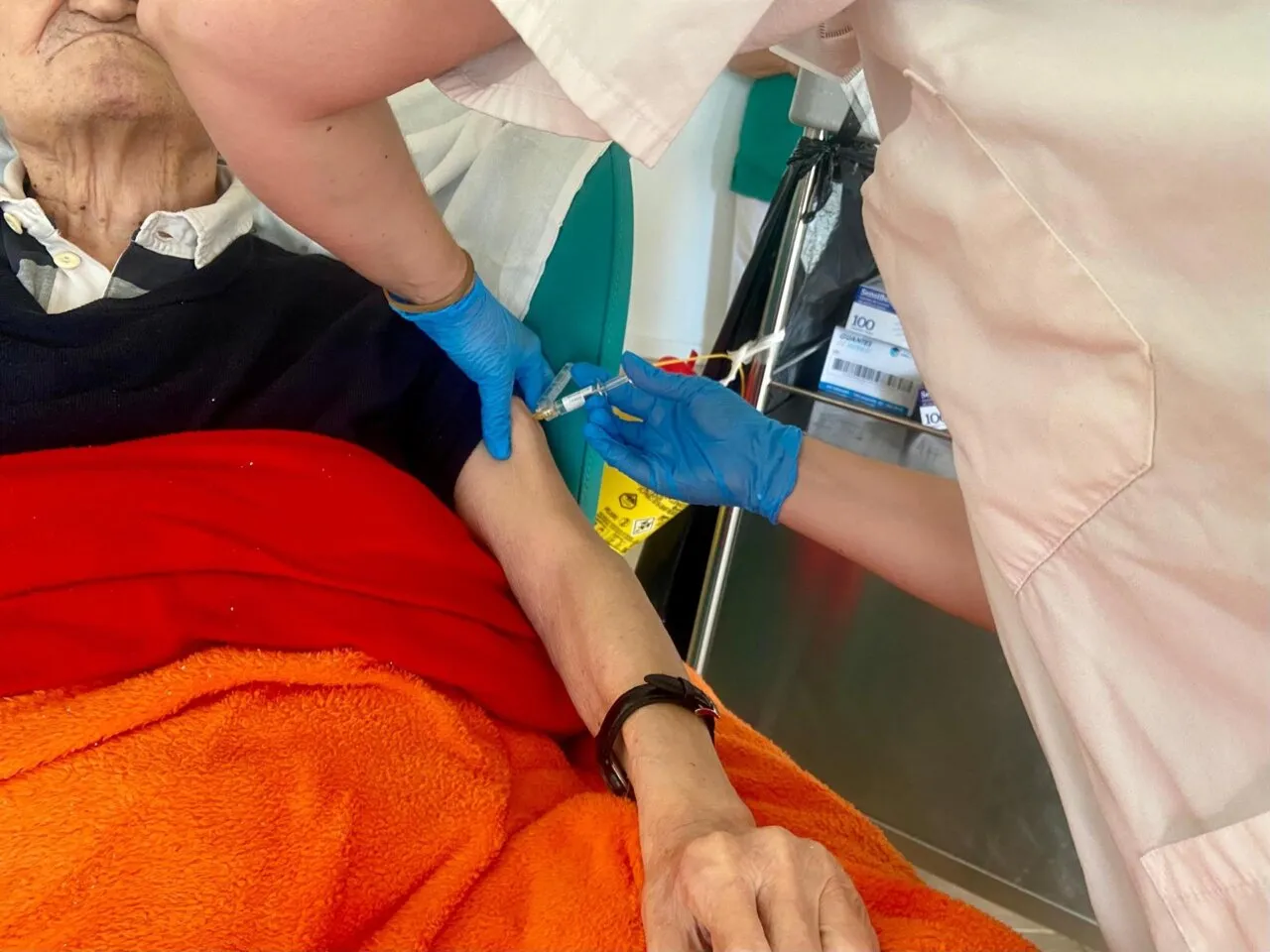
A more contagious virus, but with an effective vaccine
The H3N2 subvariant subclade K has caused a sudden and widespread upsurge of flu-like symptoms: vomiting, high fever, diarrhea, headache and exhaustion have been frequently described among patients. This aggressiveness has led to an unprecedented increase in hospitalizations at this time of year: 1,717 patients on average every day at the end of November, the highest since comparable series have been available.
Experts have explained that the virus “has drifted slightly this year”, which increases its contagious capacity. Despite this,
Reactivation of measures: from the classroom to the cancellation of activities
Under pressure from the increase in cases, some principals have reactivated mechanisms put in place during the pandemic. Classes have been cancelled, assemblies suspended and even Christmas performances cancelled. Images of students leaving partially closed schools have dominated local television and fed the ‘déjà vu‘ narrative.
At St Martin’s, with more than 250 cases, its director, Lee Jarvis, ordered a preventive closure to carry out a thorough disinfection and reduce risks: “(We) want to break the chain of contagion,” Jarvis justified, describing a scenario of “significant outbreaks”.
Downing Street fears and open pandemic wounds
Although health competence in the UK is devolved, the central government, led by Keir Starmer, fears that an escalation of regional school closures could be interpreted as a return to a model that the country has critically reviewed over the past two years. The COVID Inquiry, an official inquiry into the management of the pandemic, concluded that the education closures “brought ordinary childhood to a grinding halt” and “could have been avoided altogether” if action had been taken earlier and with greater strategic coherence.
The concern of the Executive is not only health, but also political, social and economic. Post-confinement studies have shown a deterioration in the mental health, social interaction and language development of children and adolescents, especially in the most vulnerable sectors. A report from the University of Edinburgh, the largest to date, associates months of lockdown with a
Public debate: health prudence or institutional hysteria?
In this climate of uncertainty, public and political opinions have turned mixed. Conservative figures such as
Meanwhile, in other parts of the country, measures have been less drastic but equally revealing of the cautious mood. In Leeds, Wigton Moor School restricted singing at Christmas show rehearsals after recording that one in six pupils had fallen ill in the last week. In Somerset, Danesfield Middle School closed temporarily due to an outbreak of norovirus. And in Northern Ireland, Ebrington Primary School described the situation as “back to the days of Covid”, with 170 students absent in a single day.
The position of the education unions
Education unions have adopted a cautious stance, aware that school closures still generate strong reactions. The Association of School and College Leaders has backed principals making “tough” decisions when there is no alternative to ensure safety, but has avoided calls for widespread closures, given the reputational and social burden they still carry from 2020.
NHS under pressure and winter scenario ahead
The fear in Downing Street is that the increase in infections, coupled with hospital pressure, will coincide with the strike of resident doctors, announced for the week before Christmas, in what could become the perfect storm for the NHS. Hospitals have already activated facemask protocols in at-risk areas and warn that they could have between 5,000 and 8,000 beds occupied by flu patients in the coming days, far exceeding last winter’s peak.
A complicated winter, not a national emergency
Despite the figures and the activity of the educational centers, the government insists that the country is not facing a national emergency scenario, but rather a complicated winter in which fear management will be almost as important as virus management.
The situation in British schools during this wave of aggressive flu raises key questions about how to balance public health, education and the well-being of the whole community. For many, the challenge is not only medical, but also to remember the lessons of the past without repeating the most controversial mistakes of the pandemic.