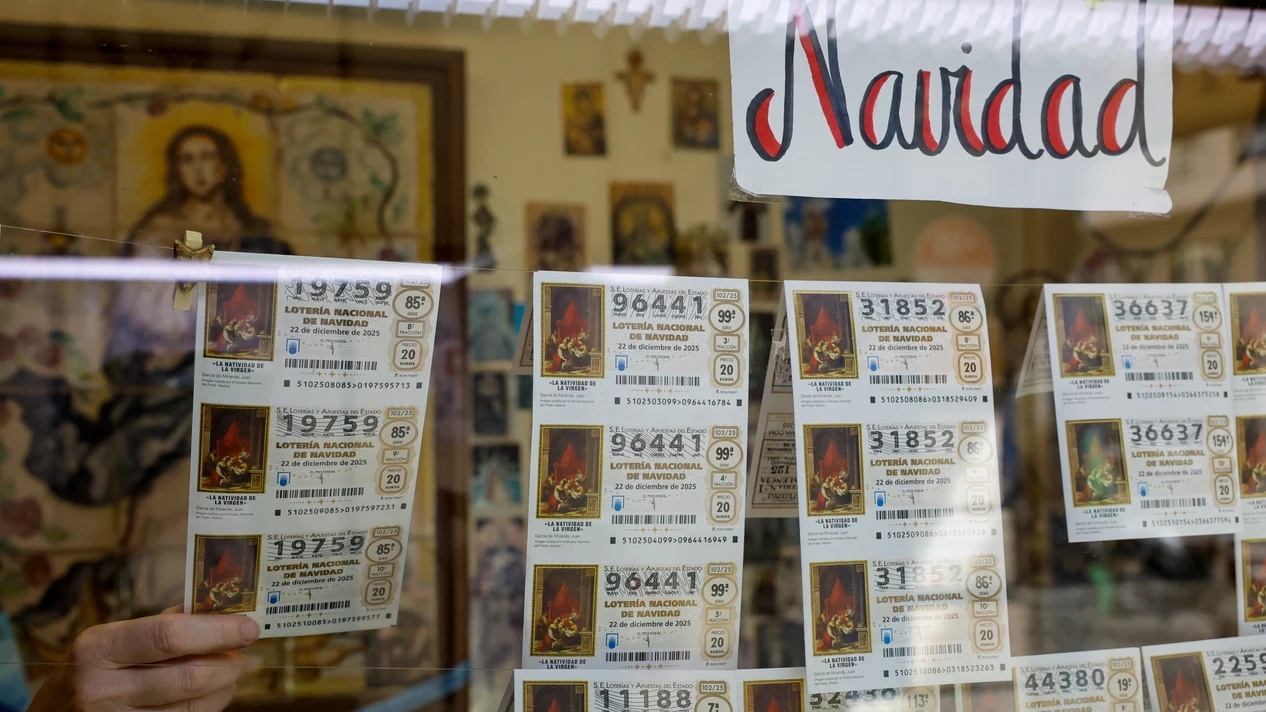
The Extraordinary Christmas Lottery Draw, which is held every December 22nd in Spain and is one of the most popular events of the year, not only distributes some of the highest prizes in the world, such as the Gordo; it also distributes a large number of smaller prizes known as pedreas. In the 2025 edition, the structure of these categories remains the same in terms of numbers, but the number of people who may win increases with respect to the previous year due to changes in the issuance of series by Loterías y Apuestas del Estado (SELAE).
What are pedreas and how many are there in 2025?
The pedrea is one of the smaller prizes of the lottery and is characterized by its large volume of winners. Unlike the main prizes (such as the Gordo, the second or the third one) that usually concentrate the attention, the pedrea distributes smaller prizes but with a much wider presence among the participants.
In the Christmas Lottery 2025, 1,794 pedreas are distributed, which is the same traditional number that has been used in recent editions of the draw. Each of these pedreas corresponds to a prize of 1,000 euros per series, which translates into 100 euros per winning tenth.
This figure of 1,794 pedreas represents an important part of the prize system: it is the category that generates the most winners among all types of minor prizes and is one of the reasons why the Christmas lottery is perceived as generous and with a high probability of obtaining some reward, even if it is not the first prize.
Why in 2025 more people can win tic-tac-toe tickets
At first glance, it would seem that if the number of pedreas is the same as in previous editions, then there is no difference in the number of winning tickets available. However, the key is in the number of series that are offered for sale.
Each five-digit number in the draw can be printed in multiple sets, and in 2025 SELAE has offered a record total of 198 sets for each number, up from the 193 sets offered for sale in 2024.
A series is composed of ten tenths, so each number can have up to 1980 tenths associated with it, one for each series multiplied by ten. This means that, although the number of pedreas (the winning numbers) is still 1,794, the fact that there are more series in circulation means that there may be more people with a tenth winning with pedrea.
In other words, the probability of a greater number of players winning a pedrea prize increases, because the same winning numbers are present in more décimos as there are more series. This expansion of the series does not alter the fundamental structure of the draw, but it does multiply the chances of the prize falling into the hands of more participants.
The lottery within the prize structure
In addition to the pedreas, the Christmas draw distributes other prizes depending on the position in the table: the first prize (known as the Gordo), which awards millions of euros per series, as well as the second and third prizes, fourth and fifth prizes. The pedrea, despite being one of the smallest prizes in terms of individual amount, is one of the most awarded numbers accumulated during the draw.
The pedrea is traditionally announced throughout the morning of December 22, while the children of the San Ildefonso school sing the numbers and the associated prizes. The sound “¡mil euros!” that accompanies each pedrea is possibly one of the most characteristic and awaited moments of the event, both for the tradition and for the expected possibility of recovering at least part of the cost of the tenth.
More series, more possibilities
The increase in the number of series to 198 in 2025 not only has an impact on the pedreas, but also on the potential to win any other prize in the draw. The record issuance means that there are more décimos in circulation than in previous years, which in turn raises the odds that more tickets will match any of the winning numbers.
From a quantitative perspective, the structure of the draw becomes broader: with more series, the base of players who can win is broadened, although the total number of prizes in each category remains the same. In this context, the pedrea remains one of the most accessible ways to win a prize in the draw, and with the expansion of the series, this accessibility can translate into a greater overall impact.