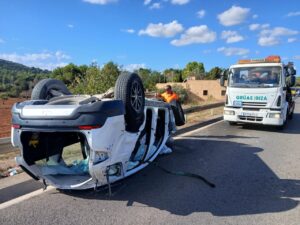

A video recorded this weekend in Bilbao has rekindled the debate on the effectiveness of V16 beacons, the new emergency signaling system that the Directorate General of Traffic (DGT) considers mandatory as of January 1, 2026. The images show an accident between two vehicles in which, at first glance, the light of the emergency flashers seems much more intense than that of a V16 beacon placed on the rear car. This comparison has provoked massive criticism on social networks and has refocused attention on the visibility of these devices.
However, both experts and Internet users who have analyzed the video point out technical nuances that help to contextualize the situation and relativize hasty conclusions. The doubts revolve around how the beacon should be placed and under what conditions its visibility is evaluated, and these details are key to understanding the controversy.
Viral video and light comparisons
In the images circulating in networks, an accident can be seen and, behind one of the vehicles, a V16 beacon apparently placed at the rear of the car. In front of it, the turn signal light is clearly visible, noticeably more intense in the footage. This has led many users to question whether the V16 beacons will fulfill their purpose of being visible early enough to other drivers.
They film an accident in Bilbao and compare the car with 4 turn signals with the one with the beacon. pic.twitter.com/HTva54daTb
– Alt Right Spain 𝕏 (@AltRightEspan). December 27, 2025

The main criticism launched in networks is that these devices seem less effective than conventional light signals, such as turn signals or the vehicle’s own emergency lights.
Technical explanation on the visibility of beacons
However, several Internet users have pointed out that the perception of lower luminosity in the video may be conditioned, in part, by the angle from which it was recorded. In the case of the virulent recording, the camera films from an elevated position, which may distort the actual perception of the light emitted by the beacon.
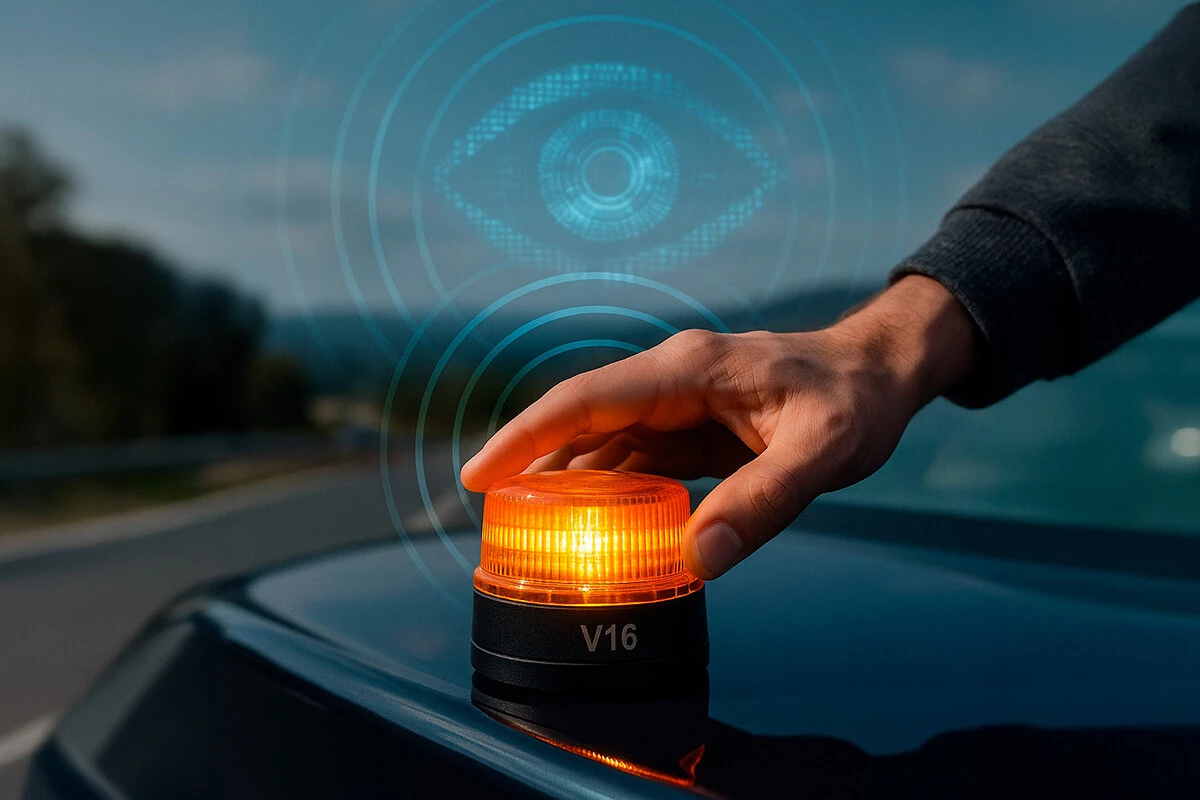
In addition, the technical regulations governing the conditions of these devices establish specific design requirements for them to be effective. According to the legislation, V16 beacons «must be specifically designed to optimize their visibility in a 360-degree horizontal plane» and have a vertical margin of around ±8 degrees. This design ensures that the luminous signal is seen at a distance of at least one kilometer by other drivers from any direction, provided that the conditions of use and placement are respected.
Device location, a key factor
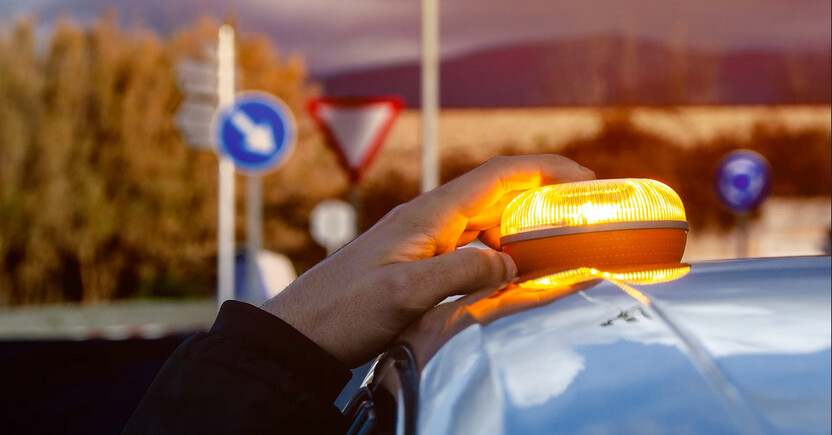
Another aspect that stands out in the discussion is the placement of the V16 beacon. The video shows that the driver of the accident vehicle has placed the beacon next to the trunk, a less high and less optimal position than recommended. Placing the device at the top of the vehicle and in an upright position is essential to ensure compliance with the visibility design specified in the regulations.
This point is important: if the beacon is not properly positioned, the intensity and range of the light can be reduced, which in a video captured from an unfavorable angle can make it appear less effective than it really is when used correctly.
Beyond light: the communicative function of V16 beacons
The V16 beacon not only emits light. From January 1, 2026, only V16 beacons connected with geolocation will be legal, incorporating an additional element: the transmission of the incident location to the DGT 3.0 platform every 100 seconds.
This provides a communicative function that goes beyond mere visual signaling. The information sent allows the incident to be reflected in real time on roadside information panels and in other drivers’ navigation applications, alerting them to the presence of a stopped vehicle long before they have visual contact with it.
-
Are the new V-16 Beacons enough? The Guardia Civil warns of a risk that many drivers are unaware of.
In relation to the connected capabilities of these beacons, some misinformation has circulated about the possible transmission of personal data. In this regard, the Spanish Data Protection Agency has refuted these hoaxes: the technical identifier sent by the beacon is not linked to the license plate or personal data of the owner, and is only activated in the event of an emergency. This means that the process maintains the anonymity of the users and protects their privacy.
The objective of the measure: to reduce secondary accident rate
The mandatory implementation of V16 beacons responds to a clear objective of the DGT: to reduce secondary accidents. The regulations consider that the use of the traditional emergency triangles forces the driver to walk on the shoulder, which means a significantly higher risk of being run over than staying inside the passenger compartment.
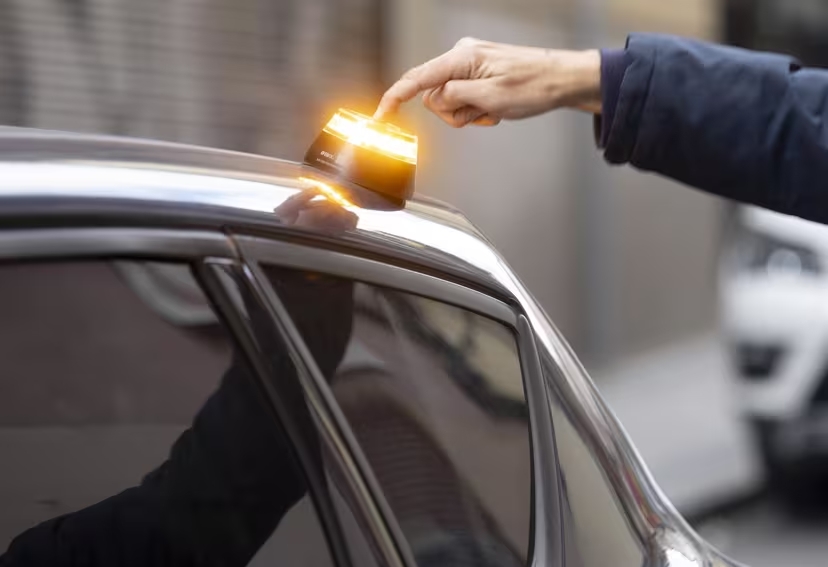
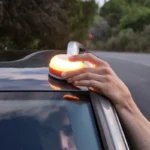
With the V16 beacon, the driver can safely signal the stop without having to get out of the vehicle. By simply reaching out of the window, the magnetic device is attached to the roof of the car, which significantly reduces exposure to traffic and thus the risk of an additional accident.
Recommendations for acquiring valid V16 beacons
With the regulatory change coming soon, drivers are advised to check the homologation code on the bulb when purchasing V16 beacons. This ensures that the model complies with legal and technical requirements. In addition, it is important to ensure that the beacon is connected, as basic beacons without geolocation will no longer be valid in less than two years according to current regulations.
Choosing a connected approved device not only ensures legal compliance, but also allows you to take advantage of all the early warning capabilities offered by DGT 3.0, which can make a real difference in terms of road safety.