


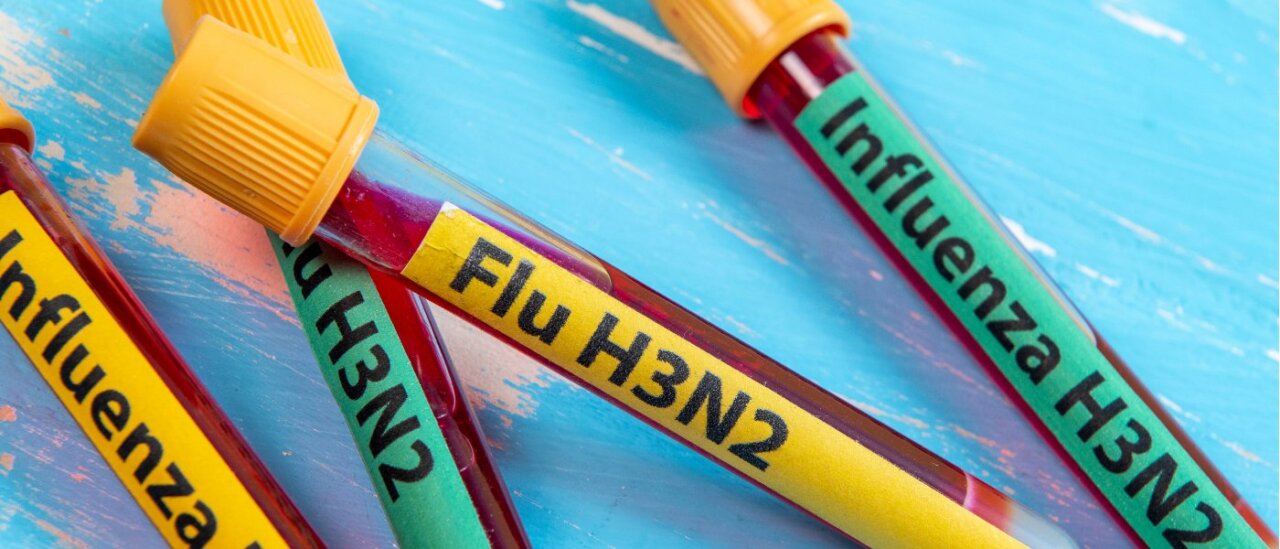
The 2025-2026 influenza season has started earlier than usual and with a protagonist that has focused the attention of international health authorities: Influenza K, the name given to the A(H3N2) J.2.4.1 subclade. The World Health Organization (WHO) has placed vaccination at the center of its strategy against a scenario of early circulation of the virus, with a sustained increase in influenza activity since October and a rapid expansion of this variant in more than 34 countries since August 2025.
Although global influenza levels remain within expected seasonal patterns, WHO warns of important regional differences and of an epidemiological dynamic that is accelerating in several areas of the northern hemisphere. The focus is not on increased clinical severity – which, for the moment, has not been observed – but on the speed of transmission and the possible impact that the genetic drift of the virus may have on the effectiveness of vaccines.
Influenza K under international surveillance
The A(H3N2) K subclade has become the main WHO surveillance element this season. Already detected in more than thirty countries, its rapid spread has made it necessary to strengthen virological monitoring systems. According to the Organization, this virus presents multiple amino acid changes in the hemagglutinin (HA) protein with respect to the J.2.4 clade from which it derives, which represents a significant evolution from the genetic point of view.
Despite this evolution, WHO stresses that no increase in clinical severity associated with Influenza K has been detected. Hospitalization rates, patient profiles and reported complications are similar to those observed with other A(H3N2) viruses in previous seasons. Even so, its ability to spread and its increasing prevalence make monitoring a priority.
Vaccine, key despite uncertainties
In this context, WHO has reiterated its core message: vaccination remains essential, especially for people at higher risk of complications. Early estimates indicate that influenza vaccine continues to offer protection against hospitalization in both children and adults, although its effectiveness against mild to moderate clinical illness is not yet fully clear.
«Vaccines remain essential, especially for people at high risk of influenza complications and their caregivers,» WHO stresses in its statement. According to preliminary data, protection against hospitalization is between 70-75% in children and 30-40% in adults.
The Organization also recalls that current vaccines include three components: A(H1N1)pdm09, A(H3N2) and B/Victoria. Even in scenarios of partial genetic mismatch, vaccination can significantly reduce the risk of severe disease and complications, a key aspect in a season that is expected to be more intense in terms of transmission.
An earlier start to the season in Europe
One of the most striking elements of the current season is its earlier timing. In temperate areas of the northern hemisphere, influenza circulation intensified earlier than usual. The WHO European Region officially declared the start of the 2025-2026 season in mid-November, approximately four weeks earlier than the historical median.

In many western European countries, consultations for influenza syndrome and hospitalizations began to increase early, with a clear predominance of the A(H3N2) virus. This pattern has raised concerns about the pressure it may put on healthcare systems, especially in the care of people over 65 years of age, where hospitalizations are already showing an upward trend.
An unequal situation by region
The WHO report paints a mixed picture globally. In the United States and Canada, cases are progressively increasing, with a confirmed expansion of the K subclade. In Mexico, however, the A(H1N1)pdm09 virus continues to predominate, reflecting the diversity of patterns even within the same region.
In the southern hemisphere, the season has been particularly prolonged in some countries and has not yet fully returned to inter-epidemic levels. New Zealand and Fiji have unusually high influenza activity for this time of year, while Australia is beginning to see a decline after weeks of intense circulation, also driven by A(H3N2).
In tropical regions, where influenza circulates practically all year round, the proportion of A(H3N2) viruses has increased steadily since August, progressively displacing A(H1N1)pdm09.
The K subclade, dominant in several zones
WHO notes that the spread of subclade K has been particularly rapid in the Western Pacific, where countries such as Australia and New Zealand detected an early increase since August 2025. Subsequently, its presence was consolidated in Asia and Europe.

In this region, almost 9 out of 10 sequences submitted to the GISAID database already correspond to this subclade. In South America, on the other hand, transmission remains limited and, as of November 4, the presence of subclade K had not been detected. Even so, WHO considers it a priority to maintain surveillance due to the speed at which it is spreading in other parts of the world.
Health pressure and key recommendations
The simultaneous increase in influenza and other respiratory viruses can generate significant pressure on health systems, especially in countries with less diagnostic capacity, surveillance or availability of hospital beds. Faced with this scenario, WHO insists on several priority lines of action.
These include the need to maintain and reinforce virological and epidemiological surveillance, improve laboratory capacities, strengthen outbreak response and enhance risk communication based on scientific evidence. All of this, the Organization stresses, is key to building trust and combating misinformation.
At the clinical level, WHO recalls that most cases of influenza are mild and self-limited, but insists on the importance of early identification of severe cases and the use of antivirals in people at high risk, as these measures can reduce hospitalizations and complications.
It also recommends reinforcing infection control measures in healthcare centers, such as the use of masks, patient isolation and additional protection in procedures that generate aerosols.
No restrictions, but with reinforced surveillance
Despite the early season and the spread of Influenza K, WHO is not recommending travel or trade restrictions with any country. The decision is based on the absence of evidence of increased severity or unusual global impact associated with this subclass.
The Organization’s message is clear: calm, but not complacency. The flu season has started earlier, the virus is moving fast and vaccination is once again the most solid tool to reduce the health impact, especially in the most vulnerable groups. With winter still ahead in much of the northern hemisphere, the evolution of Influenza K will remain under the microscope of international public health.