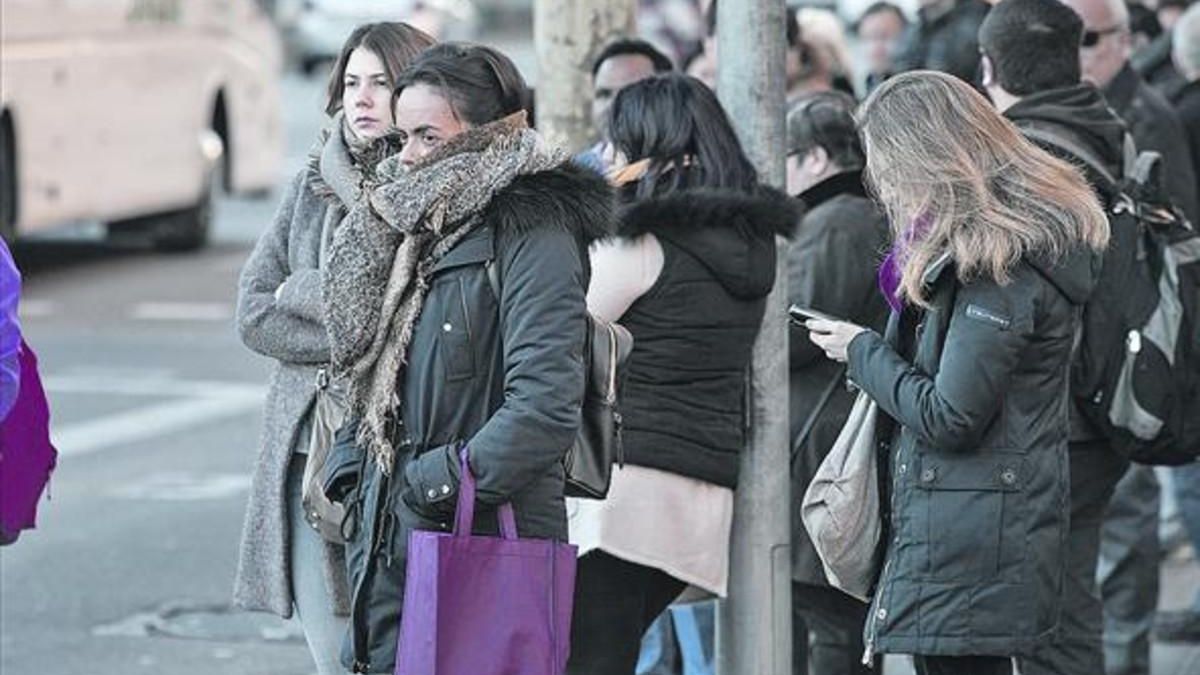
Spain has received this Christmas season under an episode of intense cold that has not been seen for more than a decade, with temperatures that have dropped significantly and is expected to remain low throughout the week. The main cause is an atmospheric phenomenon known as Scandinavian blocking anticyclone, which is driving masses of very cold polar air towards the peninsula and the Balearic Islands, as explained from the State Meteorological Agency (Aemet).
This meteorological context has made the beginning of the Christmas season the coldest in Spain since 2010 and the sixteenth coldest week since 1950, when the average temperatures of days and nights between 22 and 28 December 2025 are analyzed. In the words of José Ángel Núñez, spokesman for Aemet: “It also results in squalls circulating far south, so that throughout the week we will have squalls circulating around the peninsula”.
December started off warm, but the cold arrived with a vengeance
Although the month of December began with relatively mild temperatures, the situation changed abruptly since last Sunday, with a “sharp drop in temperature” that has surprised many citizens. This thermal decrease, according to Núñez explains, is directly related to the position of the large offensive anticyclone Scandinavian blocking, responsible for moving polar air to southern Europe and favor the arrival of cold fronts and squalls.
The cold episode not only affects maximum temperatures, but also minimum temperatures, with frost in many inland regions. According to the Aemet forecast, after a slight upturn on the eve of Christmas Eve, a further drop in temperatures is expected on Christmas Day, which will continue on December 26, a day that could become the coldest of the month and of the year 2025 to date.
A historic Christmas week in cold weather
According to Aemet weather records, which go back to 1950, the week of December 22-28, 2025 is shaping up to be the sixteenth coldest on record in that period of more than seven decades. The coldest of that long record remain the weeks of 1970, 1962, and 2001. In contrast, the warmest weeks correspond to 2022, 1995 and 2021.
The Aemet spokesman highlights the contrast with recent years: “There is a strong contrast with recent years, especially 2021 and 2022, which had very warm Christmases.” This underlines the exceptionality of the current situation, since in recent years the trend has been towards milder winters in much of the Spanish territory.
This cold winter comes in a context of climate change that, according to official data, has caused a thermal rise of 2.1 degrees since 1950 during the first week of Christmas. Despite this historical increase in average temperatures, cold episodes like the current one may continue to occur, although the Aemet warns that “although not impossible, it is very unlikely to return to have a Christmas as cold as that of 1962” with the same frequency as in the past.
Christmas Eve and Christmas Eve marked by record-breaking temperatures
The cold is not limited to the week in general: also the most important days of the Christmas calendar are registered among the coldest in decades. Christmas 2025 will be the coldest Christmas since 2010, based on historical records since 1962.
In that data series, the 1962 Christmas is listed as the coldest, followed by those observed in 1970 and 2001. In contrast, the warmest Christmases occurred in 1977, 1995 and 2022. The cold of 1962 was extraordinary: on that Christmas Day the average temperature in Spain was -4 degrees, with cities such as Madrid below zero throughout the day. In addition, snowfalls were recorded in such unusual places as Barcelona and Alicante.
This type of historical comparison helps to contextualize the current episode, which although it does not exceed the extreme values of half a century ago, it is among the coldest in recent decades.
How cold weather affects everyday life at Christmas time
Such a drop in temperatures has tangible effects on daily life: from the need to take extreme precautions when driving due to morning frost to an increase in energy consumption in homes and a greater risk of illnesses related to low temperatures. In these cases, health authorities usually remind us of the importance of protecting the most vulnerable groups, such as children, the elderly and people with respiratory or cardiovascular problems.
In addition, activities traditionally held outdoors at this time of the year, such as Christmas morning strolls or Epiphany parades, may be affected by low temperatures, forcing organizers and the public to take appropriate clothing and additional precautions.
A future of variable winters
The analysis of the climatic pattern in the medium and long term points to a general warming trend, but without excluding episodes of intense cold linked to particular atmospheric phenomena such as the one currently observed. This poses a variable winter scenario, where warm periods coexist with significant cold waves, depending on the configuration of large pressure centers and the interaction with cold currents.
The current meteorological situation, driven by the Scandinavian blocking anticyclone, has demonstrated how dynamic factors can trigger extreme conditions, even in a context of increasing average temperature. Whether or not similar episodes will be repeated in the future will depend on multiple climatic and atmospheric variables, as well as the global evolution of climate change.