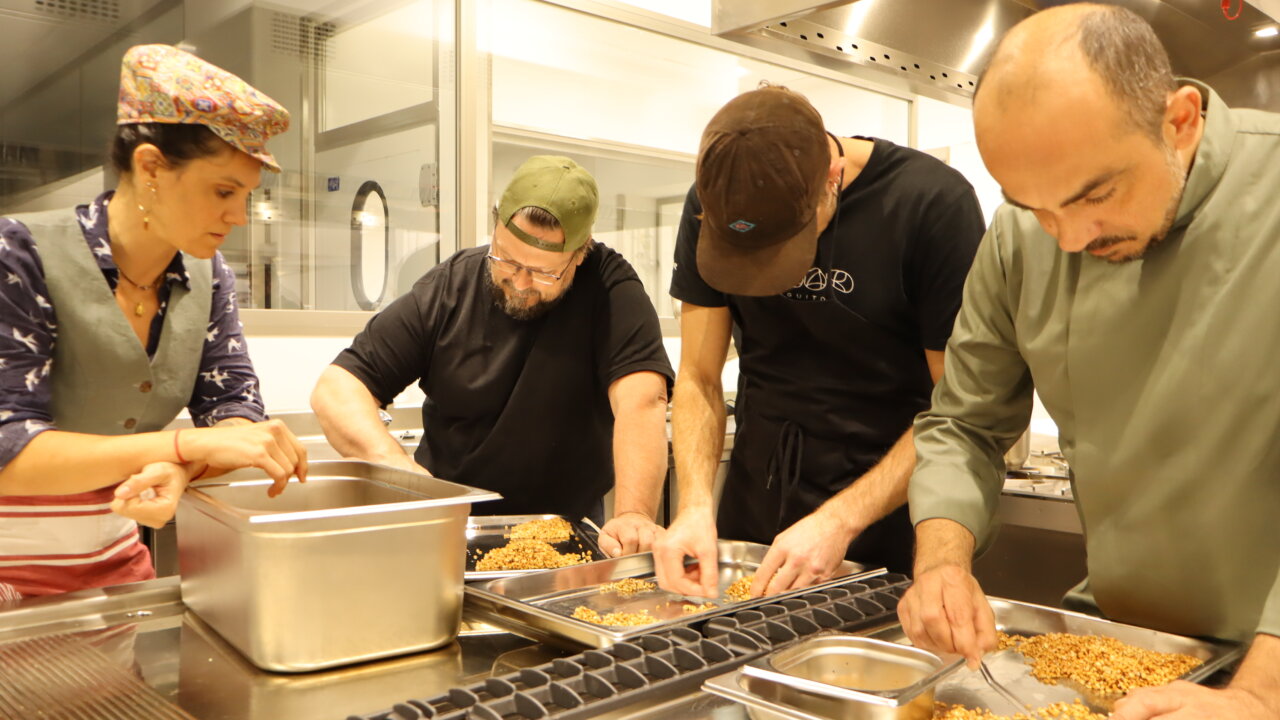
Twelve professional chefs have been participating since Tuesday in a new intensive training on sustainable cuisine organized by IbizaPreservation. The workshop, which concludes this Friday at the Escuela de Hostelería de les Illes Balears in Ibiza, is part of the project ‘Zero Waste Gastronomic Activists’ and seeks to provide the gastronomic sector with practical tools to minimize waste and strengthen the link with the local product.
The training, free for attendees and carried out in collaboration with the Conselleria d’Agricultura, Pesca i Medi Natural del Govern balear, is being taught by chef Erika Tangari, a specialist in healthy cooking and utilization techniques. During four days, participants combine theoretical and practical sessions that address from methods of preservation of vegetables to innovative proposals for sustainable pastry, always under a ‘zero waste’ approach.
According to Jordi Salewski, coordinator of IbizaPreservation’s Circular Economy program, this second edition has once again filled all the places in record time, which demonstrates the sector’s growing interest in incorporating more responsible habits in professional kitchens.

Sustainable cooking
The syllabus, divided into five blocks, covers basic concepts of sustainable cooking and delves into food revitalization techniques, the design of flexible menus with fermented or pickled ingredients, and the preparation of broths, compotes, flavored salts or vinegars from culinary by-products. The last part of the workshop focuses on sustainable pastry making with recovered and local ingredients.
The main objectives include promoting the consumption of local varieties, improving organic waste management and fostering creativity applied to reduced-impact menus. “We want to offer useful tools that can be applied on a day-to-day basis to reduce waste and strengthen the link with the island’s agricultural environment,” says Salewski.
For her part, Inma Saranova, director of IbizaPreservation, emphasizes the key role of the restaurant sector in the transition to a more sustainable food model. “Supporting those who cook every day is essential to move towards a gastronomy that cares for health and the environment,” she says. As an example of the scope of the initiative, he recalls that the chefs trained in the previous edition feed more than 20,000 people a year, a figure that illustrates the potential impact of these practices on local consumption.
Aimed exclusively at working professionals, the workshop has limited its places to ensure personalized attention. As in May, IbizaPreservation assumes the full cost of the training, reaffirming its commitment to strengthening a circular economy in the Pitiusas.