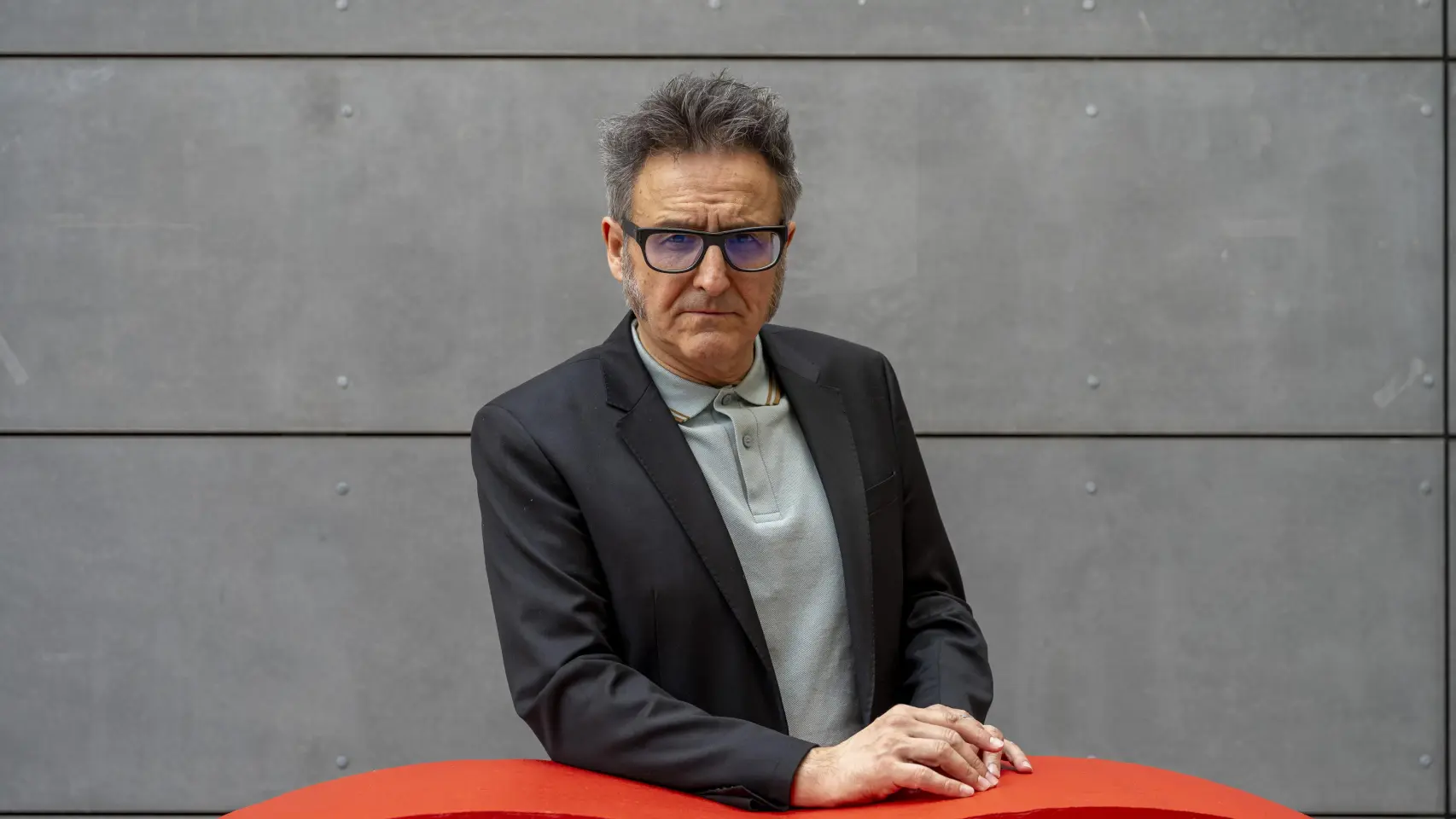
Spanish culture has dawned in mourning. José Luis Cienfuegos, director of the Valladolid International Film Week (Seminci) and essential figure to understand the recent evolution of film festivals in Spain, died suddenly this Tuesday in Madrid, at the age of 60, after suffering a cerebral infarction. He was admitted on Monday night, but, as confirmed by municipal and festival sources, “he has not been able to overcome this ailment”.
The blow has been especially painful for Valladolid, whose Seminci had just closed a few weeks ago a historic edition, the 70th, signed by Cienfuegos with the style that made him one of the most respected programmers in the country. The mayor himself, Jesús Julio Carnero, announced his death and expressed the impact he had caused among institutions, filmmakers and the public.
A legacy that marked three cities: Gijón, Seville and Valladolid.
Born in Avilés in 1964, Cienfuegos accumulated an extraordinary career before arriving in Valladolid. For years he directed the Gijón Film Festival, consolidating it as a reference for independent cinema, and later the Seville Film Festival, where his name became synonymous with criteria, risk and international openness.
The Seminci selected him in 2023 after a public competition to lead the biggest project of his career. The festival bid him farewell this Tuesday recalling that he arrived with an “unmistakable stamp”, a “necessary renovation” and an absolute loyalty to “the history and spirit that have characterized Seminci”.
-
Udo Kier dies at 81: the enigmatic cult actor who won over Warhol and the masters of European cinema
A year later, its impact was already evident: the 70th edition, which concluded just a month ago, was, according to the festival itself, “undoubtedly one of the most successful in the long history of the event”.
The festival that raised its ambition to its highest level
Under his direction, the Seminci was reaffirmed as a space where cinephilia becomes a collective conversation. Cienfuegos understood the event as a meeting point: “a place for dialogue and knowledge” about cinema, built through an “ambitious and heterodox” program that built “vibrant bridges between creators and the public”.
The @AyuntamientoVLL expresses its condolences for the sudden death of the director of @Seminci_oficial, José Luis Cienfuegos, in these moments of pain the city is at the side of his family, his friends, and all the colleagues of the Festival and the world of cinema. DEP. pic.twitter.com/mNd1JJuvyP
– Ayto. de Valladolid (@AyuntamientoVLL) December 2, 2025
His vision, the organization stresses, was “multifaceted”, with special attention to all the agents that make auteur cinema possible: distributors, producers, critics and the media. His obsession was that the Seminci should not only exhibit films, but also be useful for the industry.
The festival sums it up in one telling phrase: “Cienfuegos radically transformed the way festivals are made in Spain to celebrate culture and life.”
An abrupt end for a creator in his prime
The death has generated a wave of messages of grief in a sector that saw in Cienfuegos an essential figure and, above all, a tireless worker. The Seminci confirmed that
His recent work had revitalized the festival, propelling it into a new stage of international prestige. His sudden death interrupted a project that had barely begun to unfold fully, but left in place a structure and a vision that would mark the Seminci for years to come.
The emptiness of a renovator of Spanish cinema
If anything defined Cienfuegos, it was his ability to bring together worlds: established and emerging filmmakers, loyal audiences and new generations, industry and critical thinking. To this he added a special sensitivity to detect talent and to articulate programs that seemed designed to challenge as much as to excite. The festival put it this way in its public farewell: “It established vibrant bridges between creators and audiences.”
With his death, Spanish cinema loses one of its most influential programmers, a manager who turned every festival he touched into a livelier, more curious and more permeable to artistic risk. His name is now indelibly linked to Gijón, Seville and, above all, Valladolid. His work, like that of the filmmakers he supported so much, will continue to speak to the future.