The entry into force of the new road safety regulations that will make the connected V-16 beacon the only legal pre-signaling system on the road is generating a scenario of uncertainty among thousands of drivers. Although the regulatory change has been announced for years and its aim is to improve safety and reduce collisions on fast roads, the sudden withdrawal of several approved models has caused considerable confusion just when the timetable is tight.
As of January 2026, emergency triangles and any other signaling system will be definitively out of the law. However, far from providing a clear and orderly transition, the V-16 beacon market is going through a moment of instability that has called into question the reliability of the type-approval system and the information consumers receive.
A clear regulation, a confusing market
The Dirección General de Tráfico (DGT) established that the connected V-16 beacon would be mandatory as the only legal pre-signaling device in case of breakdown or accident. It is a system designed to increase driver safety, avoiding the need to get out of the vehicle and walk along the shoulder to place the old triangles.
However, the problem does not lie in the standard, but in its practical application in the market. With just a few days to go before the regulatory horizon, many drivers are still unclear as to which models actually meet the requirements and which are no longer valid for marketing.
This gap between the legal obligation and the clarity of information has meant that, despite the proximity of the changeover, there is no basic consensus among users on which beacon to purchase with guarantees.
Four beacons removed at the last minute
The situation became tense when the DGT withdrew the homologation of four models of connected V-16 beacon just days before the device becomes mandatory. Although the agency clarified that users who had already purchased them will be able to continue using them without risk of penalty, the measure had an immediate impact on consumer confidence.
The models excluded from the official list are Don Feliz V16IoT, The Boutique For Your Car V16IoT and Ikrea V16IoT, manufactured by Ledel Solutions, as well as the Call SOS beacon model XL-HZ-001-VC, assembled by Ditraimon S.L. All of them had passed a first phase of certification and were listed as homologated until they were withdrawn.
This last-minute exclusion has fueled doubts about the stability of the homologation process and has generated concern among those who had already purchased one of these devices.
Reasons for withdrawal
As explained by Traffic, the withdrawal of these models does not respond to technical failures or road safety risks. In most cases, the cause was the expiration of the certificate or the failure to renew it within the deadlines established in accordance with the new administrative criteria.
In some cases, the removal was even at the request of the manufacturers themselves. Even so, the impact on public perception has been notable, as many drivers interpreted the measure as a sign that the removed beacons were not safe or did not fulfill their function, something that the DGT has expressly denied.
Use permitted, sale prohibited
One of the points that has generated the most confusion is the difference between the use and marketing of these devices. Although the four recalled models can no longer be sold, their use is still valid for those who purchased them before the exclusion, as long as they keep the connectivity period included in the purchase price active.
The DGT has confirmed that no penalties will be imposed for carrying these beacons as long as they work within this period. However, when the connected V-16 beacon is mandatory, not having any valid device will be grounds for a fine under the General Vehicle Regulations.
This duality has led many users to keep their proofs of purchase, with a view to possible returns, while others opt directly to purchase a model with current homologation to avoid future problems.
What is the V-16 beacon connected
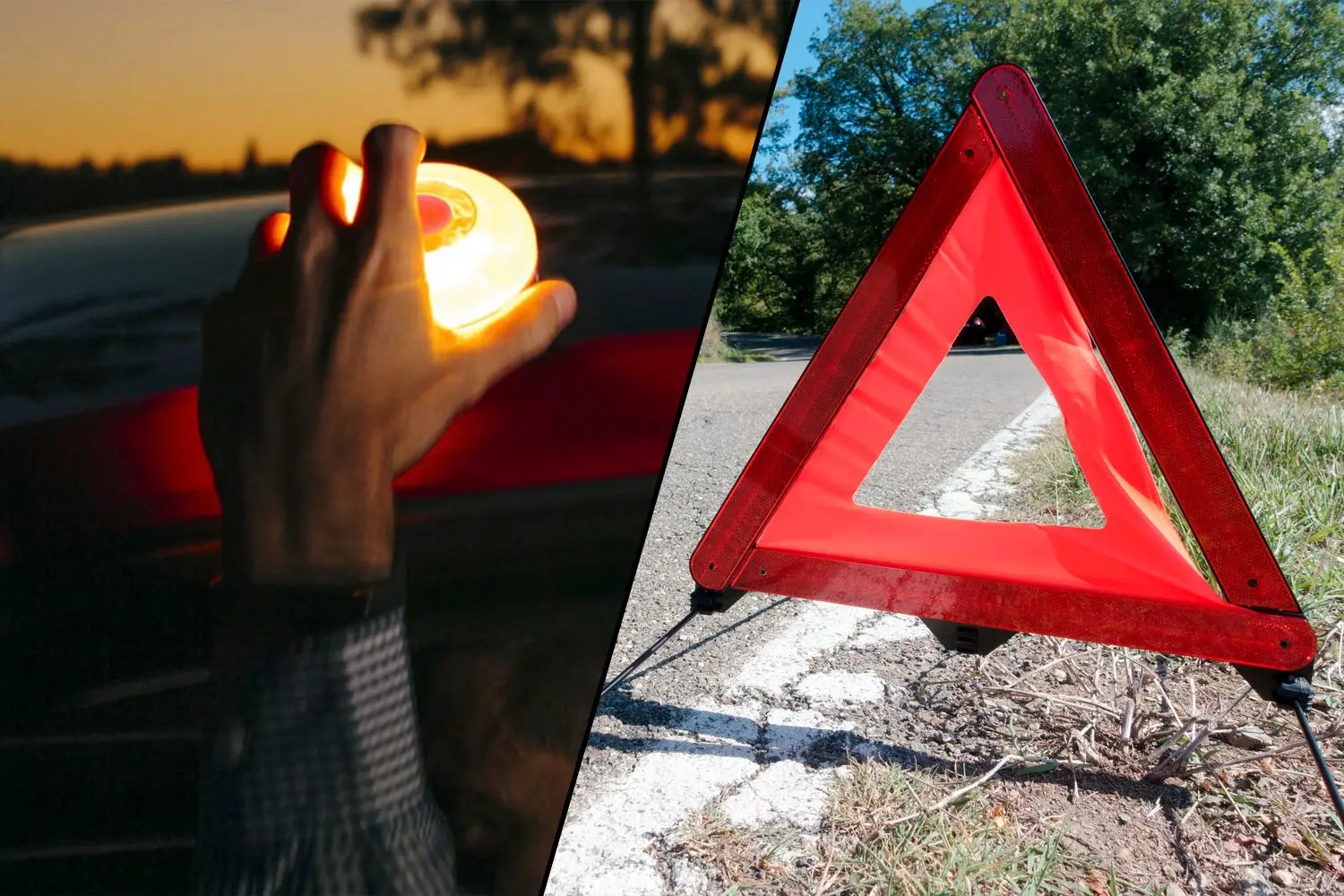
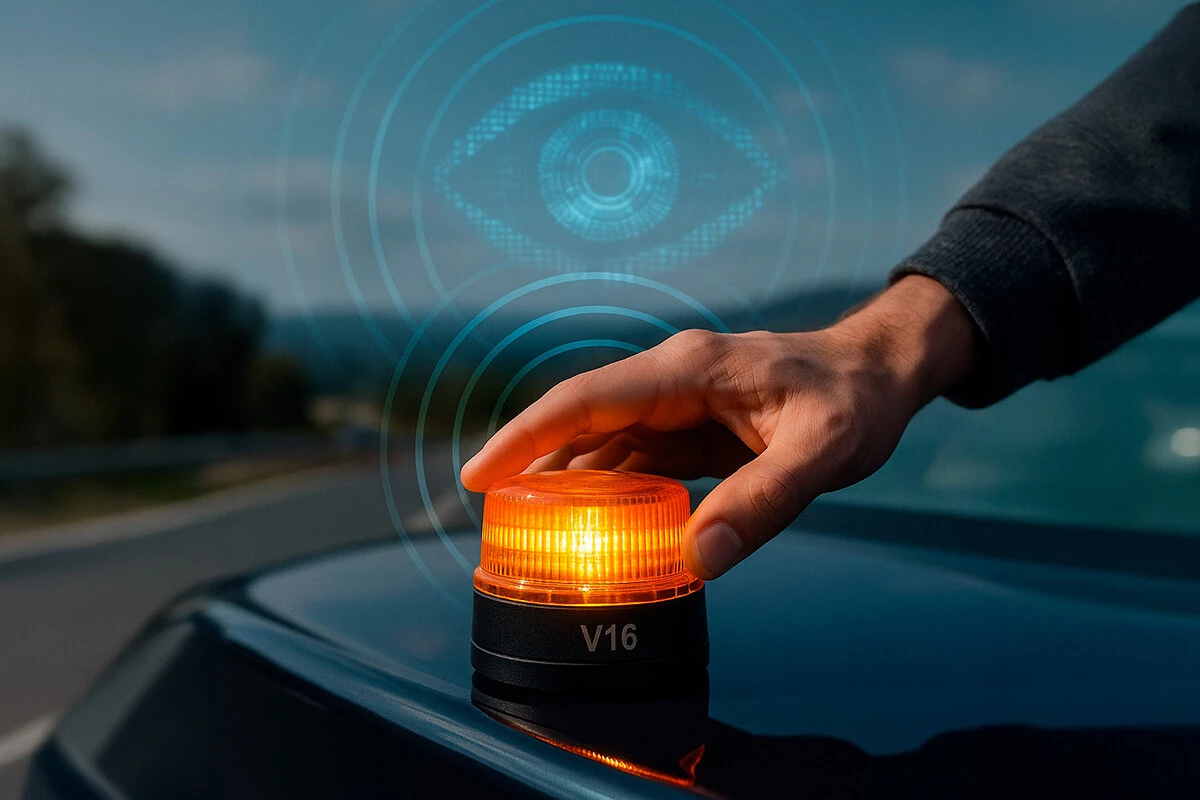
The connected V-16 beacon will definitively replace emergency triangles and light beacons without connectivity. When activated, it emits a flashing light visible in 360 degrees for at least 30 minutes and automatically sends the vehicle’s location to the DGT 3.0 platform every few minutes.
This data transmission allows the incident to appear in real time on roadside information panels and navigation applications, alerting other drivers long before they have visual contact with the stopped vehicle.

The system is battery operated, with a minimum life of 18 months, and is designed to operate even in adverse weather conditions or low visibility.
DGT’s objective: to reduce secondary accident rates
The regulatory change responds to a clear objective: to reduce secondary accidents. Walking on the shoulder to place the emergency triangles poses a high risk of being run over, especially on fast roads or roads with poor visibility.
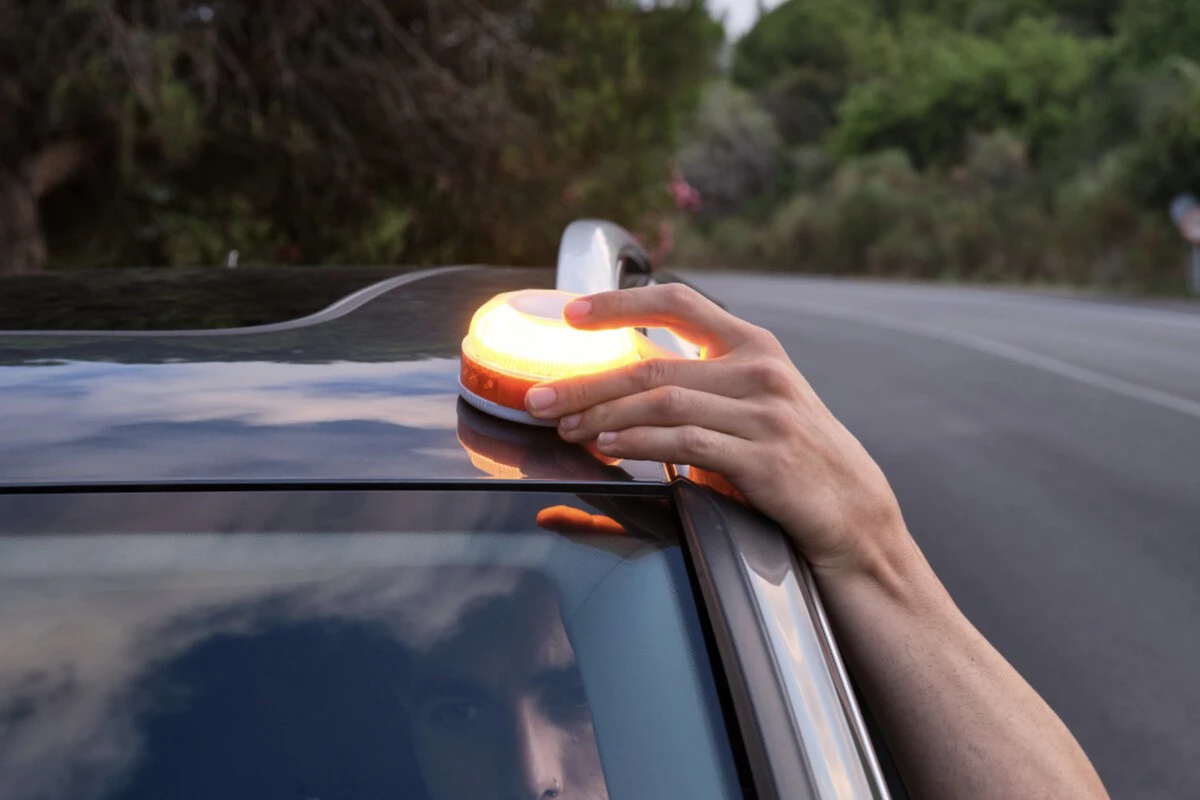
With the V-16 beacon, the driver can signal the breakdown without getting out of the vehicle, simply by putting his arm out of the window and placing the magnetic device on the roof. This difference, according to the DGT, is key to improving road safety.
The importance of verifying homologation
In this context of changes and recalls, the main recommendation is to always check that the connected V-16 beacon is on the official list of approved devices. It is essential to check the approval code on the product’s cover and make sure that it is a connected model, as beacons without geolocation will no longer be valid.
Although the transition to this digital system is still underway, the last-minute withdrawal of models has highlighted the need for clearer and more accessible communication for drivers. With just a few months to go before the connected V-16 beacon becomes mandatory, certainty remains the most sought-after element in a process that aims precisely to improve road safety.