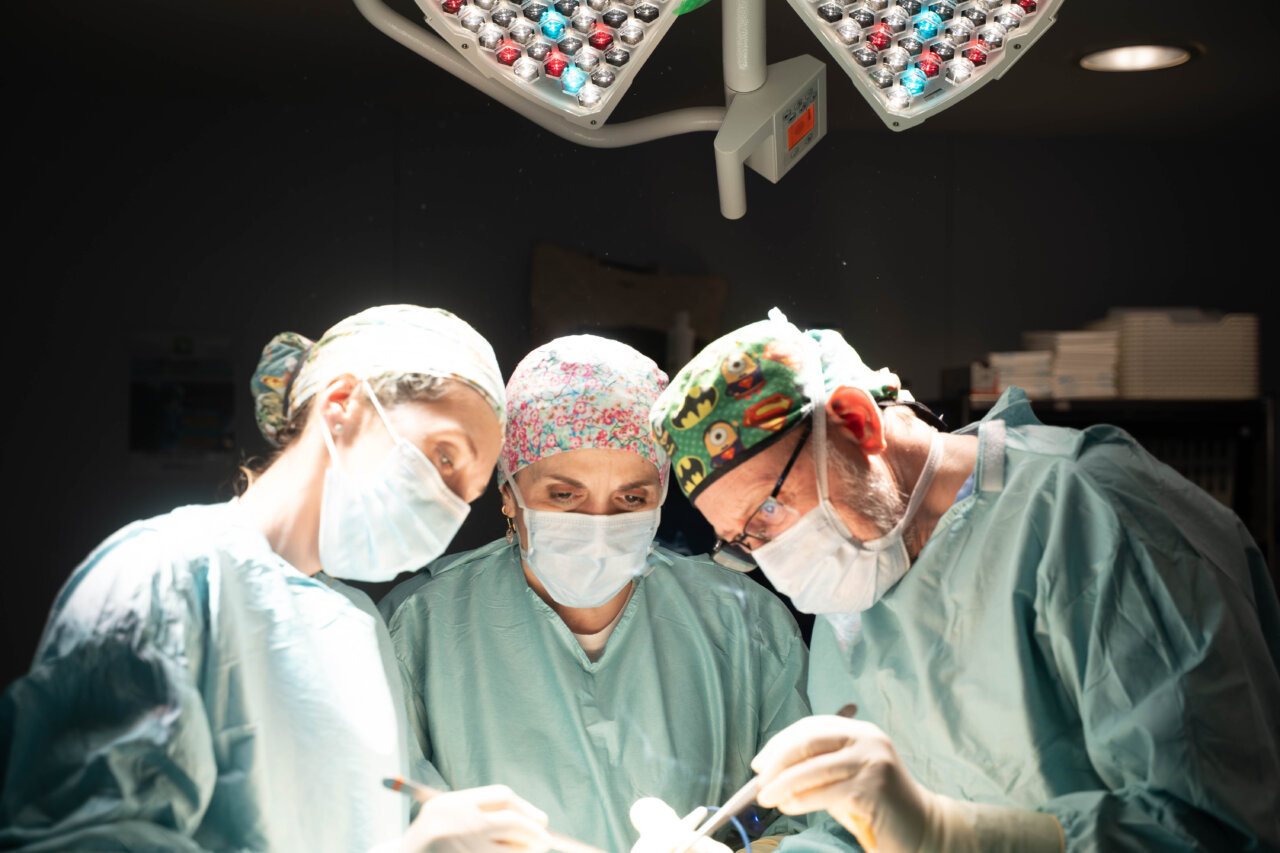
Nuclear medicine has taken a decisive turn in endocrine surgery in Ibiza. For the first time, a patient with a parathyroid adenoma – a small benign tumor that alters calcium levels in the blood – has been operated on usingSPECT-CT technology, a tool that combines gammagraphy and tomography to locate the affected gland with millimeter precision.
Until now, locating one of these adenomas was a challenge. The lentil-sized parathyroid glands can be hidden within tissues or even located in atypical areas of the neck and mediastinum. With traditional techniques, surgery required wide incisions and almost exploratory work inside the neck. SPECT-CT changes that scenario: it makes it possible to identify exactly where the diseased gland is before entering the operating room.
Targeted surgery from the very beginning
The procedure, applied at the Policlinica Group, begins hours before the operation. The patient receives a small dose of radiopharmaceutical and undergoes SPECT-CT, which generates a three-dimensional map showing the adenoma clearly marked. Once in the operating room, the team uses a gamma probe -a device sensitive to the radiation emitted by the gland- to confirm the location and direct the incision with total accuracy.
«The change is radical,» explains general surgeon Mario Ronquete. «Before, we had to open the neck wider and explore for much longer. Now we go directly to the exact spot. The surgery is faster, safer and much less aggressive.»
This is what happened in this first case: a minimal incision, direct removal of the gland and a single night’s hospitalization as a precaution. The technique, similar to that used to locate the sentinel node in breast cancer, reduces complications and speeds recovery.
SPECT-CT is especially effective in single, well-delimited adenomas, although it has limitations in patients with multiple affected glands or complex thyroid pathology. Even so, when indicated, it has become one of the most accurate tools for planning these interventions.
The incorporation of this technique in Ibiza represents an important advance in endocrine care on the island and marks a further step towards image-guided surgery, more precise and less invasive, which places the patient at the center of the process.