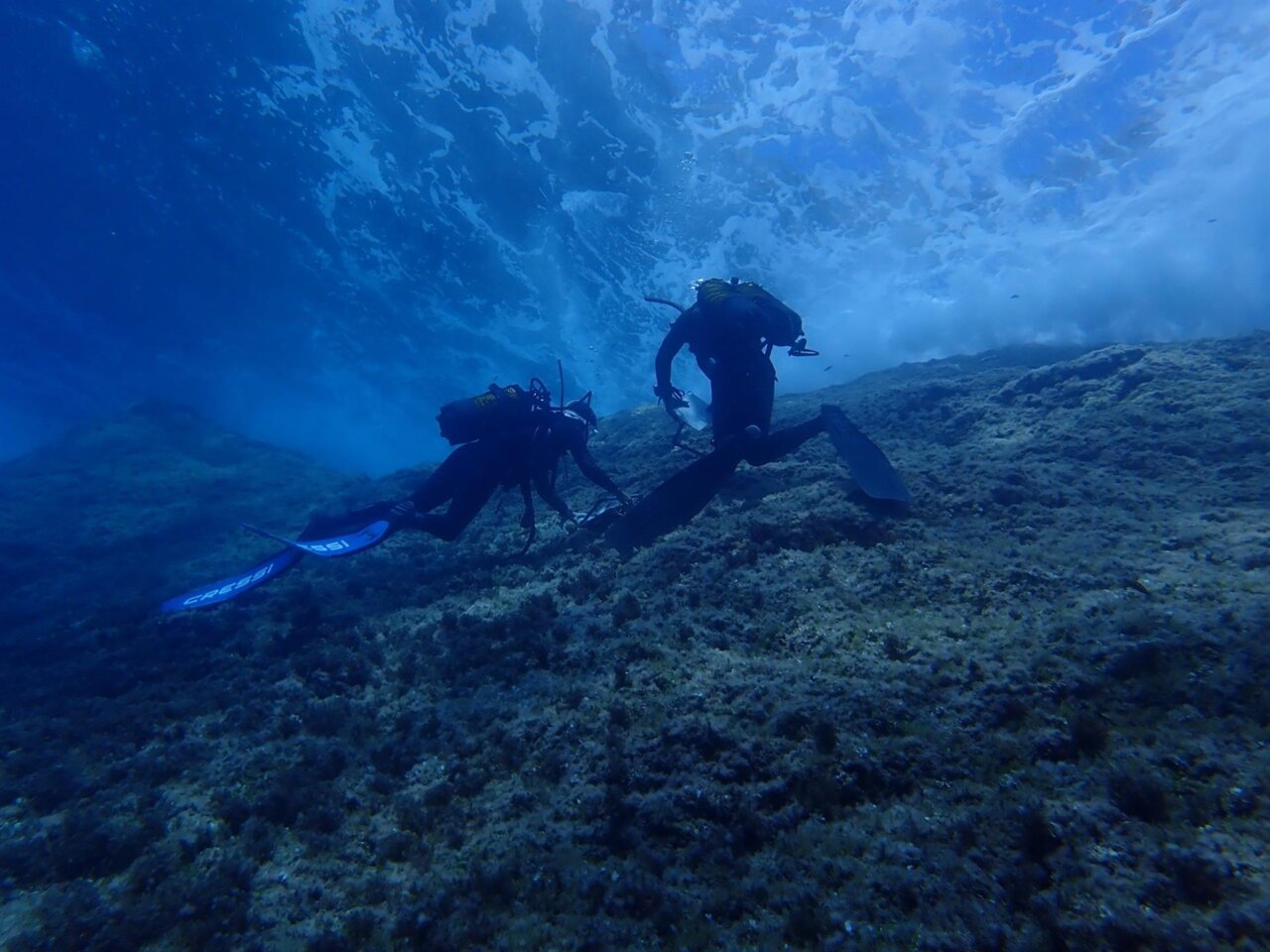
A study conducted by researchers from the Center for Advanced Studies of Blanes (CEAB-CSIC) and the University of Barcelona (UB) has detected a significant decline in biodiversity in the two marine national parks in Spain: the National Maritime-Terrestrial Park of the Archipelago of Cabrera, in the Balearic Islands, and the National Maritime-Terrestrial Park of the Atlantic Islands of Galicia. The work, based on data collected over nearly a decade, has been published in the scientific journal Diversity and Distributions, as reported Thursday by the CEAB in a statement.
The research is based on repeated sampling of the same seafloor habitats in 2014 and 2022. The analysis ranges from shallow, well-lit areas to deeper communities, as well as even deeper detrital bottoms composed of sediments and calcareous algae. This approach has made it possible to accurately compare the evolution of biological diversity at different levels of the marine ecosystem.
By contrasting the first years of monitoring, between 2014 and 2015, with the most recent data, corresponding to 2021 and 2022, the researchers found that species richness has decreased by about 40% on average in both national parks. The decline is observed both in the Mediterranean environment of Cabrera and in the Atlantic environment of the Atlantic Islands, despite the oceanographic differences between the two areas.
-
Ibiza, the island with the most anchoring on Posidonia: concern grows over the impact on the meadows
The scientific team stresses that, although the national park status significantly reduces local pressures, these areas are not isolated from their environment. In this sense, they warn that they also respond to the effects of global change derived from human pressures, such as the warming of the oceans or the alteration of environmental conditions on a large scale.
The study also highlights the importance of incorporating advanced genetic techniques, such as metabarcoding and metaphylogeography, into long-term biomonitoring programs. According to the authors, the availability of solid time series not only makes it possible to assess the state of marine ecosystems, but also to anticipate future impacts and more effectively guide biodiversity conservation and recovery actions.
Continue reading:
-
New marine thermometer in Ibiza: this is how the water temperature in Cala Gració will be controlled.
-
Unusual bleaching of posidonia in Ibiza worries scientists and divers
-
Ibiza as a thermometer: the sea reveals worrying signs of transformation
-
Garbage and dead lizards: Es Vedrà, on the verge of environmental collapse
-
From “cat god morons” to “trespasser traps”: the phrases that ignite environmental controversy in Ibiza
-
Pacma alerts about the massive death of cats in Ibiza’s Cepad